


 Battle Study Package: Battle of Saratoga
A new hope for the American Revolution
HISTORICAL SIGNIFICANCE
The American victory at the Battle of Saratoga was the turning point of the American Revolution. By successfully defeating and capturing an entire British army, the Americans convinced the French king of their ability to successfully wage revolution, resulting in France entering the war on their behalf.
TACTICAL IMPORTANCE
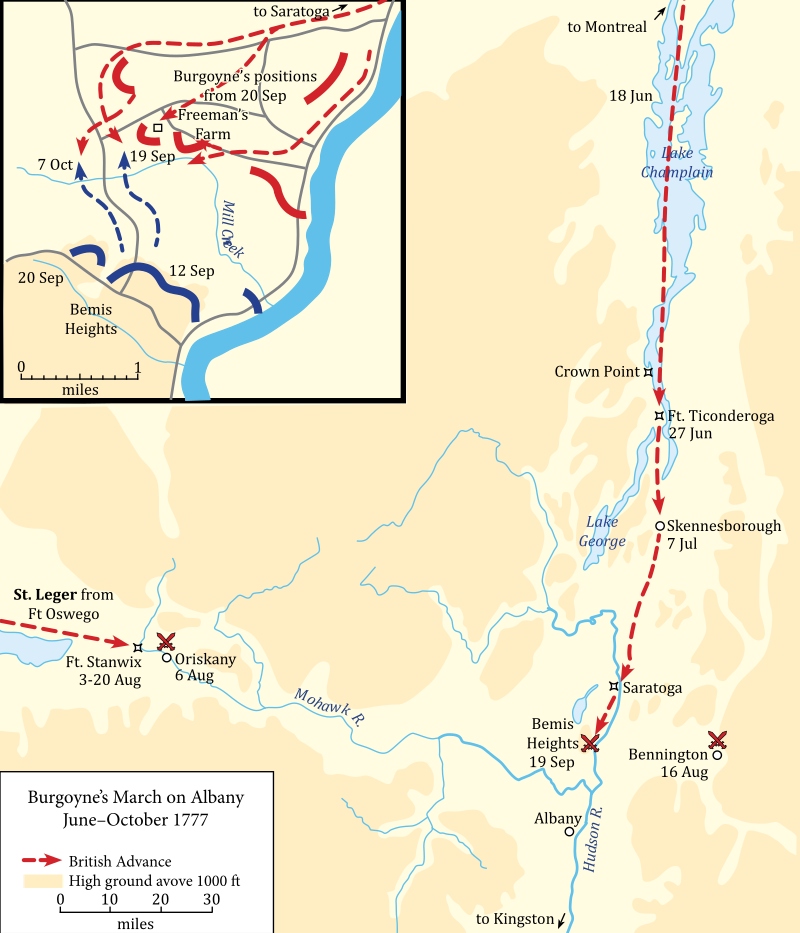
In 1777, the British strategy for the American Revolution was to separate the New England colonies from the Mid-Atlantic and southern colonies—whom were perceived to be more loyal to the British government than their New England counterparts. The plan involved a three-pronged strike into New York: Gen John Burgoyne and his army would march south from Montreal, Gen Barry St. Leger would approach from Ontario, and Gen William Howe would advance north from New York City. Beginning in June, Gen Burgoyne’s force of around 7,500 men began their advance and were successful in capturing the American-held Fort Ticonderoga with minimal losses; however, their logistically heavy baggage train meant that the British army moved incredibly slow across the rough terrain of northern New York. In mid-August, a detachment of Gen Burgoyne’s army was annihilated by American forces at the Battle of Bennington, losing close to 1,000 men in the process. This loss was compounded by the news that Gen St. Leger’s army was forced to turn back after a failed siege at Fort Stanwix. Furthermore, rather than follow through on his plan, Gen Howe sent his army to seize the American capital of Philadelphia, leaving Gen Burgoyne isolated without any means of support. In response to the British-endorsed Indian raids and the murder and mutilation of Jane McCrea, the ranks of the Continental Army under the command of Gen Horatio Gates swelled to around 9,000 men—greatly outnumbering the British forces in the region.
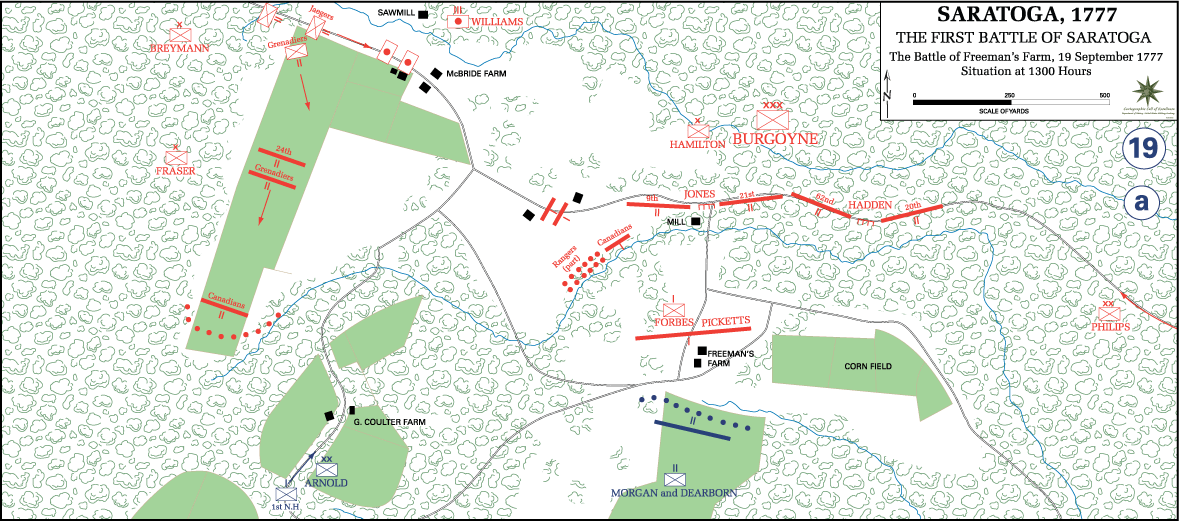
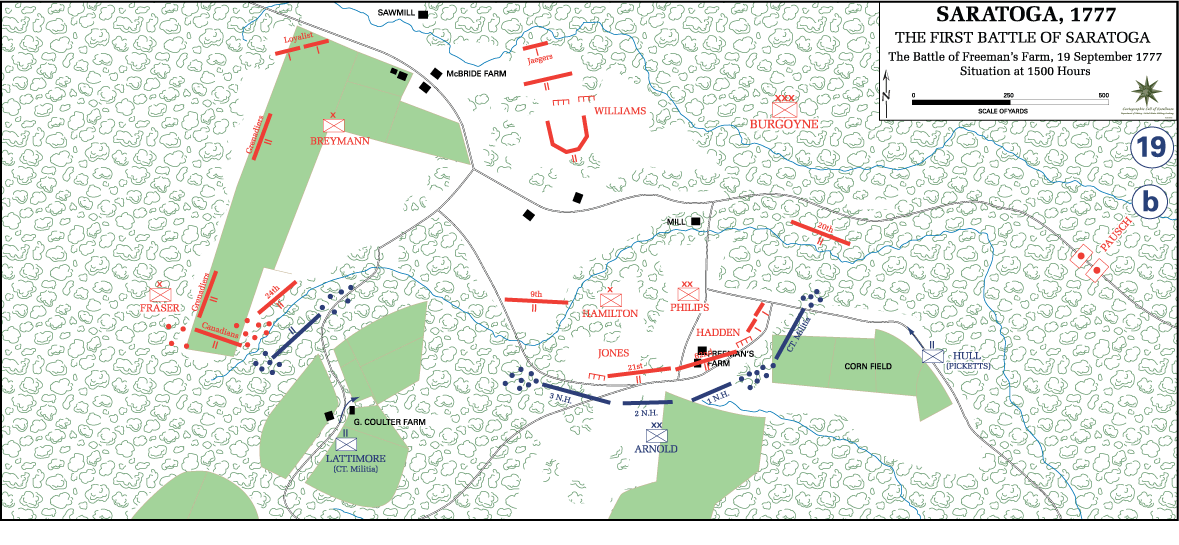
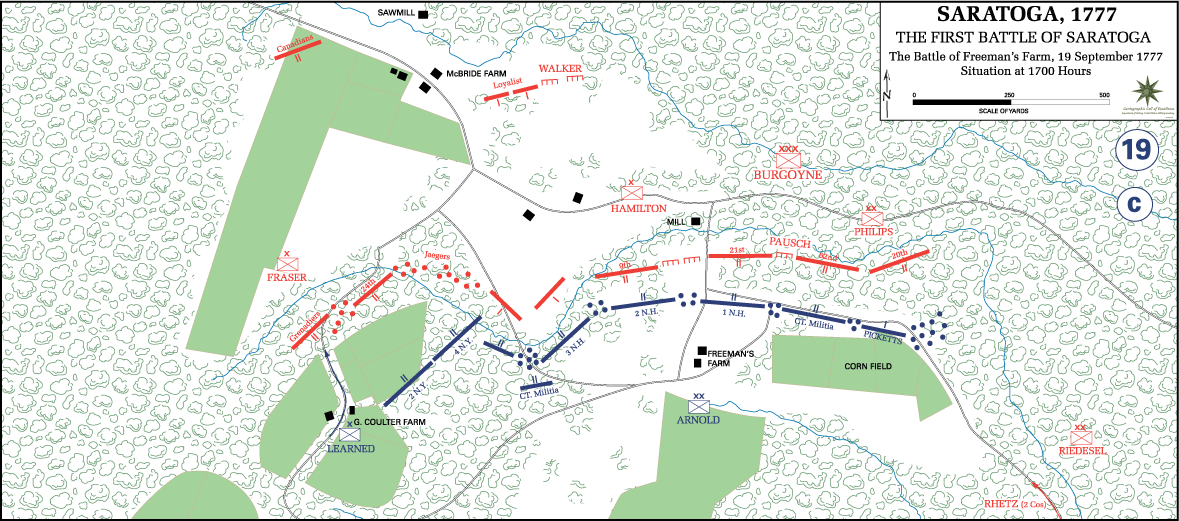
By September, the American army maintained a defensive position along the Hudson River to block any further British advance to the south. Gen Burgoyne divided his army into three columns to test the American defenses. On 19 September, the central column ran into the American light infantry under the command of Col Daniel Morgan near Freeman’s Farm. The two forces clashed in a back-and-forth battle, with both sides appealing to reinforcements throughout the day. The American light infantry demonstrated their sharpshooting capabilities and successfully targeted several British officers and artillerymen throughout the battle. By the end of the day, a British counterattack on the American right flank granted them control of the field of battle, but the Americans succeeded in sapping the momentum of the British advance south, forcing them to entrench and wait for reinforcements. Casualties for the Battle of Freeman’s Farm were over 500 British compared to around 300 American.
Following the Battle of Freeman’s Farm, Gen Burgoyne urgently awaited reinforcements from Gen Henry Clinton, and although Clinton attempted to relieve Burgoyne’s army, his advance stalled by early October. Realizing his forces could no longer hold their positions indefinitely, Gen Burgoyne decided to continue his advance southward. Unbeknownst to him, the size of the Continental Army had increased significantly to around 12,000 men.
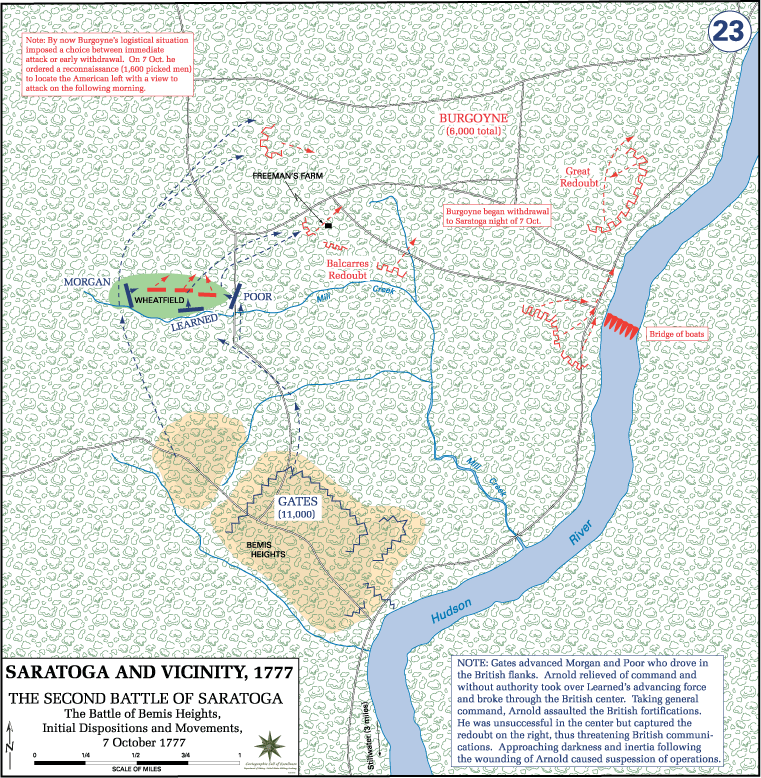
On 7 October, Gen Burgoyne ordered a third of his army (whittled down to around 5,000 men) to launch a reconnaissance in force against the Americans located near Bemis Heights. Unfortunately for them, the Americans easily repulsed this advance and forced the British to return to their entrenched positions after suffering heavy casualties. Following this initial portion of the battle, the Americans were joined by Gen Benedict Arnold (Gen Arnold and Gen Gates had been on bad terms before the battle as they disagreed over whether to embark on an offensive or defensive strategy, of which Arnold supported the former). Gen Arnold’s presence and leadership brought new energy to the American assault, as he urged them to follow through on their initial success and seize the right flank of the British position anchored at Breymann Redoubt. The Americans were successful in their assault and forced the British to abandon their advance and concentrate at their Great Redoubt positioned along the Hudson River. The Battle of Bemis Heights and Breymann Redoubt resulted in around 1,000 British casualties compared to around 500 Americans.
STRATEGIC IMPACT
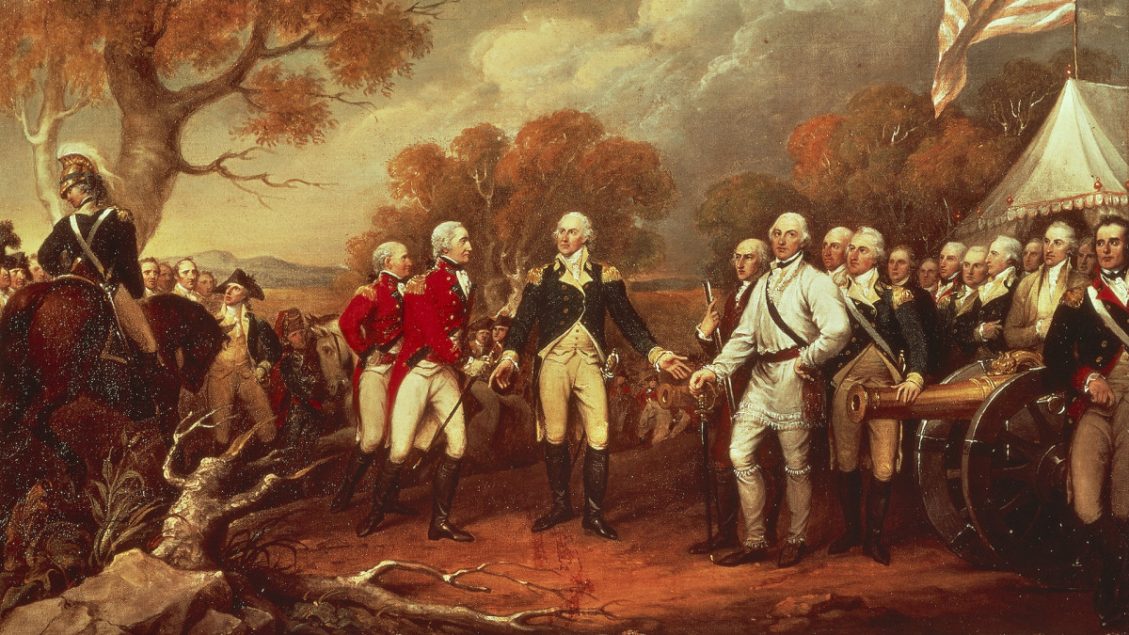
Following the battle, Gen Burgoyne withdrew his army to the vicinity of Saratoga, New York, where a series of rainfalls severely hampered his movements, and his army was eventually surrounded by American forces. Consequently, he agreed to terms of surrender on 16 October and his army formally surrendered the next day. By concentrating their forces on an isolated enemy, the Continental Army had managed to annihilate an entire British army, resulting in a massive morale boost for the revolutionary nation. When word reached France of the American success at Saratoga in December, King Louis XVI began formal negotiations to ally with the Americans, which was formalized in a treaty signed in February 1778. This changed the strategic nature of the American Revolution and offered a new hope for the American Patriots.
Maps
Study Guide
Podcasts
Books

Videos
Testimonials
“They retired to their camp, leaving us masters of the field; but it was a dear bought victory if I can ever give it that name, as we lost many brave men.”
-Lieutenant Digby, a British officer recalling the Battle of Freeman’s Farm
“Victory or death!”
-General Arnold upon taking command of the American counterattack at the Battle of Bemis Heights