

 Bougainville Campaign
Bougainville (1 November 1943 – 21 August 1945)
The Allies neutralize Rabaul.
Historical Significance
The Bougainville campaign remains one of the most resounding successes of the world War II’s Pacific theater in terms of the coordination between the Navy and Marine Corps. The capture of Bougainville successfully isolated Rabaul and caused the Japanese to expend more of their air units than they could afford to lose. Also, the Bougainville airstrips constructed at Torokina and Piva by Seabees and engineers made fighter-escorted bomber attacks against Rabaul possible, as well as attacks on other Japanese bases on New Ireland and New Britain. In December 1943, Air units in the Solomons began a massive attack on Rabaul. The ensuing two months of constant air strikes, only made possible by the possession of Bougainville, caused the Japanese to withdraw.
Tactical Importance
During Japan’s occupation of the south Pacific it constructed naval aircraft bases and developed a naval anchorage at Tonolei Harbor near Buin, their largest base, on the southern coastal plain of Bougainville. On the nearby Treasury and Shortland Islands they built airfields, naval bases and anchorages. These bases helped protect Rabaul the major Japanese garrison and naval base in Papua New Guinea, while allowing continued expansion to the southeast, down the Solomon Islands chain, to Guadalcanal and beyond. To the Allies, Bougainville was vital for neutralizing the Japanese base around Rabaul.
Strategic Impact
The Solomon Islands campaign began with the taking of Guadalcanal in December 1942. In February 1943 the Russell Islands fell, and the New Georgia group followed in August 1943. At the end of 1943, the campaign reached its goal when American troops gained a solid foothold on the island of Bougainville. The Russells, New Georgia and Bougainville were objectives because of their value as air bases. Bougainville’s strategic importance lay with its location just over 200 air miles from Rabaul. One of the objectives of the Solomon Islands campaign was to cut off Japan’s major forward air and naval base at Rabaul, on the island of New Britain. Rabaul was the hub of Japanese air power in the south Pacific – a stopping point for planes coming from New Guinea in the southwest and Truk, the home of the Japanese Combined Fleet, in the south-central Pacific. Bougainville was key to neutralizing Rabaul.
Related Articles
The Marine Corps Gazette and Leatherneck Magazine archives have more than 100 years of articles. Click the buttons below to read articles about the Battle of Tarawa and its implications on the Corps, yesterday and today.
Maps
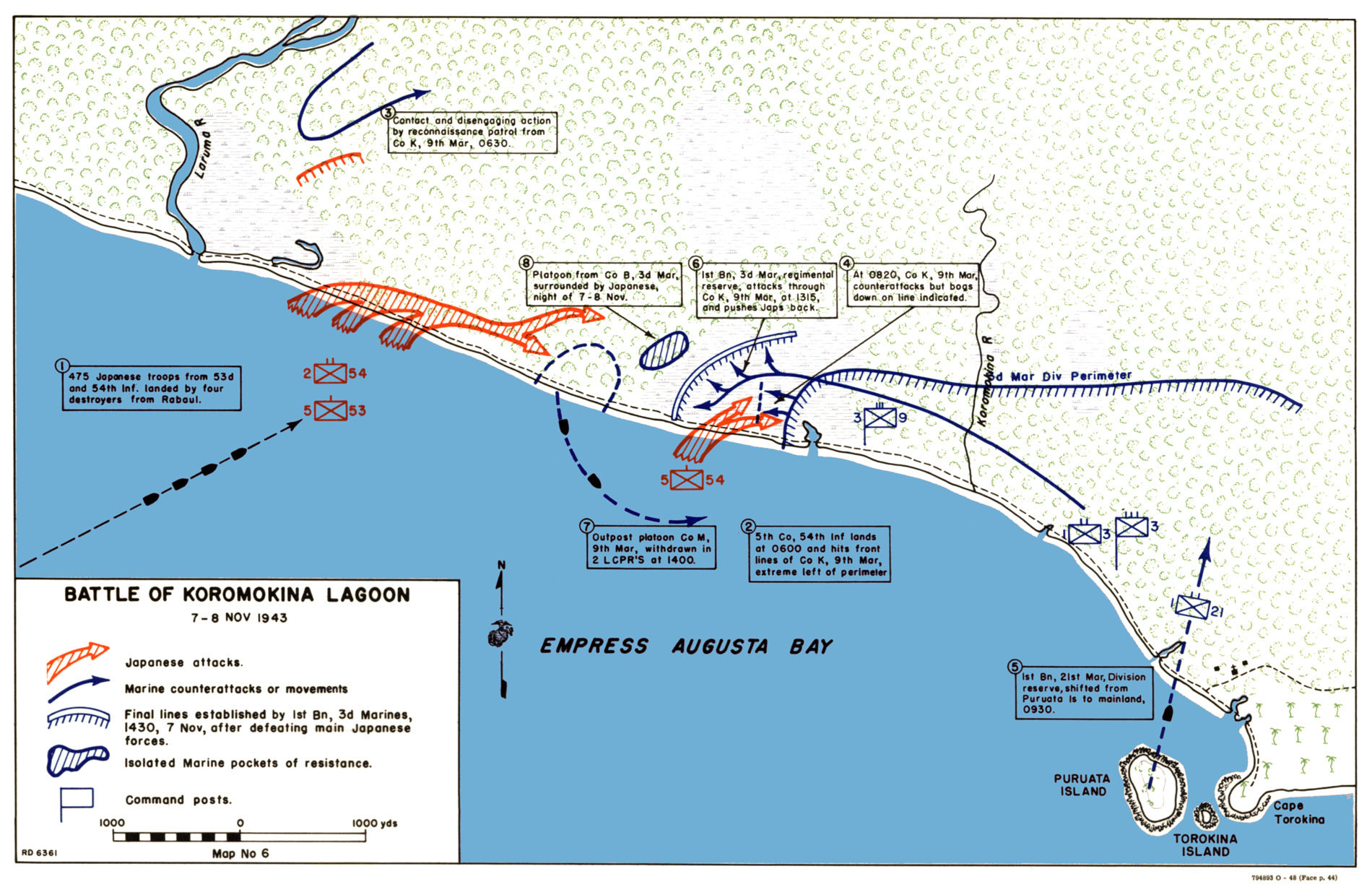
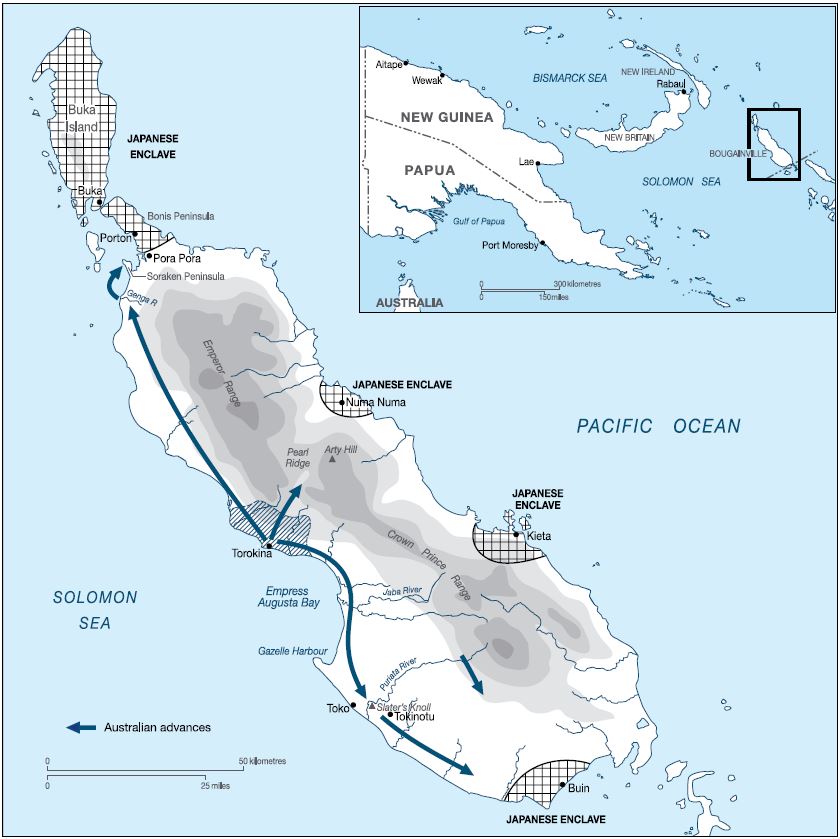
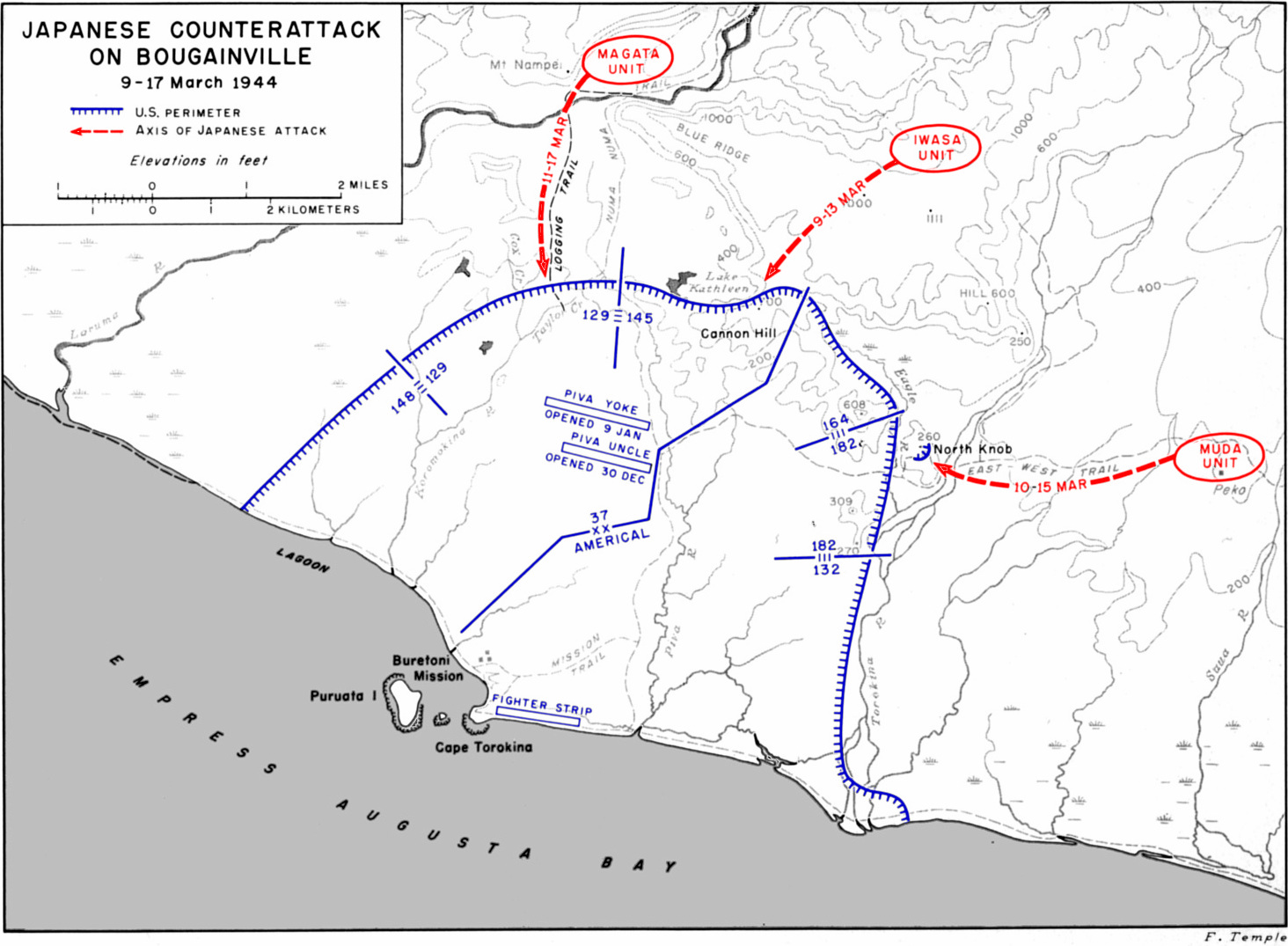
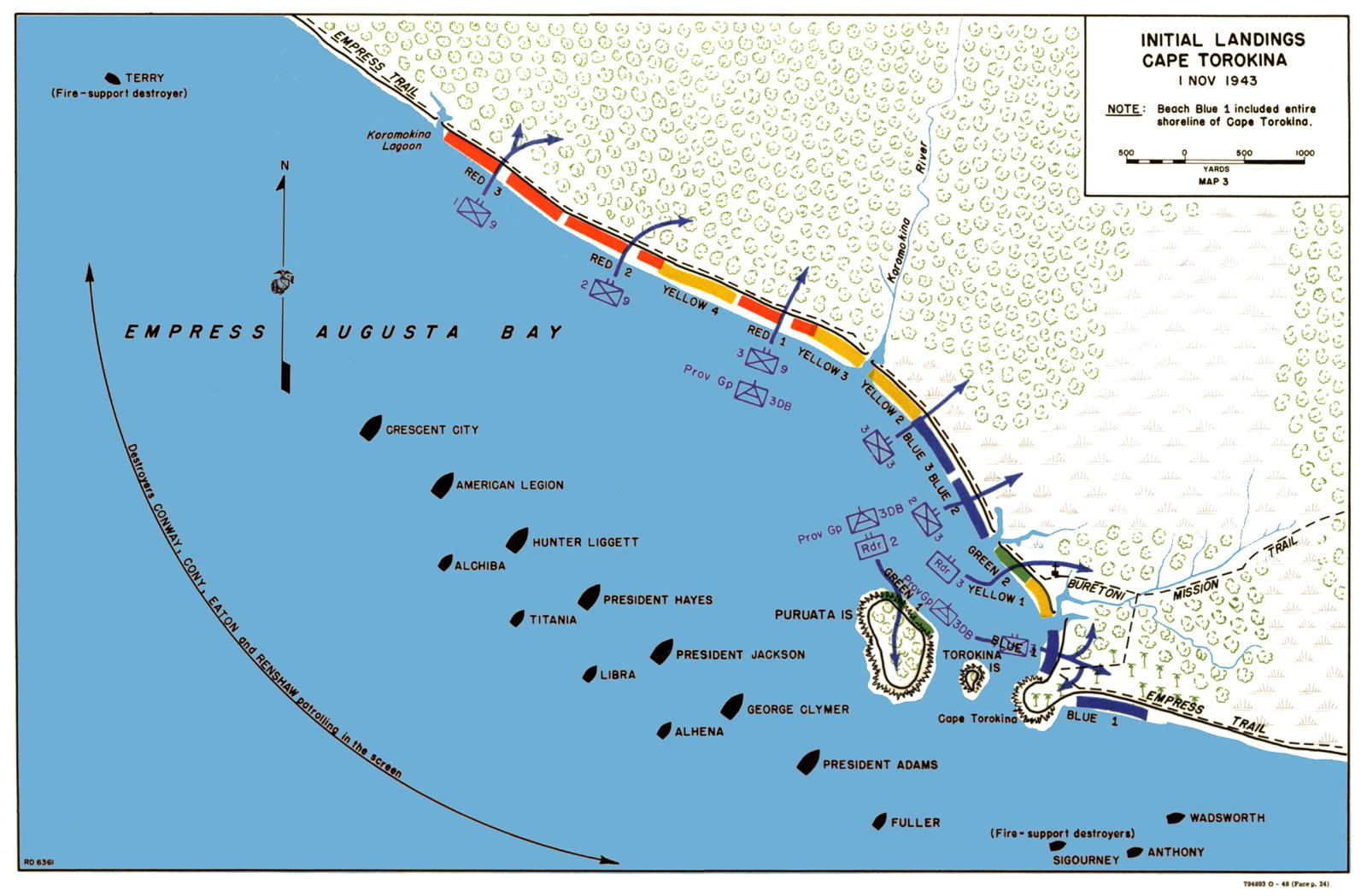
Podcasts
Books