

 Battle of Saipan
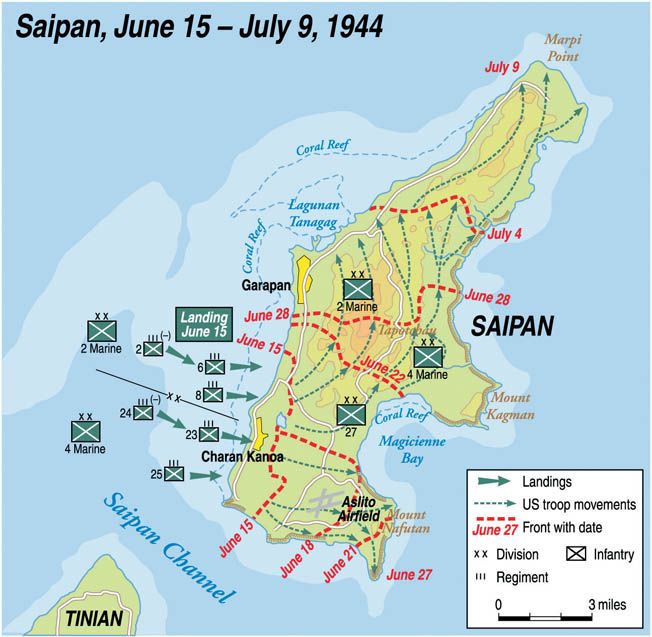
Saipan 15 June – 8 July 1944
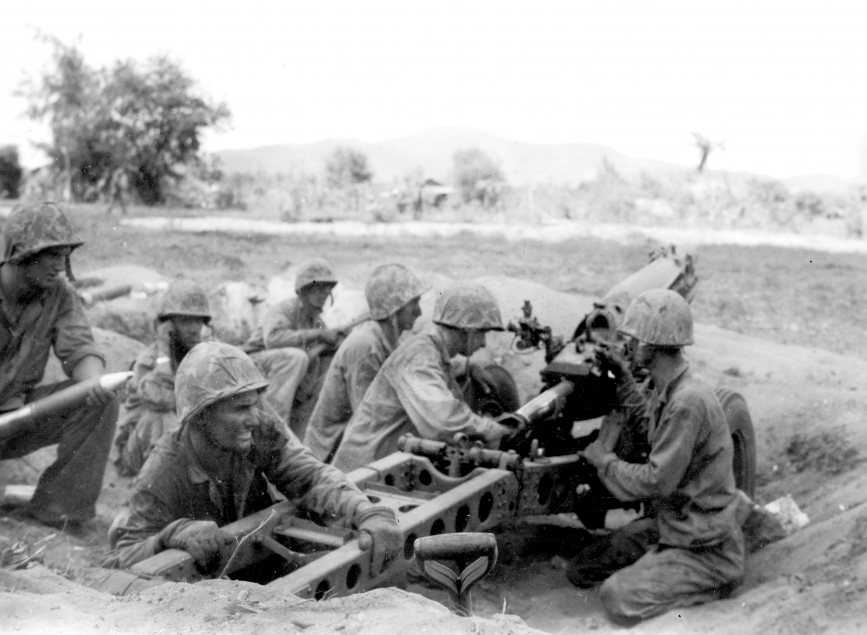
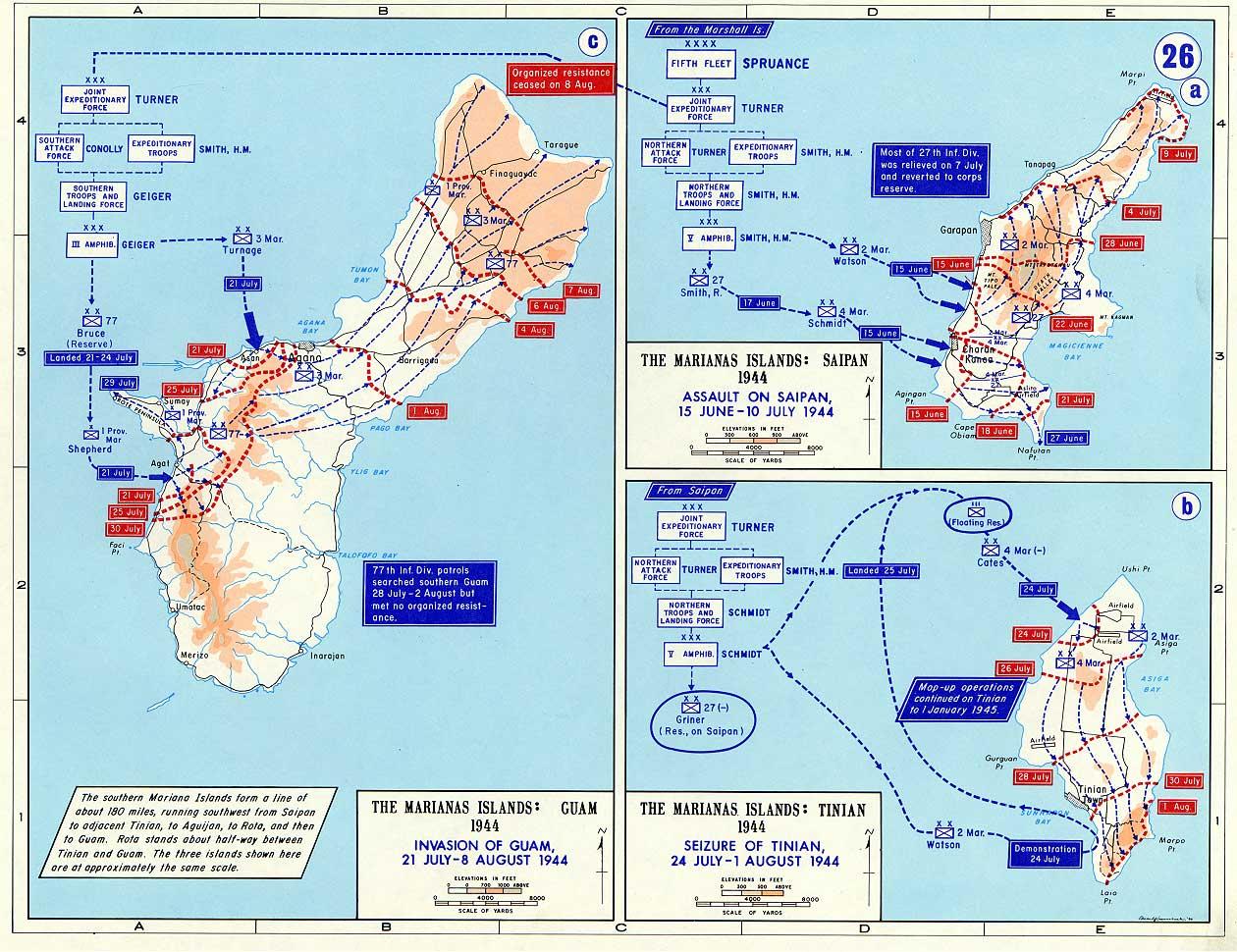
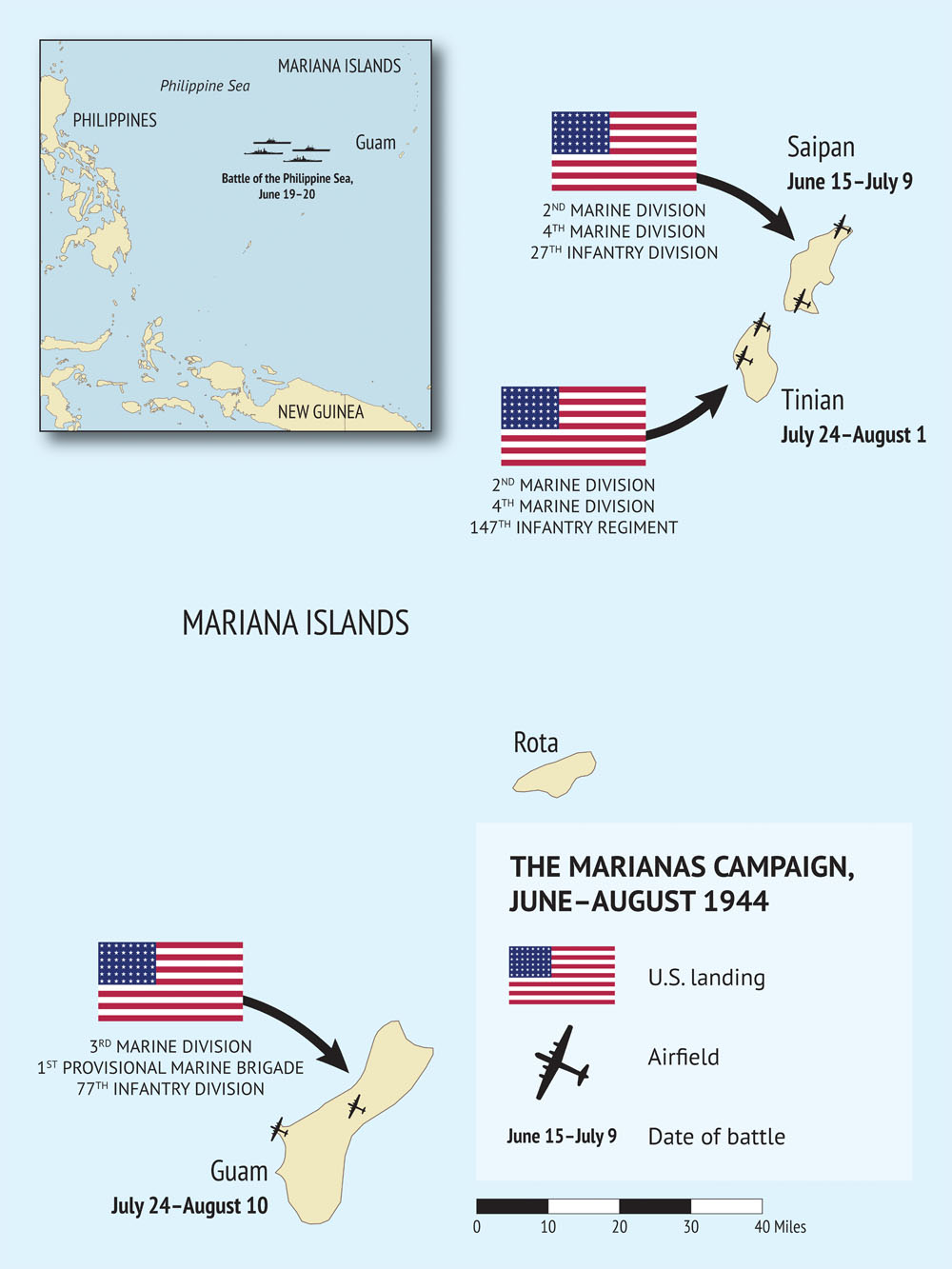
The Marines advance into the Marianas.
Historical Significance
In March 1944, the Joint Chiefs of Staff concluded the Mariana Islands would be the next logical step in bringing about the downfall of Japan. Saipan was the first target for seizing the Marianas. D-Day was 15 June 1944. Lieutenant General Holland M. Schmidt was over-all in command of the landing force consisting of: the 2d Marine Division under Major General Thomas E. Watson; the 4th Marine Division under Major General Harry Schmidt; and, in reserve, the 27th Infantry Division (Army) under Major Gen Ralph C. Smith and later under Major General Sanderford Jarman (U.S. Army). The Marines declared the island secure on 8 July, although mopping-up operations continued for months as Japanese soldiers took refuge in the caves that abounded on the island.
Tactical Importance
Capturing the Marianas would also provide air and sea bases from which the U.S. could effectively strike at the Philippines, Formosa, China, and the Japanese home islands. The island became the first B-29 base in the Pacific.
Strategic Impact
Saipan, along with Guam, Tinian, and Rota were vital links in Japan’s line of defenses and key to the Central Pacific because they dominated Japan’s lines of communication for its “Inner South Seas Empire.” Although the price was high, seizing Saipan was a significant step forward in the advance on the Japanese home islands and the beginning of the end for Japan.
Related Articles
The Marine Corps Gazette and Leatherneck Magazine archives have more than 100 years of articles. Click the buttons below to read articles about the Battle of Saipan and its implications on the Corps, yesterday and today.
Maps
Podcasts
Books