

Ready Player One and Preparation for Eureka Moments
Posted on: August 13,2019
General Berger says in his planning guidance, “The complexity of the modern battlefield and increasing rate of change requires a highly educated force.” So why read a book ostensibly about video games when books on war are too numerous to read?
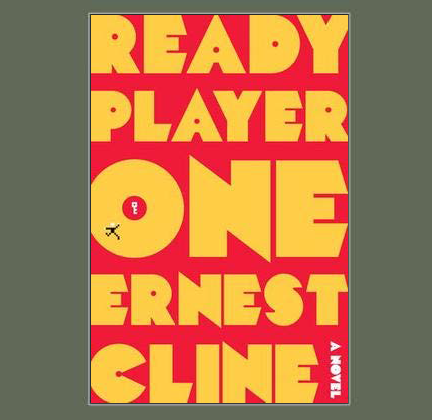
Ready Player One was not among the more than forty Reading List books for which the Marine Corps University Research Library has a “Why This Book?” guide. Superficially, the connection to military education is hard to find. The story’s protagonist, Wade, spends all day playing a life-like video game in pursuit of a hidden egg and its multi-billion-dollar payout. Clues along the way require a vast knowledge of arcane 1980s movies and video games.
Though Wade’s challenge is different than ours, he embodies a fundamental Marine Corps ethic—a commitment to mastery that allows him to improvise solutions to unique problems. Ender’s Game is an immensely enjoyable testament to the delayed gratification of diligent preparation. His “eureka” moments—when he solves a riddle or devises a plan to infiltrate his enemy—are not the product of innate genius. Instead, as Ian Leslie says in Curious, “They arise from the gathering and the working over—the slow, deliberate, patient accumulation of knowledge.” He cultivated that knowledge base over years of exhaustive preparation. Ultimately, it gave him an extraordinary ability to weave disparate threads into cohesive solutions.
This level of preparation is a central requirement of our maneuver warfare philosophy. A centralized command and control system requires one big brain. The rest can waste their time on their smartphones. In maneuver warfare, everyone needs to be smart. Everyone needs to study. General Berger demands a “Highly educated force,” not a “Highly educated senior officer/SNCO corps.” Ready Player One is an enjoyable parable about how to get there.
—Captain Edwin Powers


Comments