


 BUNKER Hill
“A few more such victories would have shortly put an end to British dominion in America.” Gen William Clinton
Historical Significance
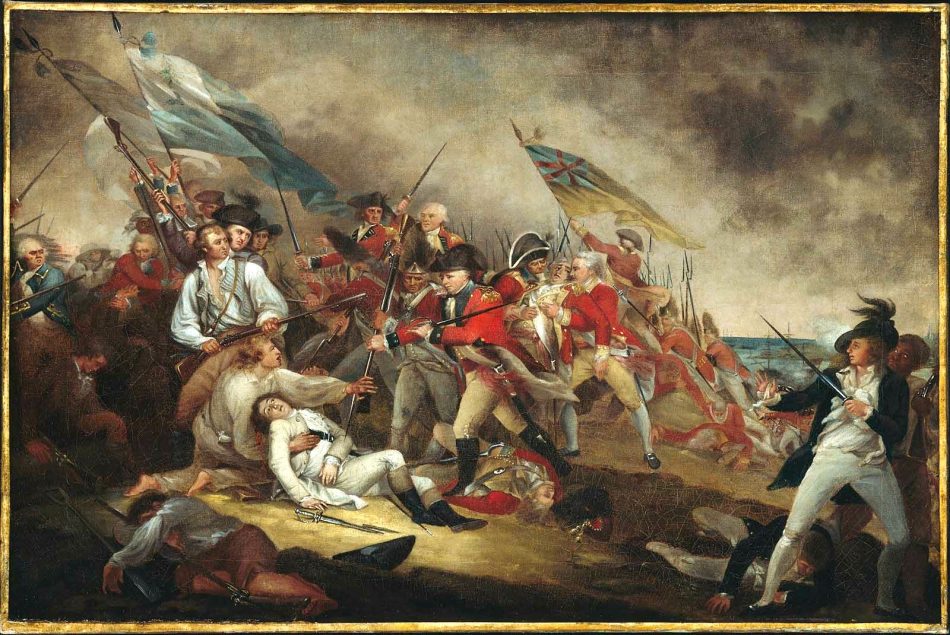
The Battle of Bunker Hill—which, in reality, was fought nearby on Breed’s Hill—was among the first major battles of the American Revolution. While the British were tactically successful, their victory was a pyrrhic one because of the highly disproportional casualty rate when compared to the American losses: over 1,000 British casualties compared to less than 500 American. The battle demonstrated that American militia units were capable of maintaining cohesion and efficiency in fighting against the regular army soldiers of the British Empire.
Tactical Importance
Following the Battles of Lexington and Concord, the American Colonial forces lay siege to the British garrisoned in Boston, MA. While the Americans commanded the heights and land routes around the city, the British Royal Navy ensured the sea lines of communication remained open. With recently arrived reinforcement, the British commander, Gen Thomas Gage, sought to break out of the defenses by landing a force and seizing the heights behind Charleston across Boston Harbor. Anticipating the British movements, on 16 June a force of 1,200 militiamen under the command of Col William Prescott occupied Breed’s Hill and Bunker Hill to the north of Charlestown, entrenching themselves in preparation for an upcoming assault. In the morning and early afternoon of 17 June, British forces—having realized the extent of the American defenses—initiate a largely unsuccessful naval bombardment. By around 3:00 in the afternoon, a British force of over 2,000 men commanded by Gen William Howe landed near Charlestown. After receiving sporadic fire from the town, Gen Howe orders an incendiary barrage to ignite the buildings, setting Charlestown aflame. The British then marched toward the American position arrayed in a line formation; however, their movements were hampered by tall grass and fences arrayed before the defenses on Breed’s Hill. The Americans held their fire until the British were around 30 yards from their position before unleashing a volley that drove the regulars into disarray. The British then reformed and attacked again, only to be repulsed again with heavy casualties. After successfully stopping the British offense twice, the Americans were low on ammunition, and a third assault succeeded in overwhelming the militiamen—forcing them to engage in a fighting retreat toward Cambridge.
Strategic Impact
While the British were successful in their objective of securing the Charlestown Peninsula, the casualties incurred during the fighting rendered their victory pyrrhic. Furthermore, although they maintained control over the Charlestown Peninsula, the British were still trapped within Boston. Following the battle, the American Continental Congress sent the Olive Branch Petition to the British government with the hope of preserving peace. This proposal was summarily rejected, with King George III issuing a Proclamation of Rebellion. War was no longer avoidable.
Related Articles
The Marine Corps Gazette and Leatherneck Magazine archives have more than 100 years of articles. Click the buttons below to read articles about the Battle of Bunker Hill and its implications on the Corps, yesterday and today.
Royal Marines: Soldiers from the sea
Maps
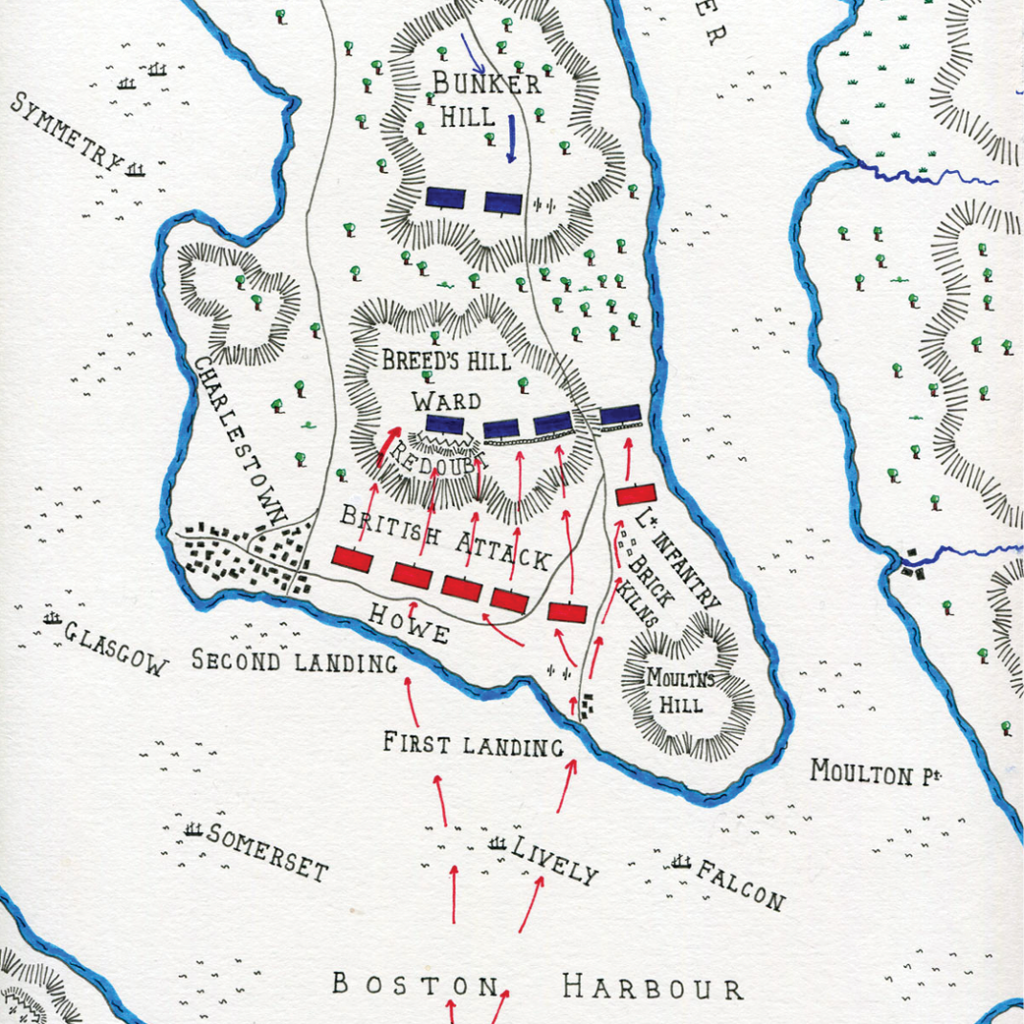
Map of the Battle of Bunker Hill on 17th June 1775 in the American Revolutionary War
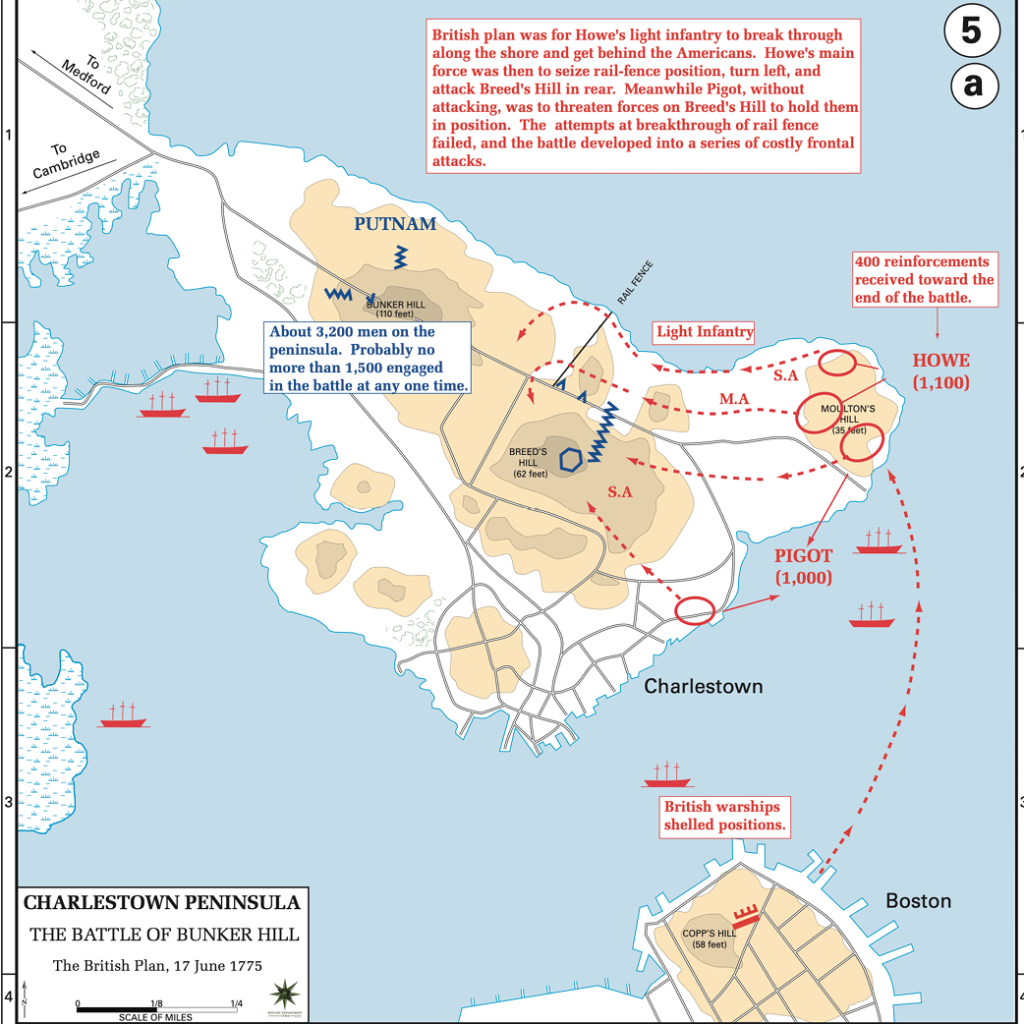
Charleston Peninsula
The Battle of Bunker Hill
The British Plan, 17 June 1775
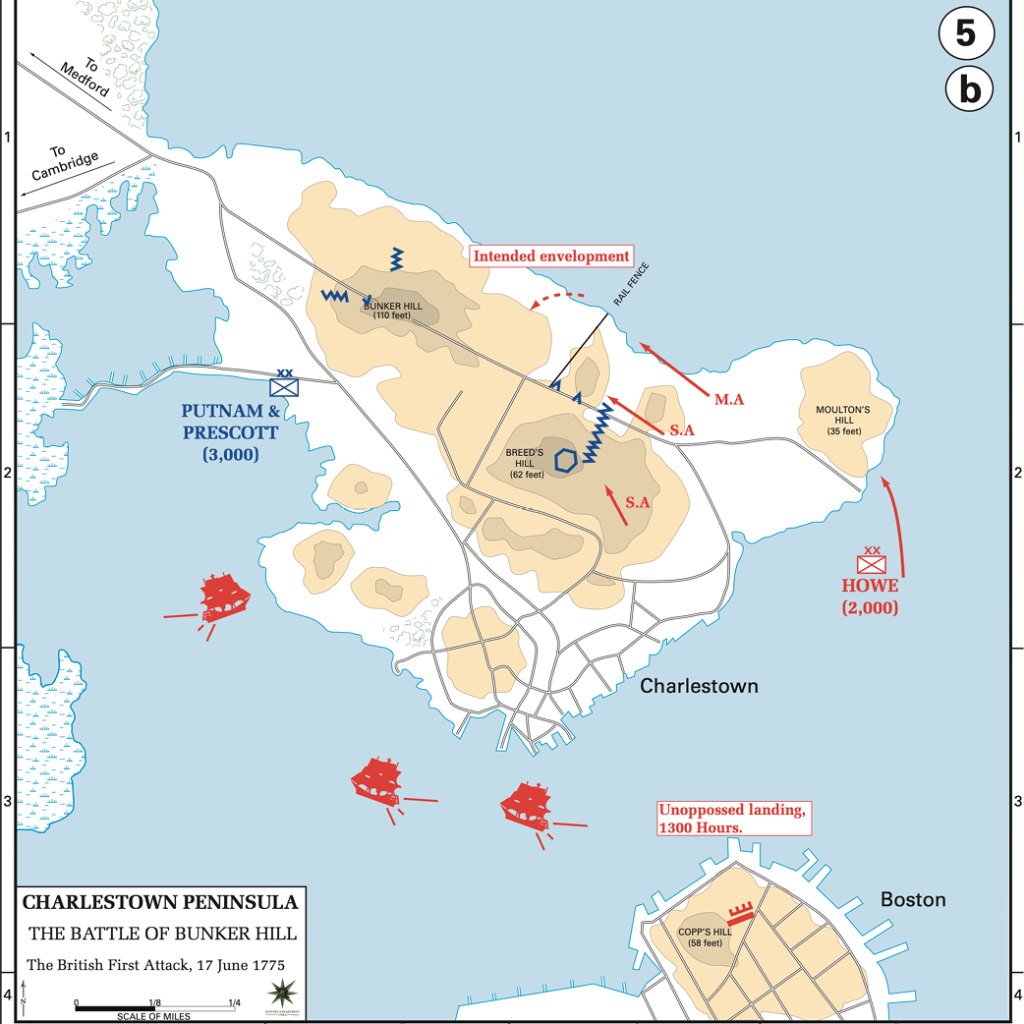
Charleston Peninsula
The Battle of Bunker Hill
The British First Attack, 17 June 1775
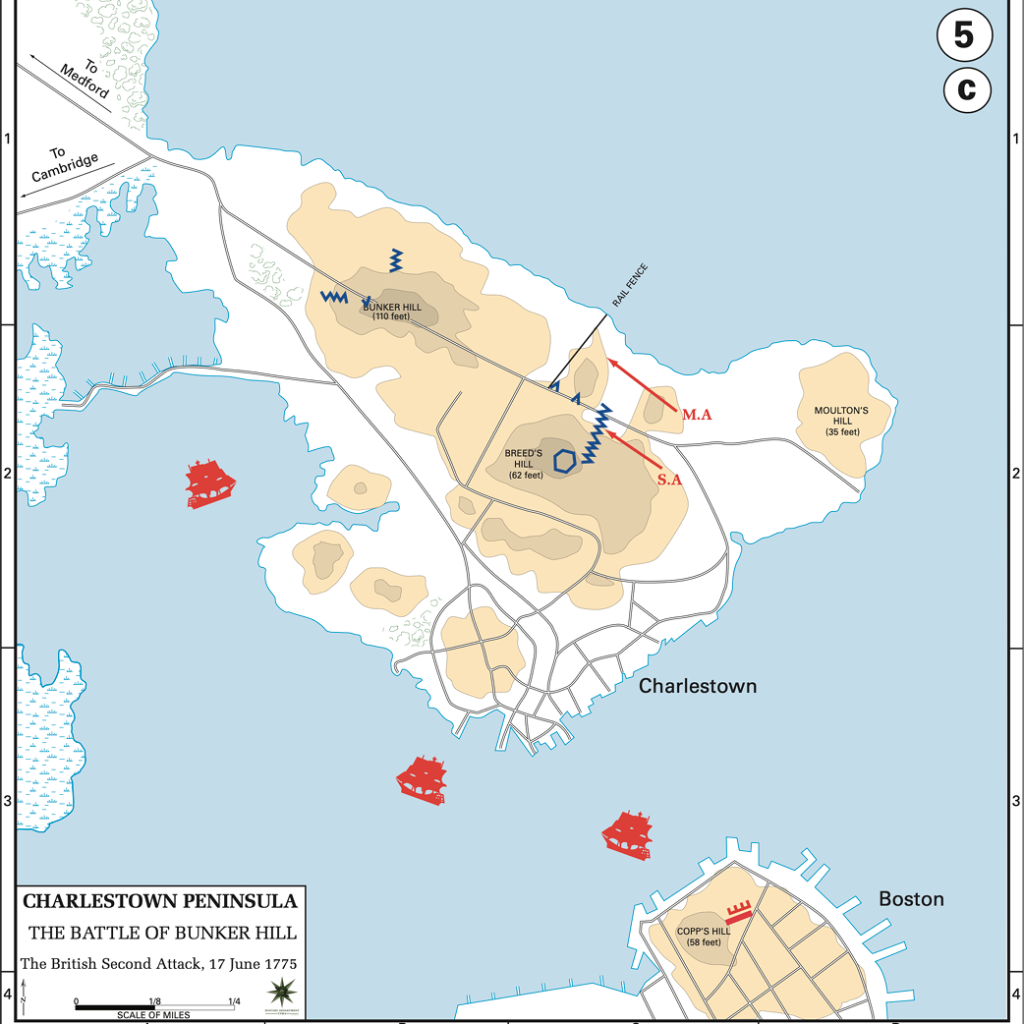
Charleston Peninsula
The Battle of Bunker Hill
The British Second Attack, 17 June 1775
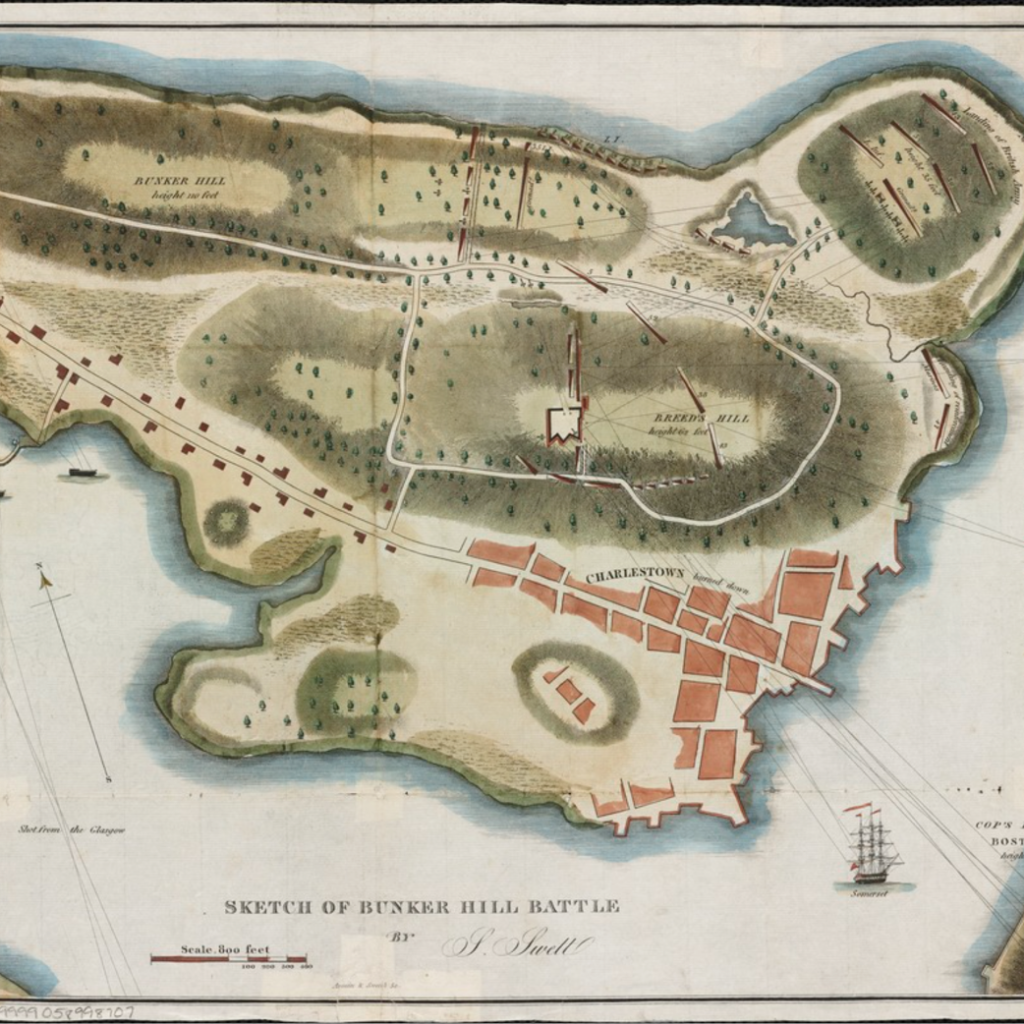
Sketch of Bunker Hill Battle
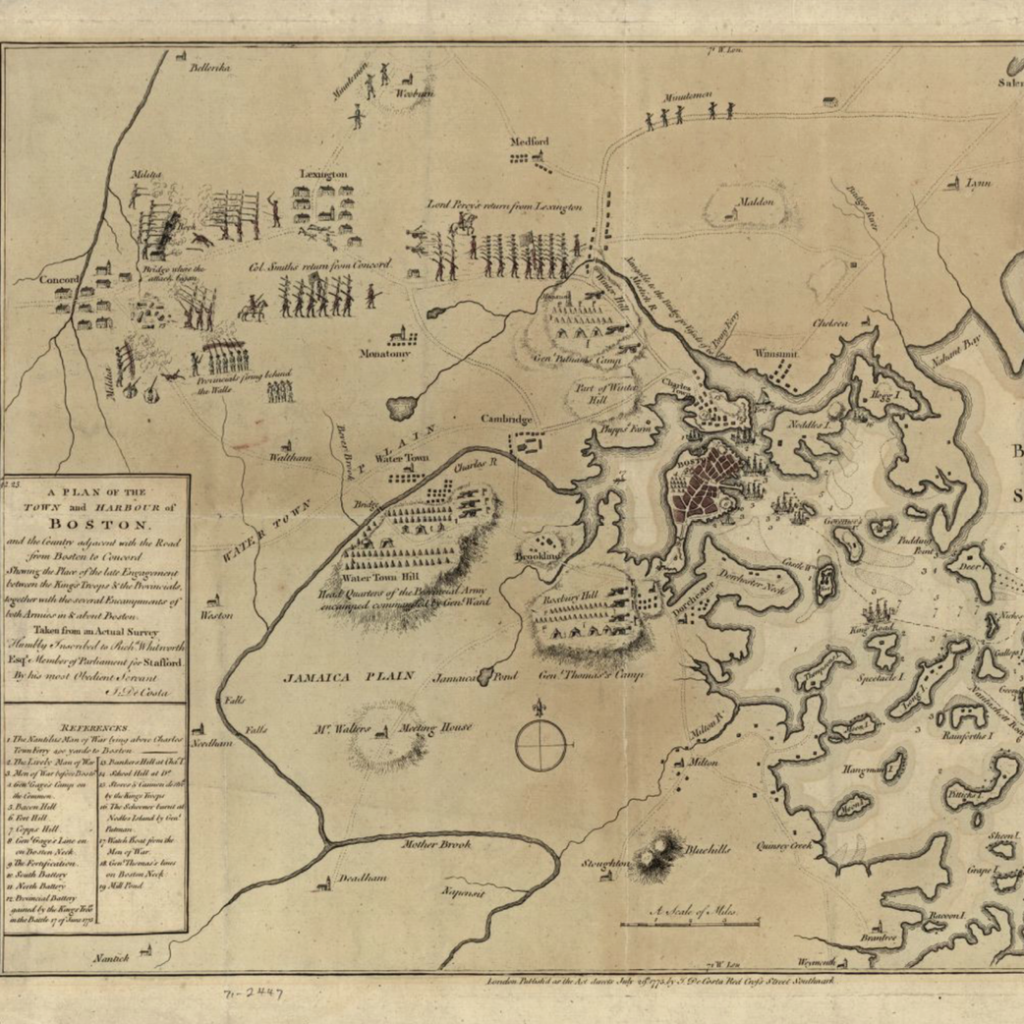
A plan of the town and harbor of Boston and the country adjacent
Study Guide

Podcasts
Books
Videos
Other Resources
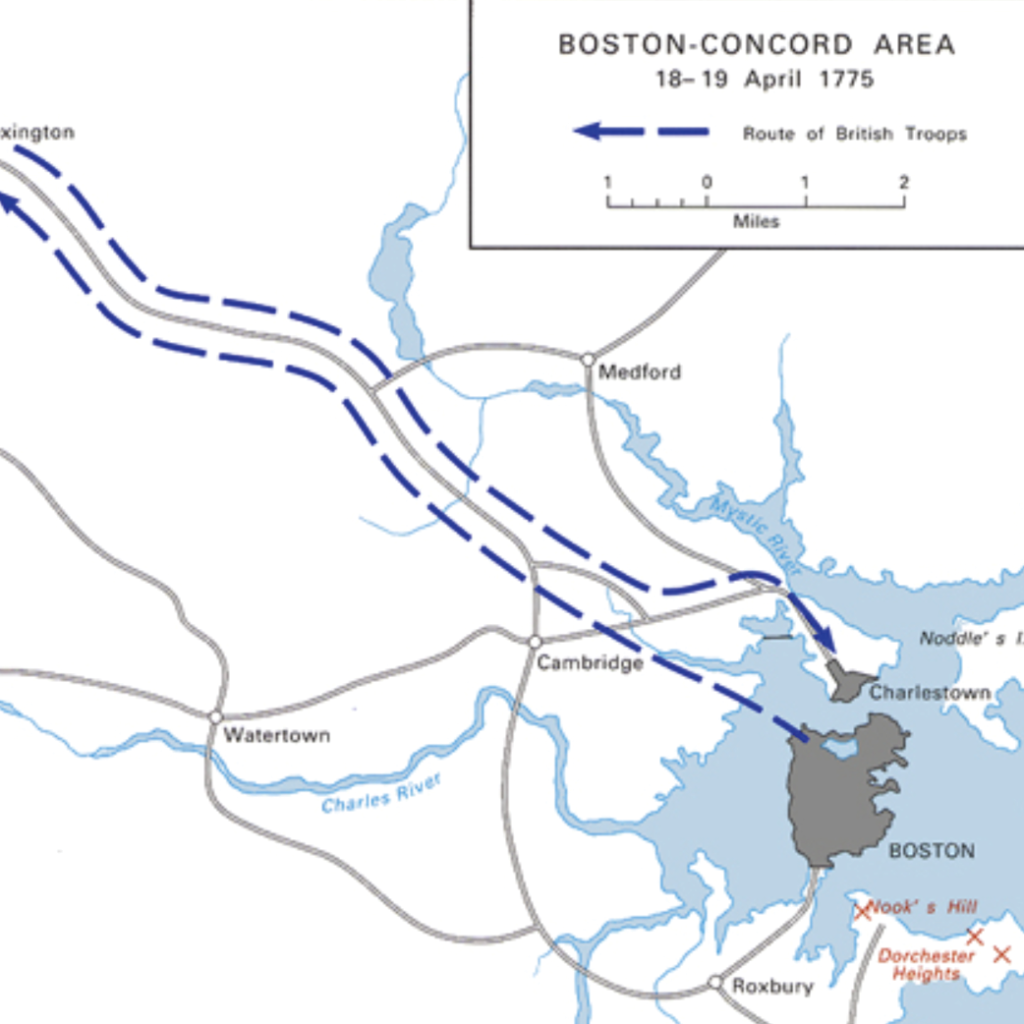
The American Revolution: First Phase
American Military History Volume 1
The United States Army and the Forging of a Nation, 1775-1917
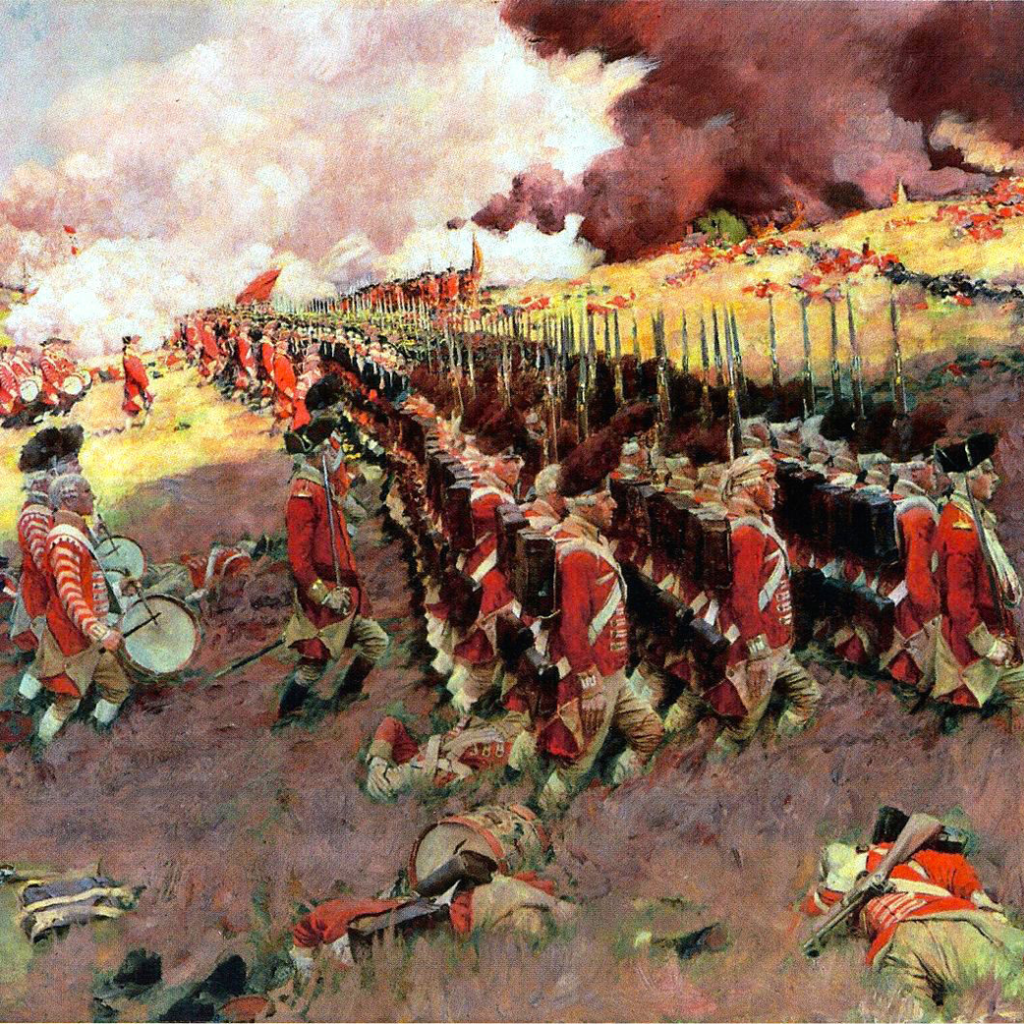
Bunker Hill: A Story of Prudent Risk and Reckless Irresponsibility
Small Wars Journal
Col Thomas Williams, USAR (Ret)
An Account of the Battle of Bunker’s Hill
H. Dearborn
Major-General Of the United States’ Army
A Full and Correct Account of the Battle of Bunker Hill
Printed June 17, 1825