


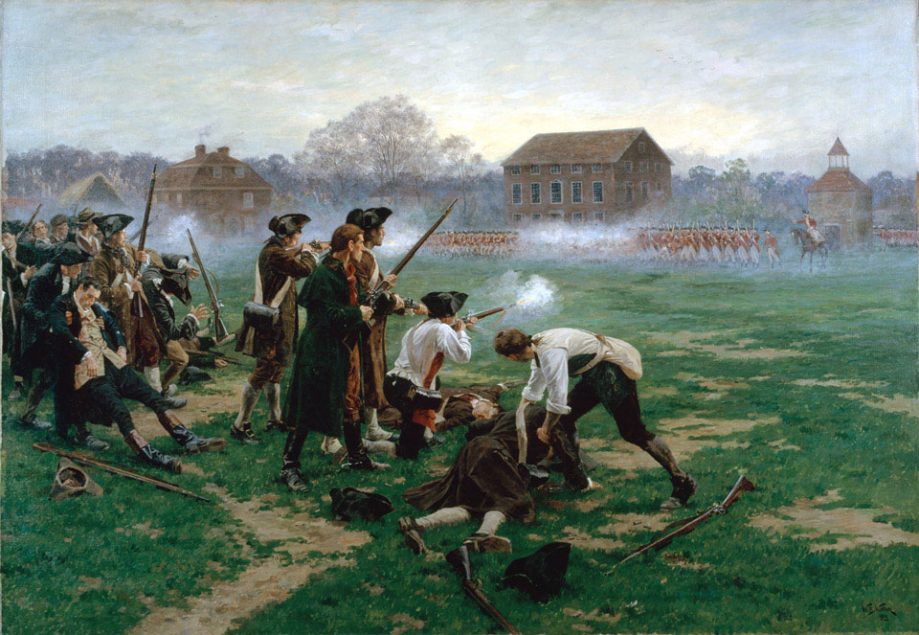
 Battle Study Package: Lexington & Concord
Patriot militiamen confront British regulars, initiating the American Revolution
Historical Significance
The Battles of Lexington and Concord were the spark that ignited the American Revolution. These battles demonstrated that the seething discontent between Great Britain and her Thirteen North American Colonies had reached a breaking point, and the situation quickly spiraled into a state of open war—thus beginning the American Revolution.
Tactical Importance
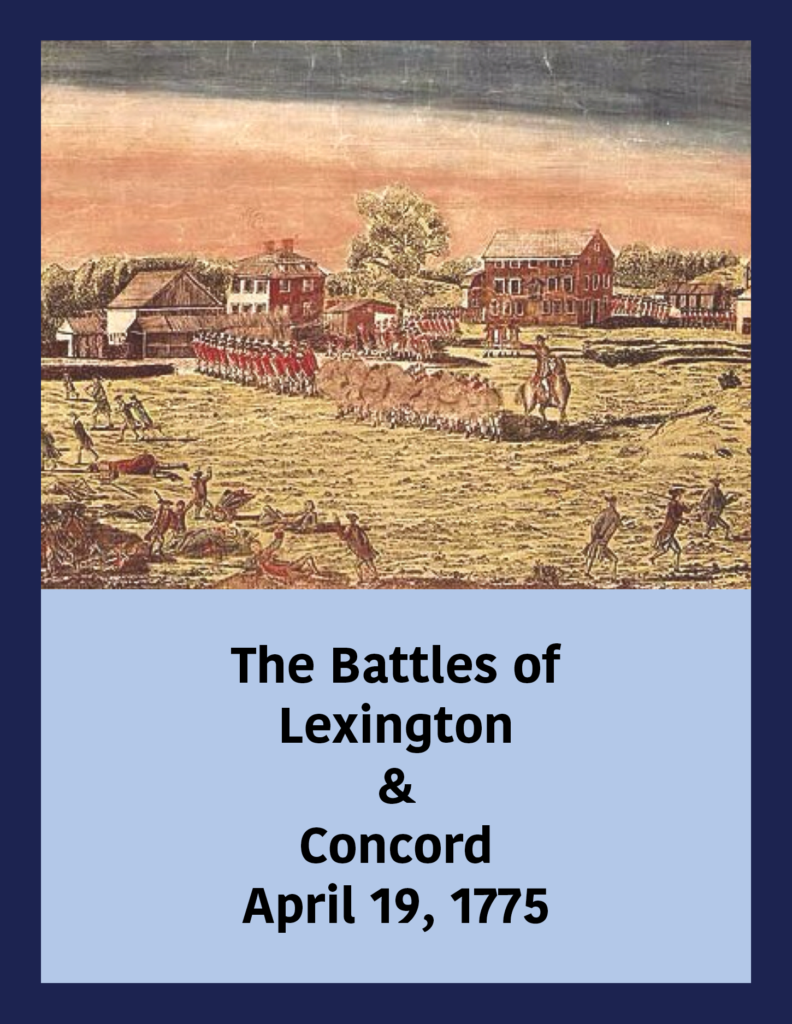
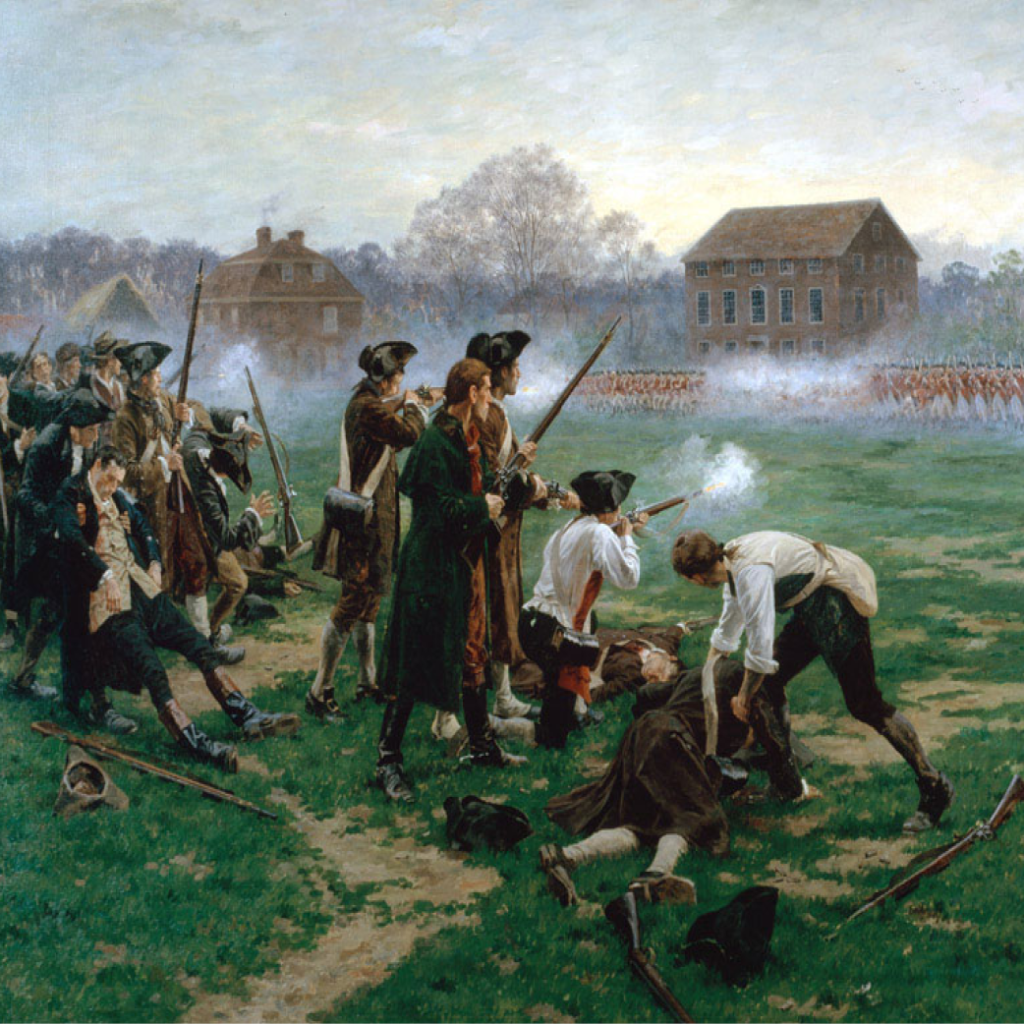
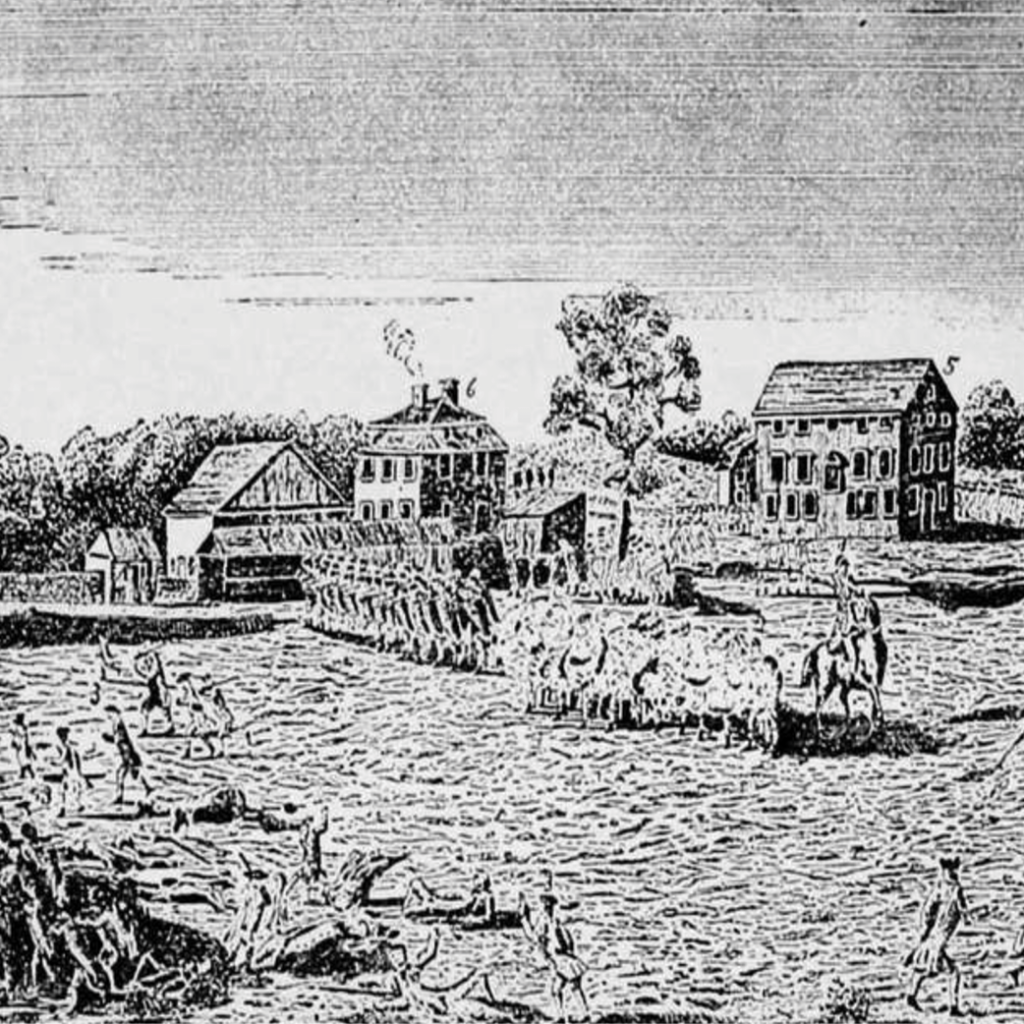
The Battles of Lexington and Concord began almost by accident. Following the revelation that the military governor of Massachusetts, Gen Thomas Gage, intended for British Army regulars to confiscate arms and ammunition from Massachusetts militia units based out of Concord, the local militia began to sound the alarm and muster. In the early hours of 19 April 1775, British forces under LtCol Francis Smith, numbering around 700 men, departed in the direction of Concord. Upon reaching Lexington, the regulars were met by around 80 members of the local militia. As the militia began to disperse, a shot from an unknown source was fired—prompting both sides to fire upon each other. A bayonet charge dispersed the militia, and the regulars then proceeded toward Concord. Upon reaching Concord, the regulars dispersed through the town to scour for militia armaments and secured positions around the North Bridge. While this was occurring, the colonial militia began forming in the heights overlooking the North Bridge and began moving toward Concord. After a brief exchange of fire, both sides withdrew, and the regulars continued to search and destroy militia supplies before beginning their return to Boston around midday. As the regulars embarked on the road to Boston, hundreds of local militiamen—using guerilla tactics—proceeded repeatedly to assault, ambush, and delay the main column at any possible opportunity, with their numbers increasing to several thousand by the end of the day. A relief force from Boston reinforced the regulars as they passed through Lexington, but failure to bring an ample supply of ammunition forced the regulars to continue their withdrawal to Boston. The regulars were pursued to Charlestown, where they were able to command a strong defensive position. The Battles of Lexington and Concord proved that a disorganized but determined militia could outmaneuver and bring superior arms to bear against an organized regular force. Ultimately, colonial casualties numbered less than 100, whereas the regulars suffered around 300 total losses.
Strategic Impact
The Battles of Lexington and Concord demonstrated that peace between Britain and the Thirteen Colonies was no longer tenable, changing the strategic relationship from civil discontent to open warfare. For the situation developing around Boston, the American militia units maintained the strategic high ground around the city, trapping the British forces in the city to wait for reinforcements to arrive from the sea.
Related Articles
The Marine Corps Gazette and Leatherneck Magazine archives have more than 100 years of articles. Click the buttons below to read articles about the Battles of Lexington and Concord and its implications on the Corps, yesterday and today.

Major Pitcairn and The Marines in the Expedition to Lexington and Concord, 18th and 19th April, 1775
Colonel C. Field
Leatherneck
August 1927
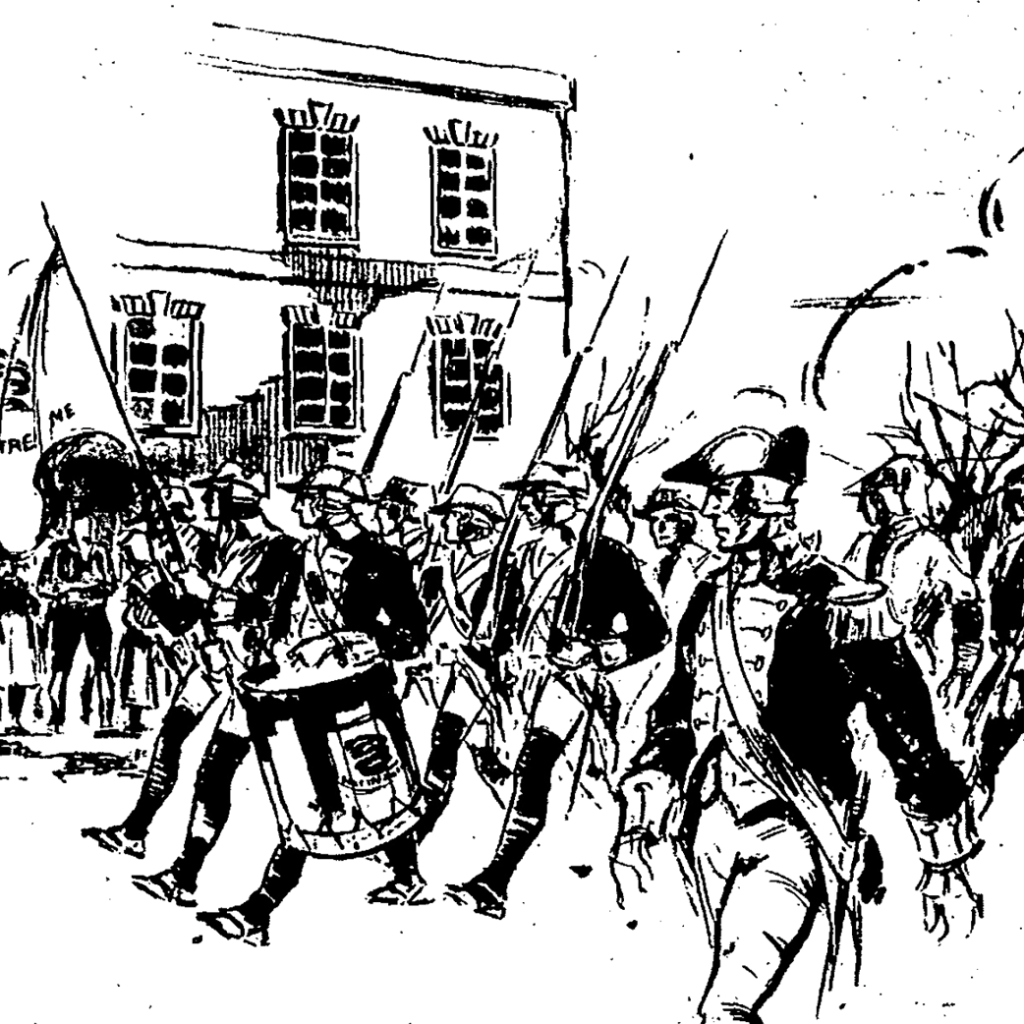
The First Expedition of Marines
Frank H. Rentfrow
Leatherneck
March 1933
Maps
Boston and Vicinity
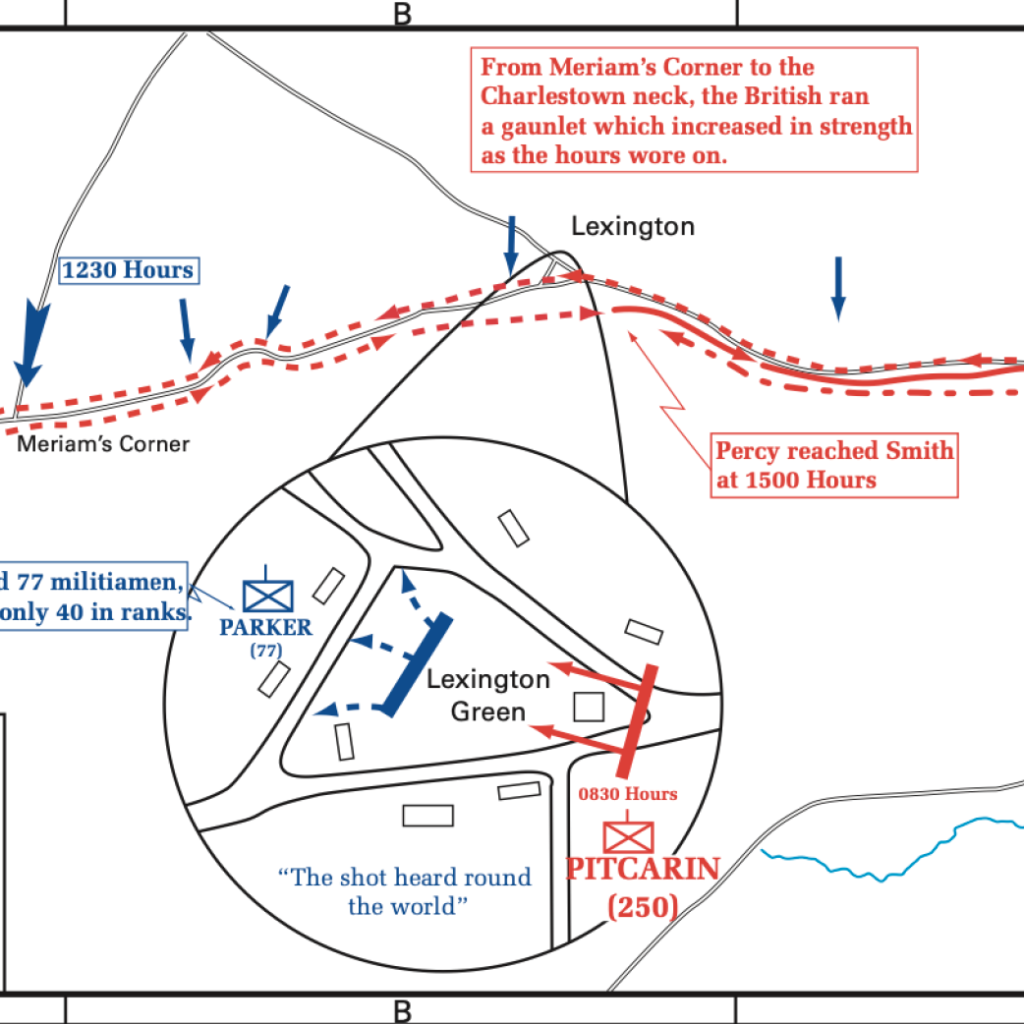
Lexington and Concord
Initial Dispositions and Movements, 19 April, 1775
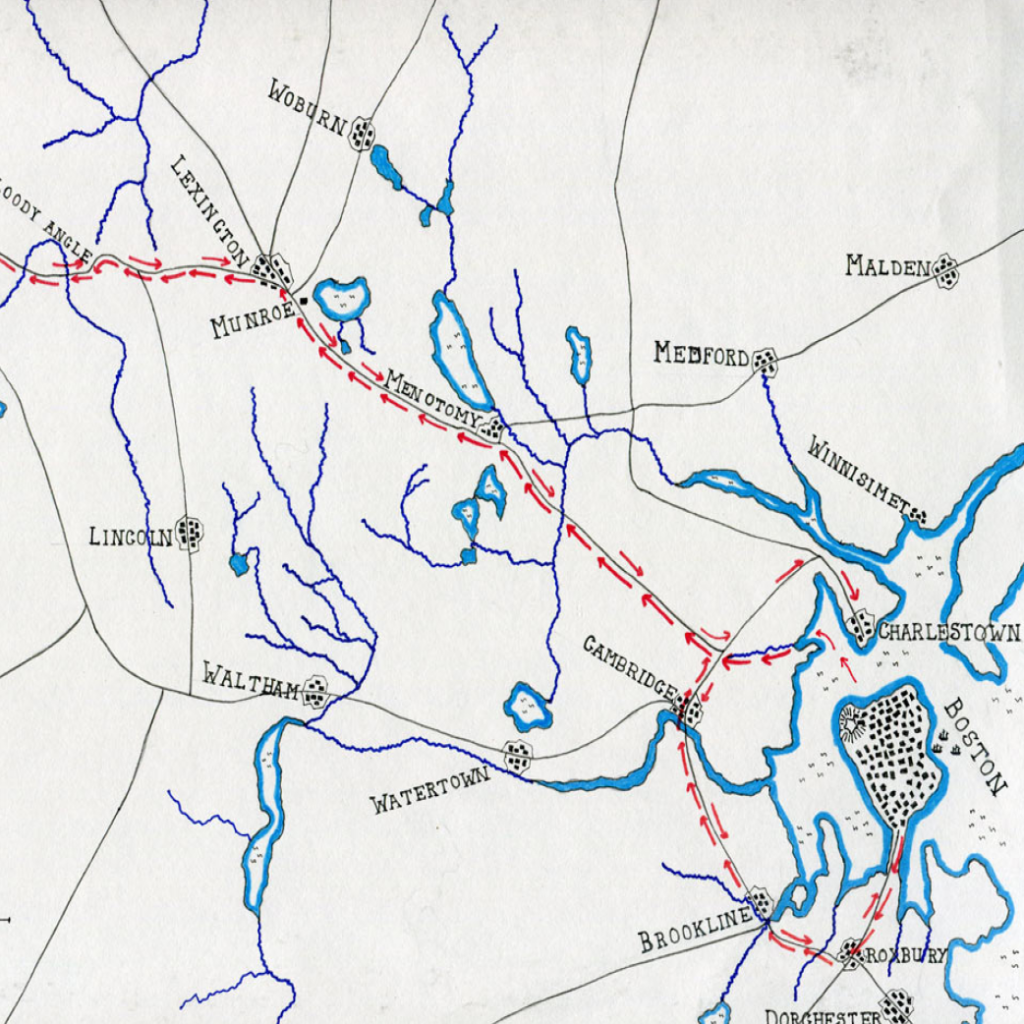
Map of the British Route to Concord 19th April 1775 American Revolutionary War
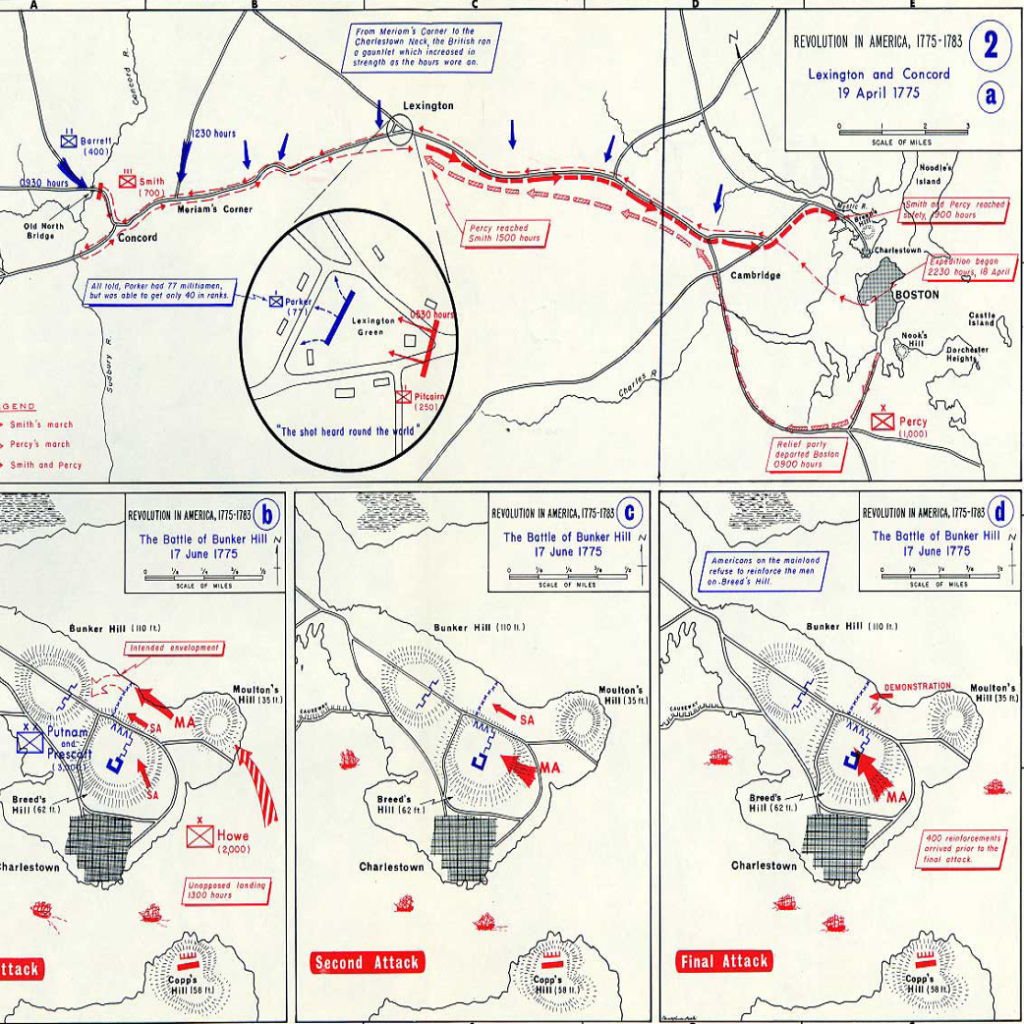
Revolution in America, 1775-1783
Lexington and Concord
19 April 1775
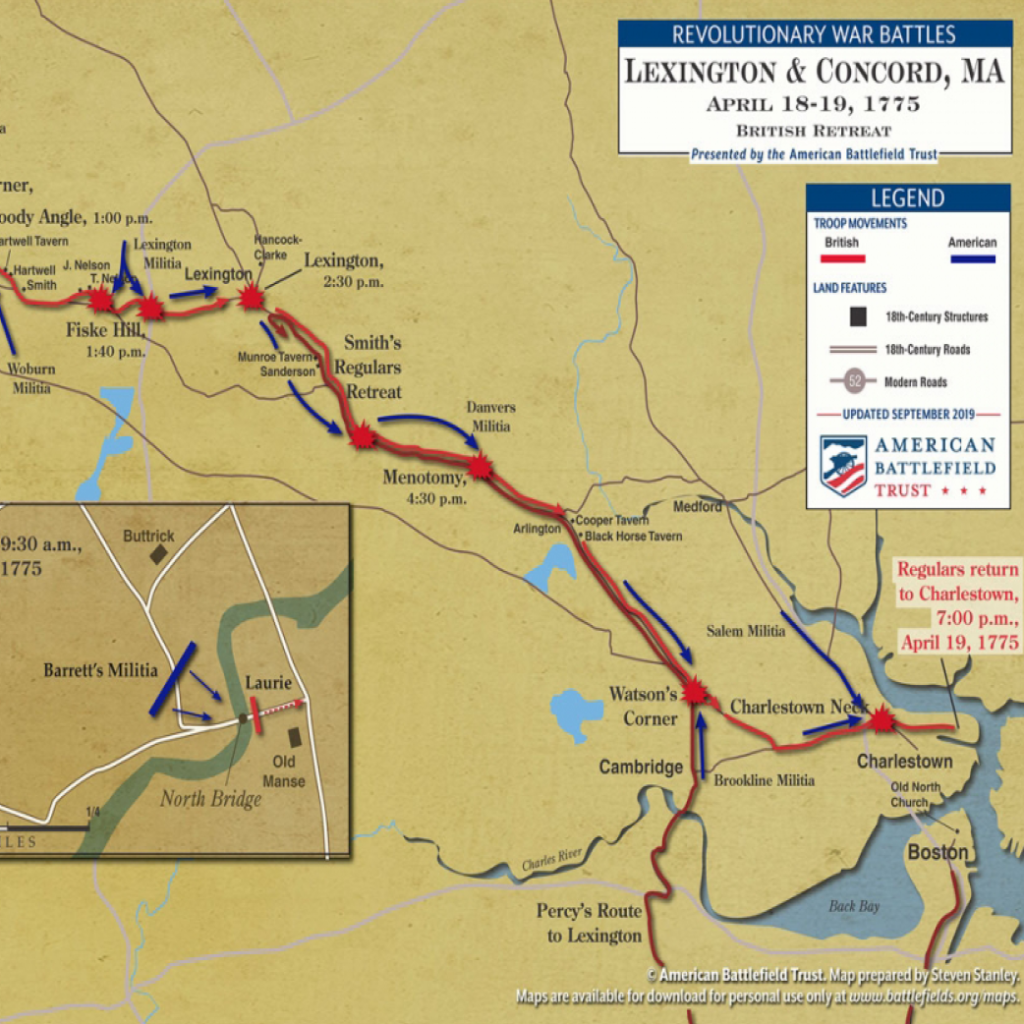
Lexington & Concord, MA April 18-19, 1775
British Retreat
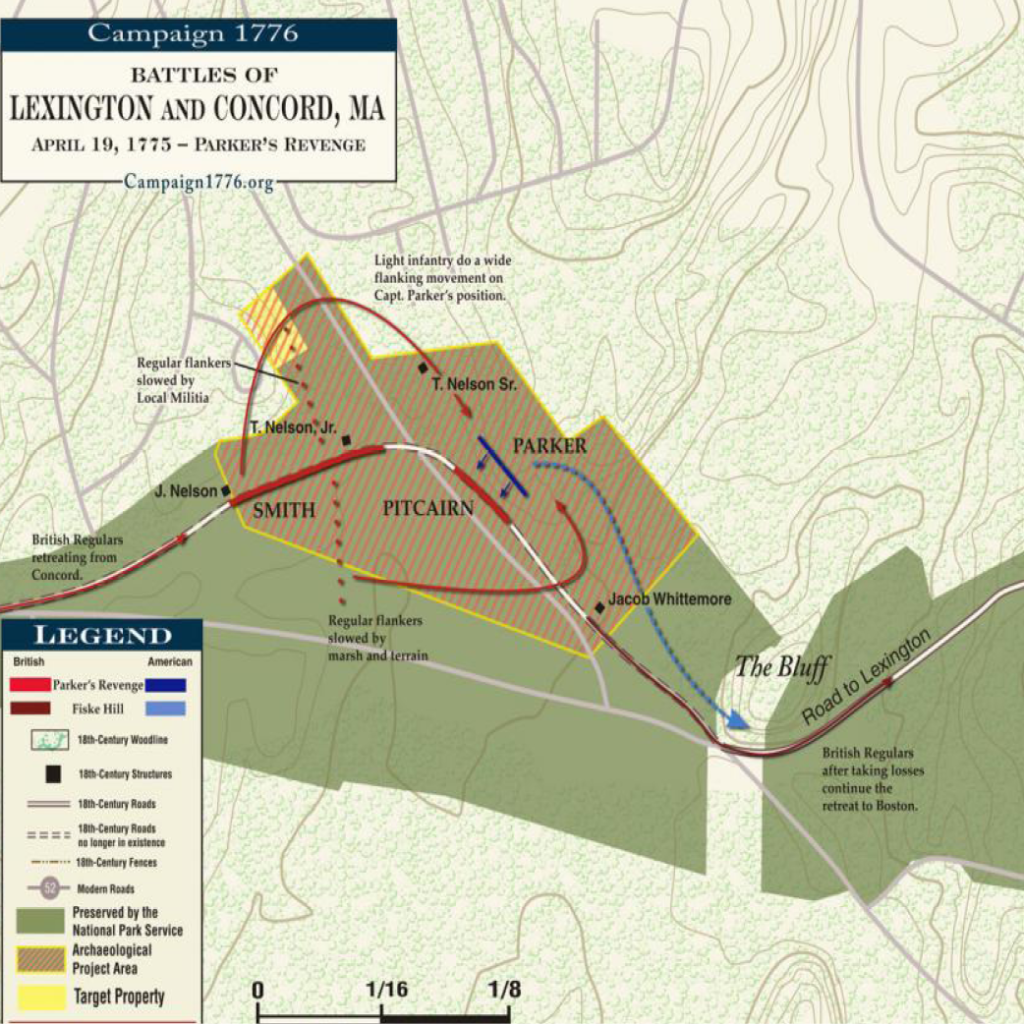
Battles of Lexington and Concord, MA April 19, 1775 – Parker’s Revenge
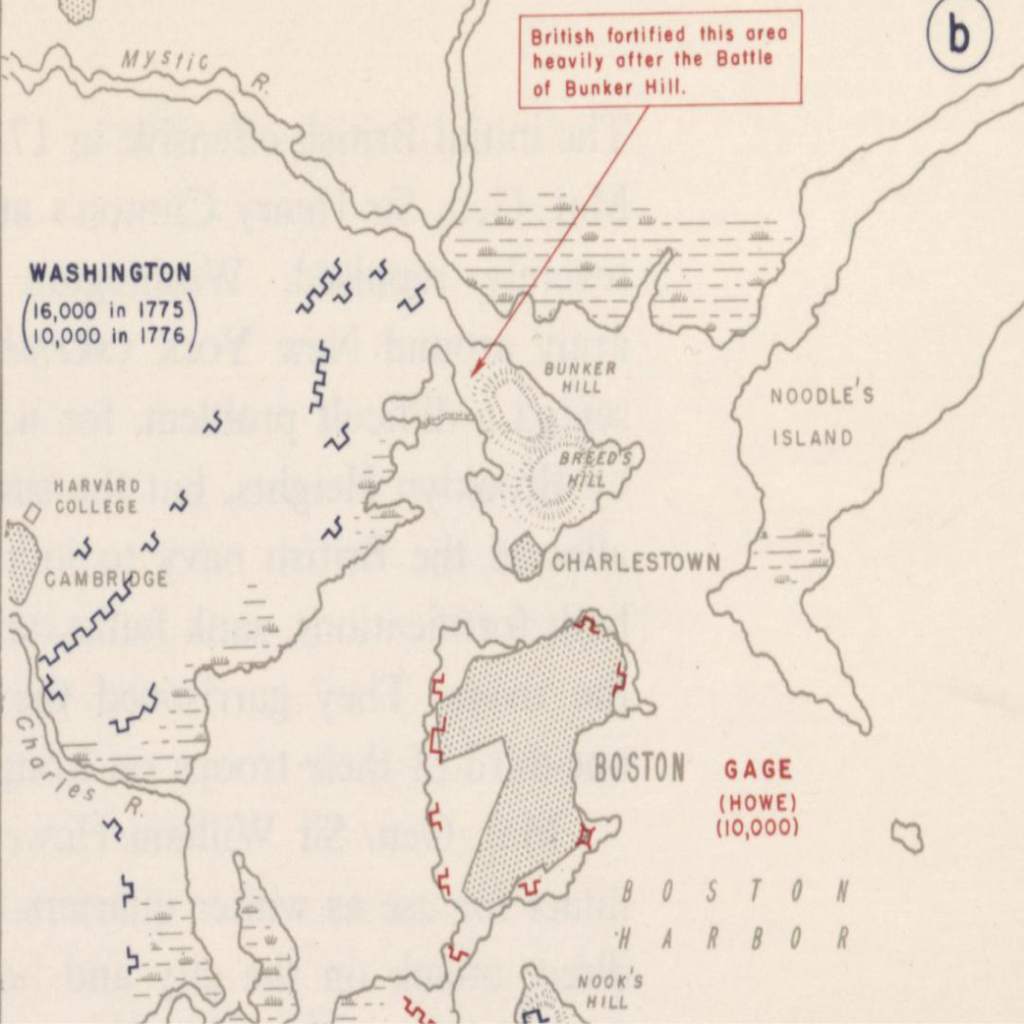
Siege of Boston
1775-1776
Study Guide
Podcasts
Books
Videos
Other Resources
Lessons from the Battle Road
A Story of Mission Command, Miscalculation, and Adaptive Thinking
Col Thomas Williams (USAR Ret.)
The Battle of April 19, 1775
in Lexington, Concord, Lincoln, Arlington, Cambridge, Somerville and Charlestown, MA
Frank Warren Coburn
The Military Journals of Two Private Soldiers 1758-1775
Published By Abraham Tomlinson
1855

Lexington and Concord
Massachusetts Historical Society
CSPAN
George Daughan