


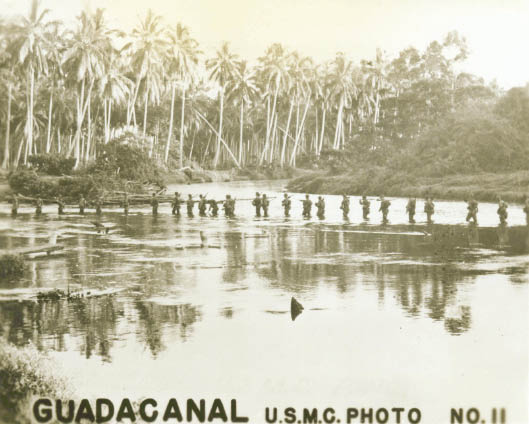
 Guadalcanal
Historical Significance
The Guadalcanal Campaign was the first major amphibious landing conducted by the United States during the Second World War. Fought primarily by the men of the 1st Marine Division, Guadalcanal cemented the Marine Corps’ fighting prowess against the forces of the Empire of Japan. Despite being outnumbered and cut off from their sealines of communication, the Marines at Guadalcanal halted Japanese expansion into the Pacific and boosted public support for the war at home.
Tactical Importance
The landing of the 1st Marine Division on Guadalcanal began on 7 August 1942. Taking the Japanese completely by surprise, the landing force moved ashore almost completely undisturbed and managed to quickly secure the island’s airfield, which would later be named Henderson Field. However, during the night of 8-9 August, a Japanese naval force surprised and defeated the U.S. Navy, forcing the American naval force and transports to retreat before they could unload all of the 1st Marine Division’s supplies, heavy equipment, and men. However, using the heavy equipment the Japanese left behind, the Marines finished the airfield and established a defensive perimeter. The first month of fighting at Guadalcanal consisted of patrolling the jungle with intermittent large-scale assaults made by the Japanese, such as the Battle of Tenaru, where the Marines defeated a near-suicidal onslaught of Japanese infantry. Throughout late August and early September, the Japanese ferried reinforcements to the island and launched a major offensive against the Marines near Lunga Ridge, beginning on the night of 12 September. After being repulsed several times with heavy casualties, the Japanese forces withdrew two days later. Despite the setback at Lunga Ridge, the Japanese prepared another offensive to be launched in late October; however, the Marines in turn began launching assaults against Japanese positions in late September and early October in the Matanikau Valley. Beginning on 24 October, the reinforced Japanese forces launched another major offensive against Henderson Field; after several days of relentless fighting, the Japanese withdrew after incurring massive losses while American casualties were comparatively light. Following up their success, the Marine and Army units launched their offensive, pushing the Japanese back toward a position near Point Cruz by mid-November and exacting a heavy toll on the Japanese defenders. By late November, the Japanese high command decided to abandon Guadalcanal and withdraw their forces starting in January. In December, the 1st Marine Division was replaced by the 2nd Marine Division as well as men from the 23rd and 25th Divisions from the Army, who then launched their successful offensive against the Japanese. By mid-January, the Japanese began withdrawing their forces and completed their evacuation of Guadalcanal by 7 February. In total, the Americans suffered around 7,000 total casualties compared to the Japanese who incurred over 30,000 casualties.
Strategic Impact
The Guadalcanal Campaign checked Japanese expansion in the Pacific, thus ceding the offensive initiative to the Allied Powers. In taking the airfield on the island of Guadalcanal, the Americans prevented the Japanese from severing the lines of communication between the United States and Australia. Although the Guadalcanal Campaign was costly for both sides in terms of men and materials, the Japanese Empire could ill afford these losses whilst the American war machine was only just beginning to fully materialize. No longer would the Japanese Empire expand further in the Pacific.
Related Articles
The Marine Corps Gazette and Leatherneck Magazine archives have more than 100 years of articles. Click the buttons below to read articles about the Battle of Guadalcanal and its implications on the Corps, yesterday and today.
Number 1 D-Day
Col Donald L. Dickson, USMC (Ret)
Leatherneck
November 1971
Saved Round
R.R. Keene
Leatherneck
August 2015
Star-Crossed Translator
Dick Camp
Leatherneck
August 2004
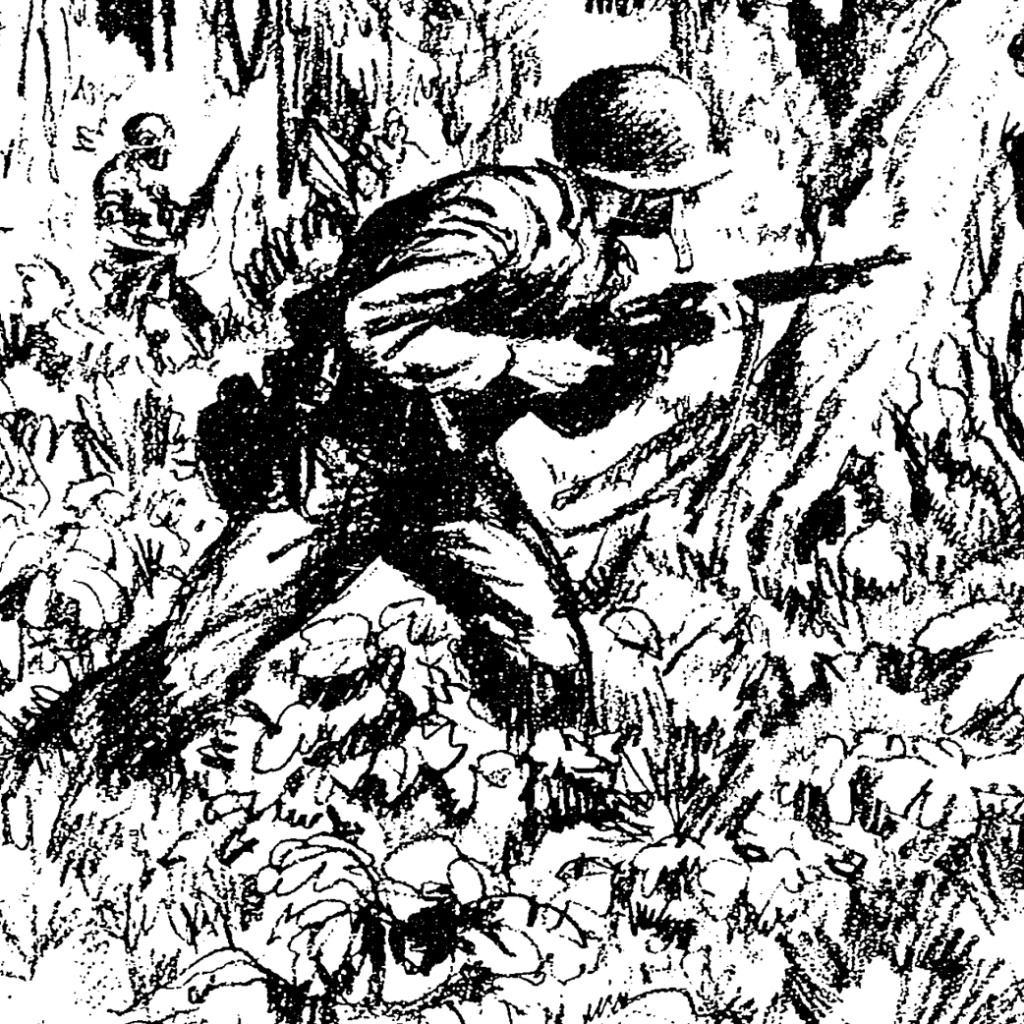
Why Guadalcanal?
Irwin Ross
Leatherneck
August 1978
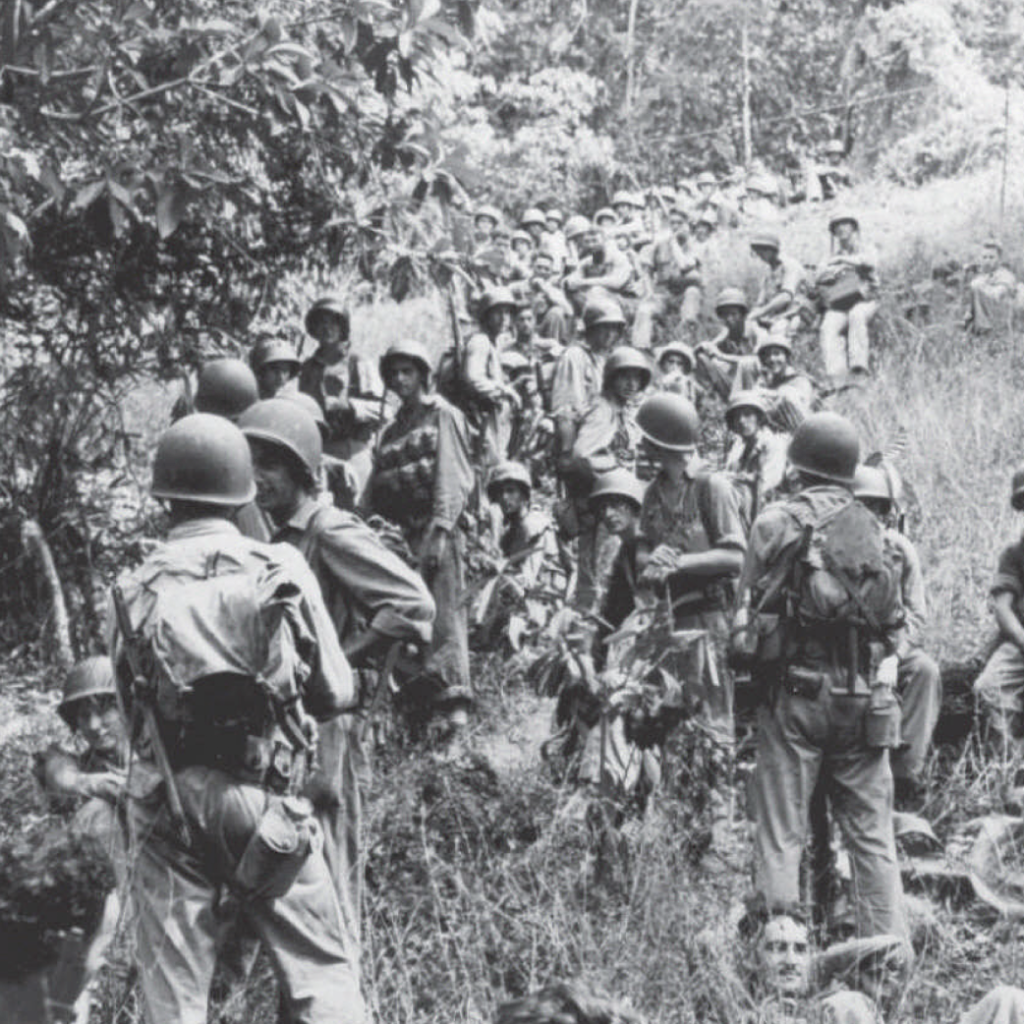
Guadalcanal First Battle of the Matanikau
Eric Hammel
Leatherneck
July 2017
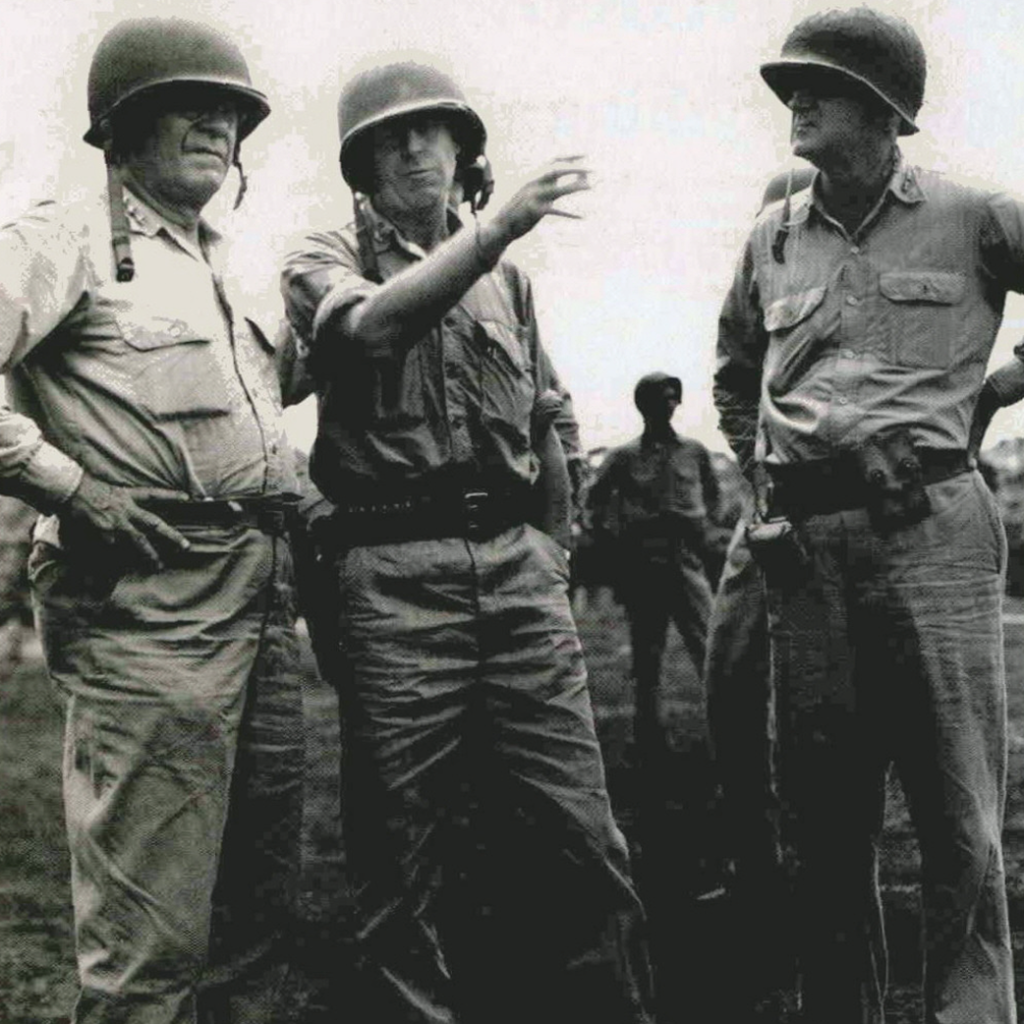
Tasimboko: Small Raid Changed Everything at Guadalcanal
Capt Frank J. Guidone, USMC (Ret)
Leatherneck
August 2009
Maps
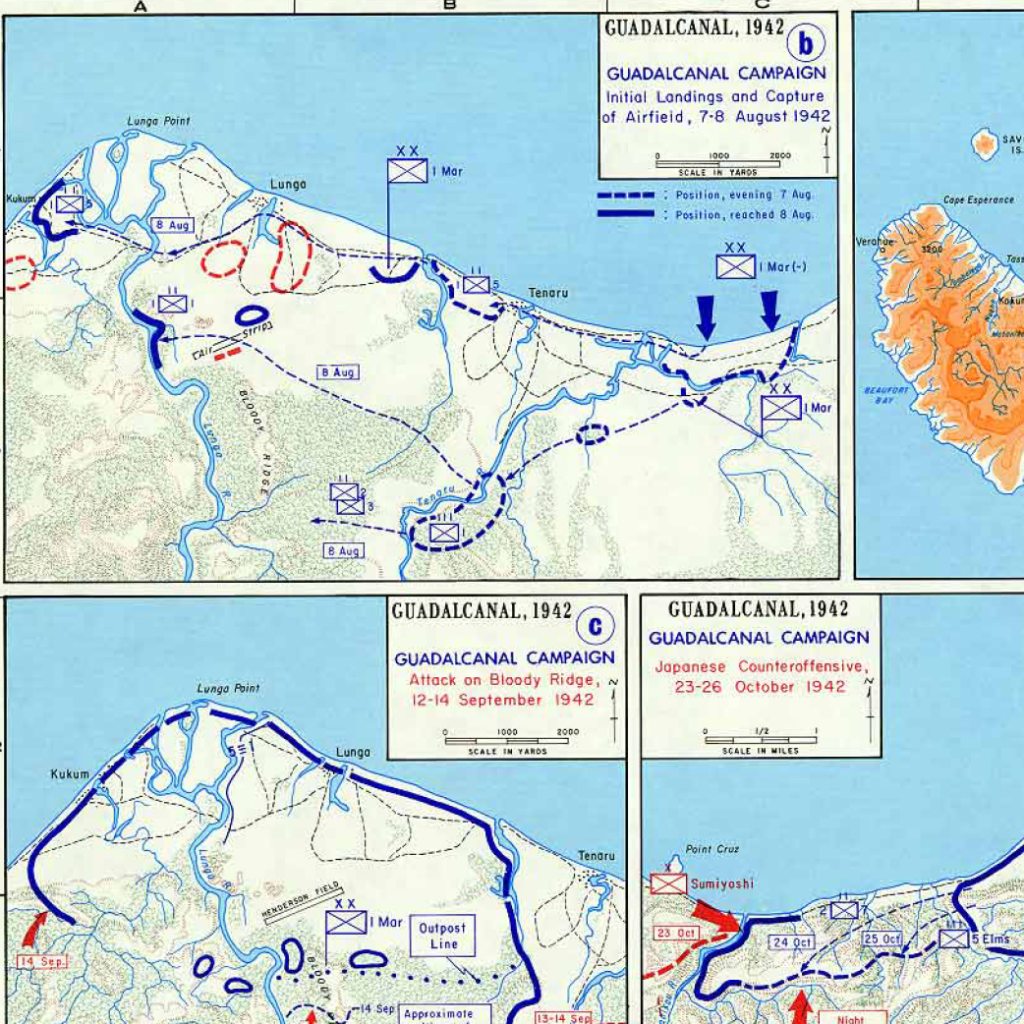
Guadalcanal Campaign 1942
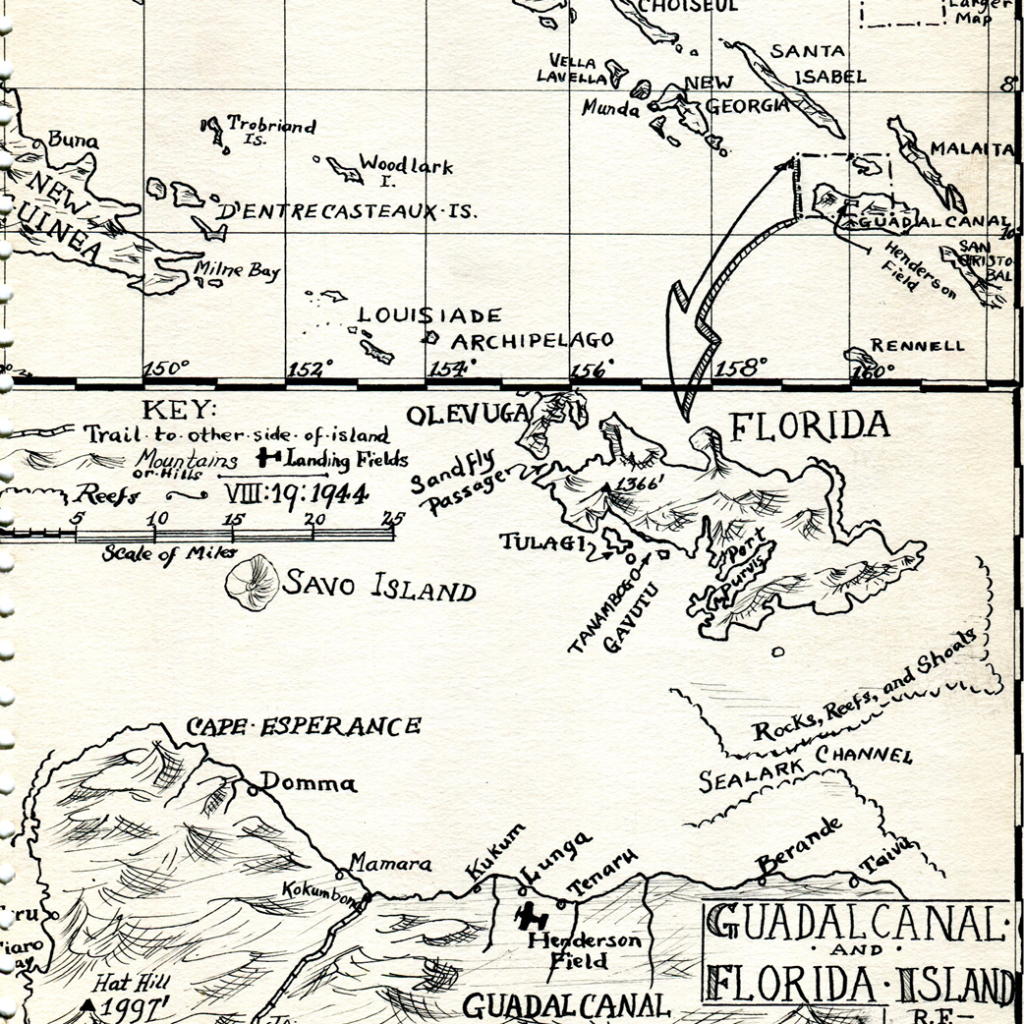
Guadalcanal and Florida Island circa 1942
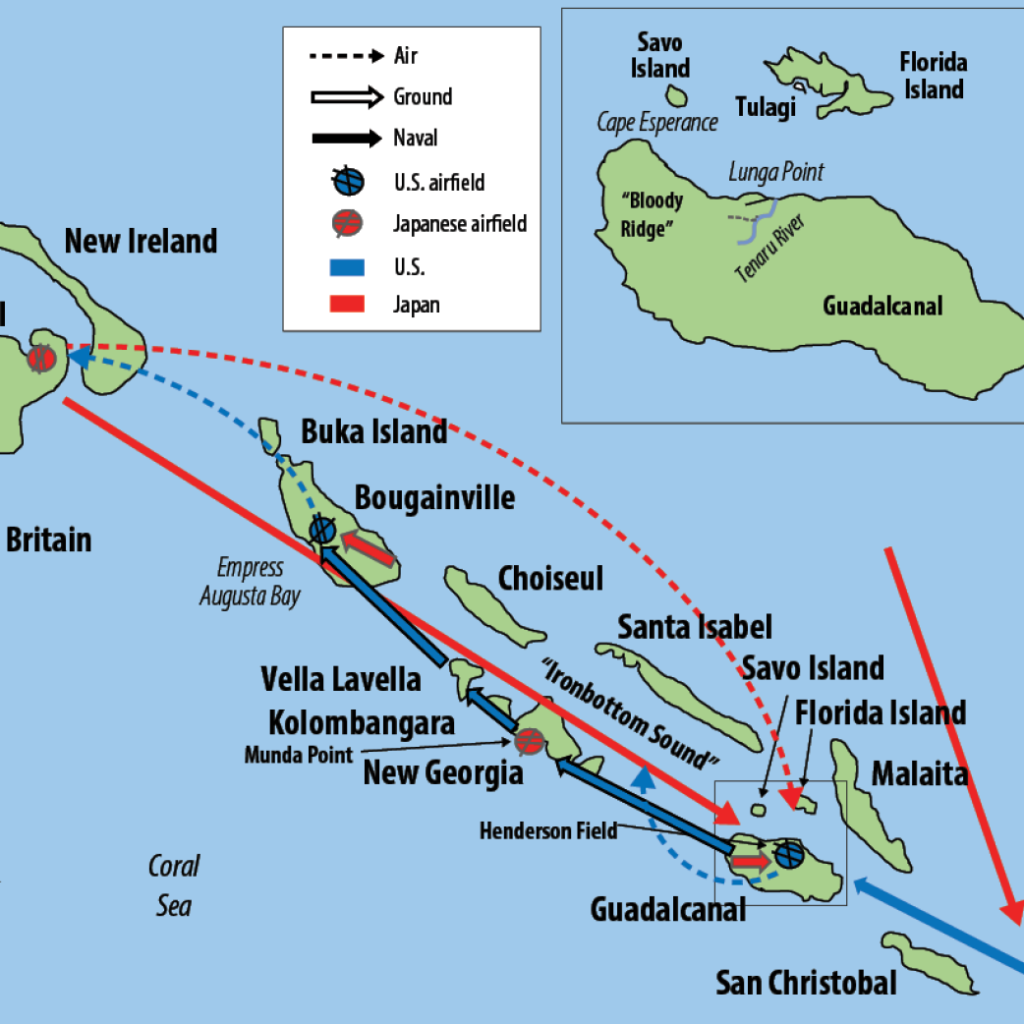
Operations on Guadalcanal and the Solomons
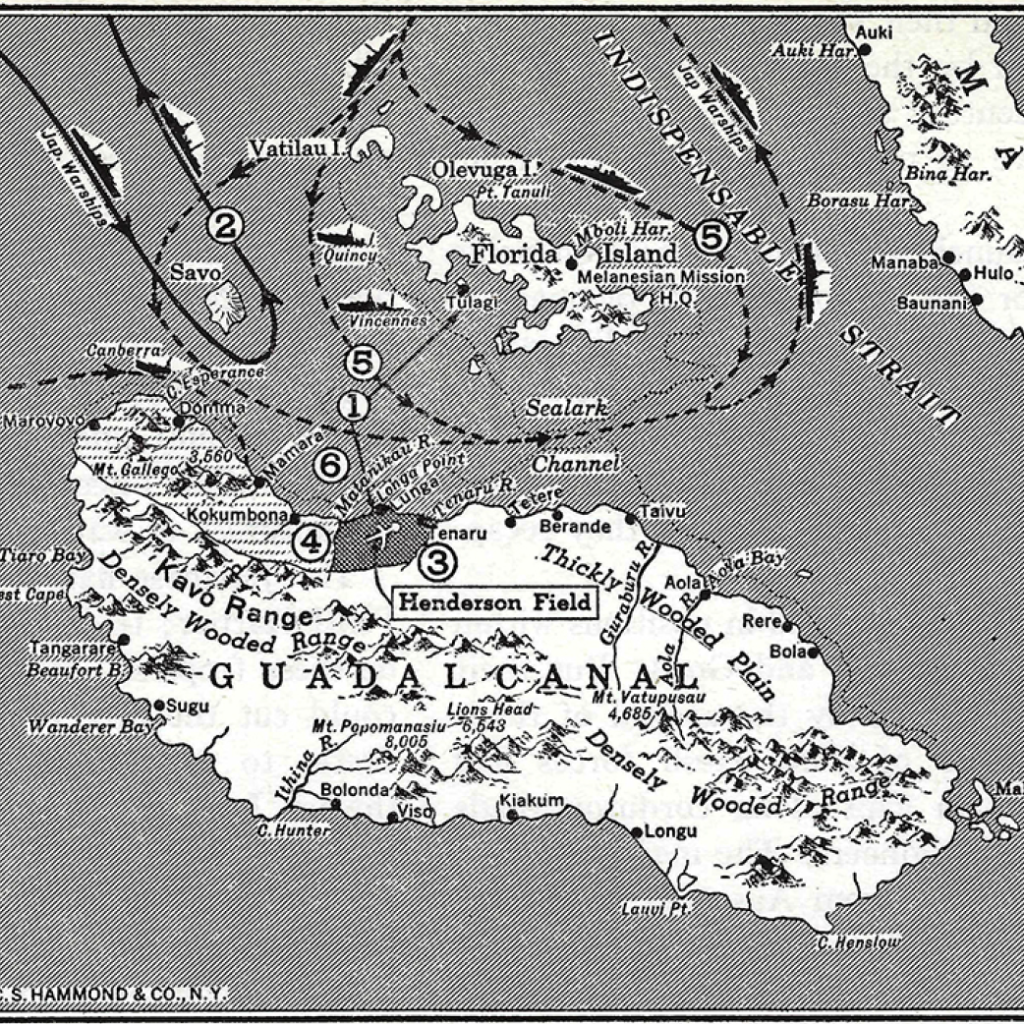
Guadalcanal
Florida and Tulagi Military Developments in 1942
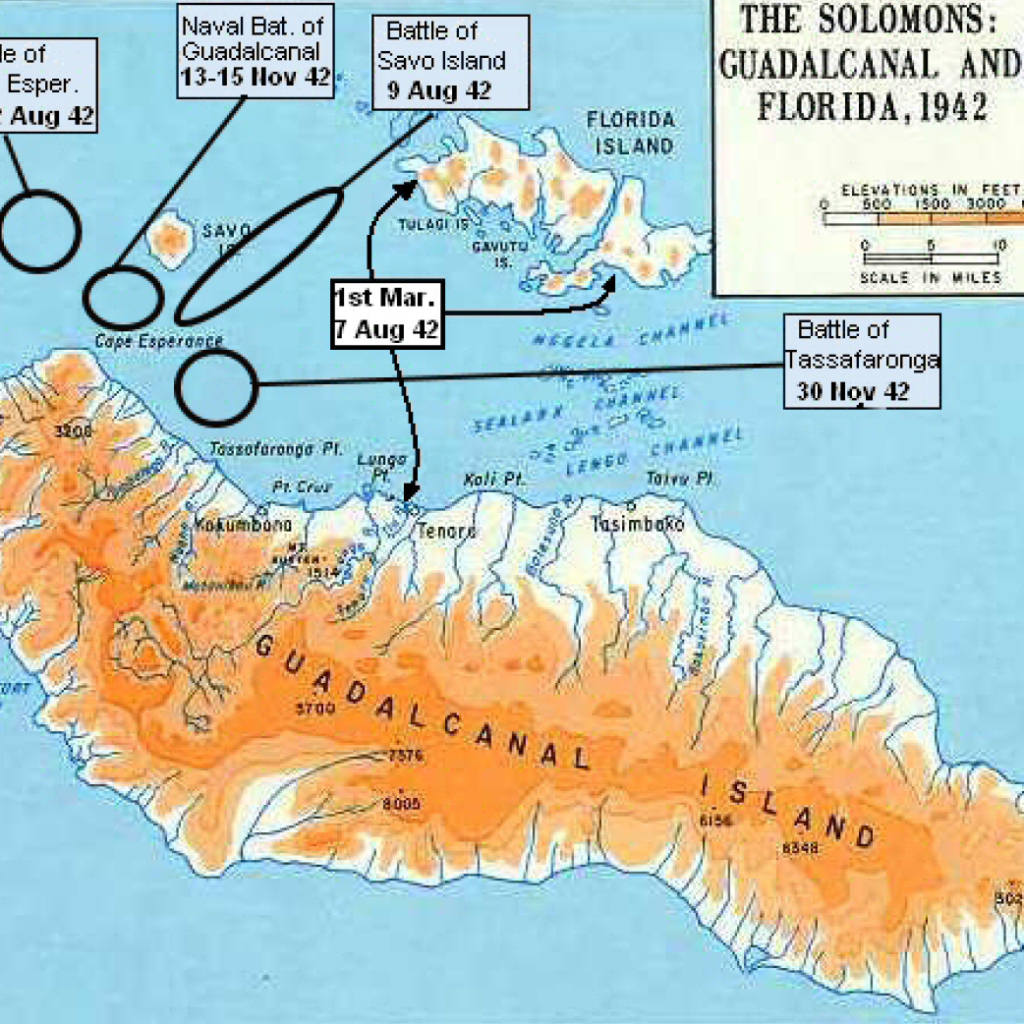
The Solomons: Guadalcanal and Florida, 1942
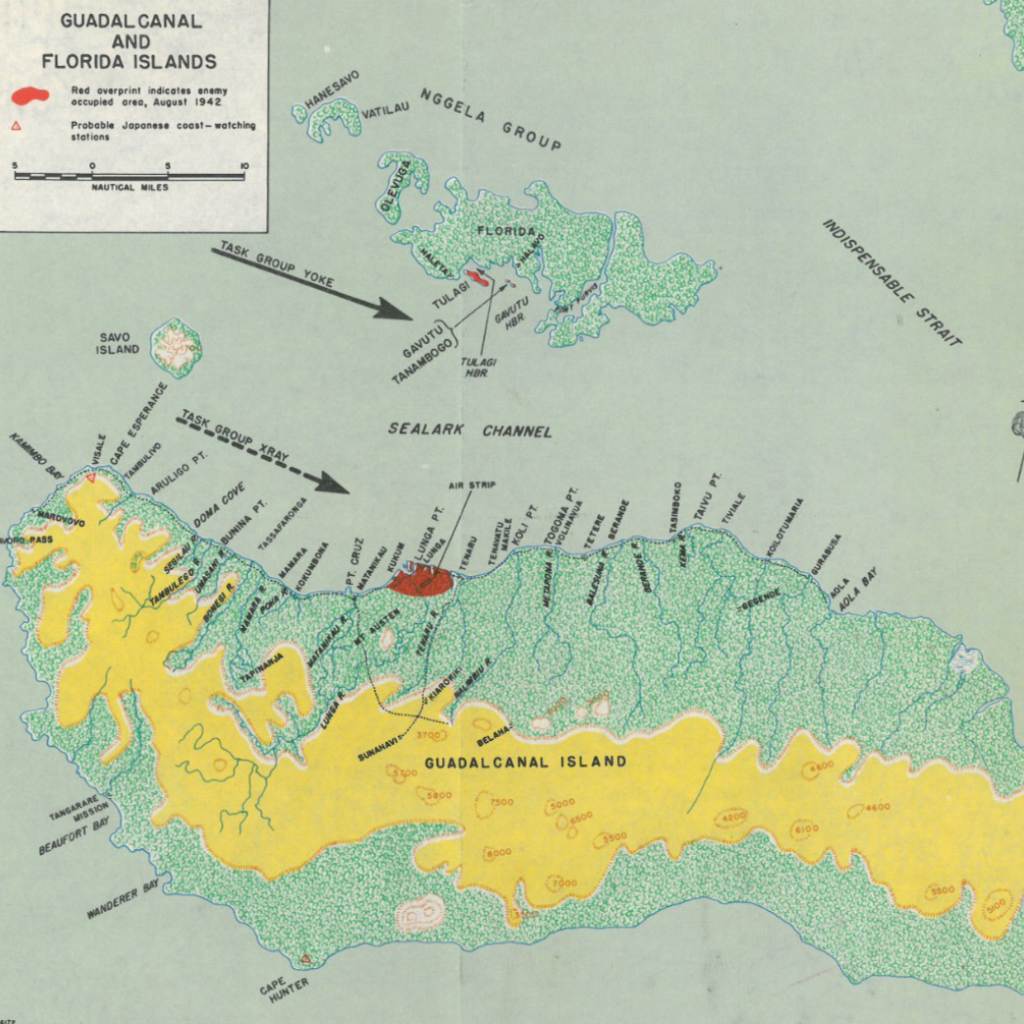
Guadalcanal and Florida Islands
Study Guide
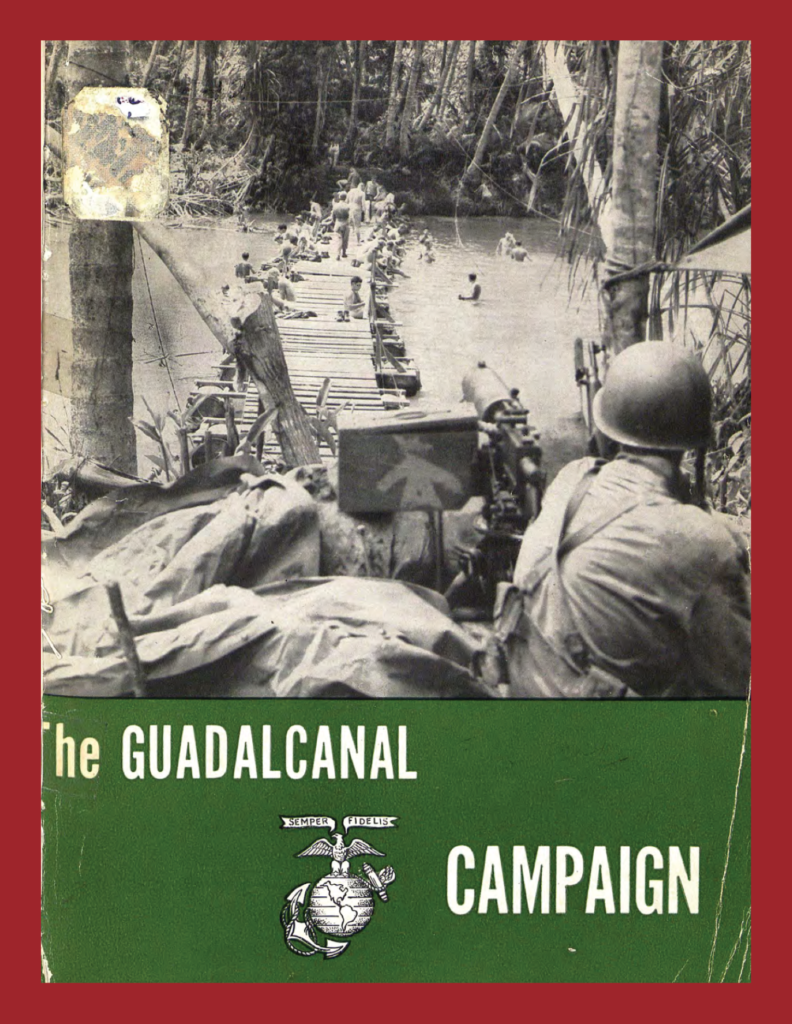
Podcasts
Books
Videos
Other Resources
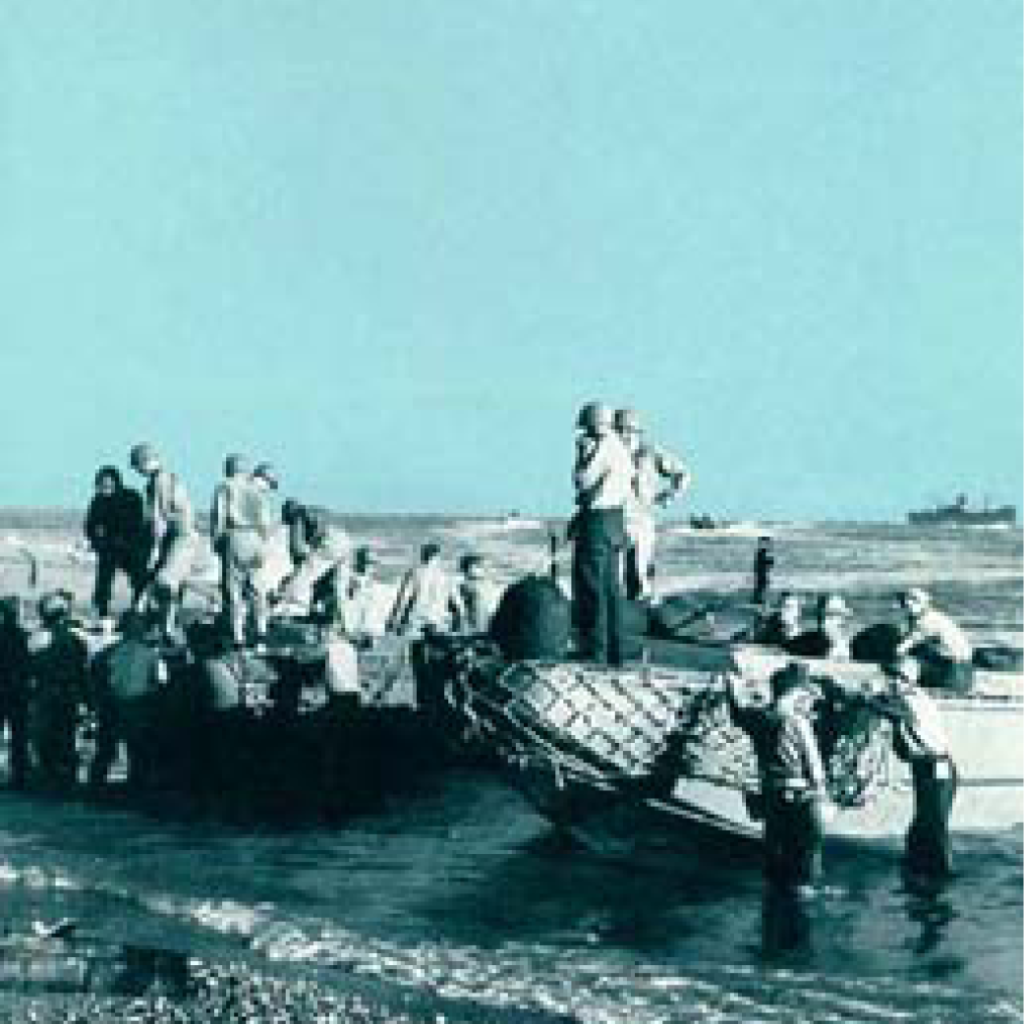
Guadalcanal
The U.S. Army Campaigns of World War II
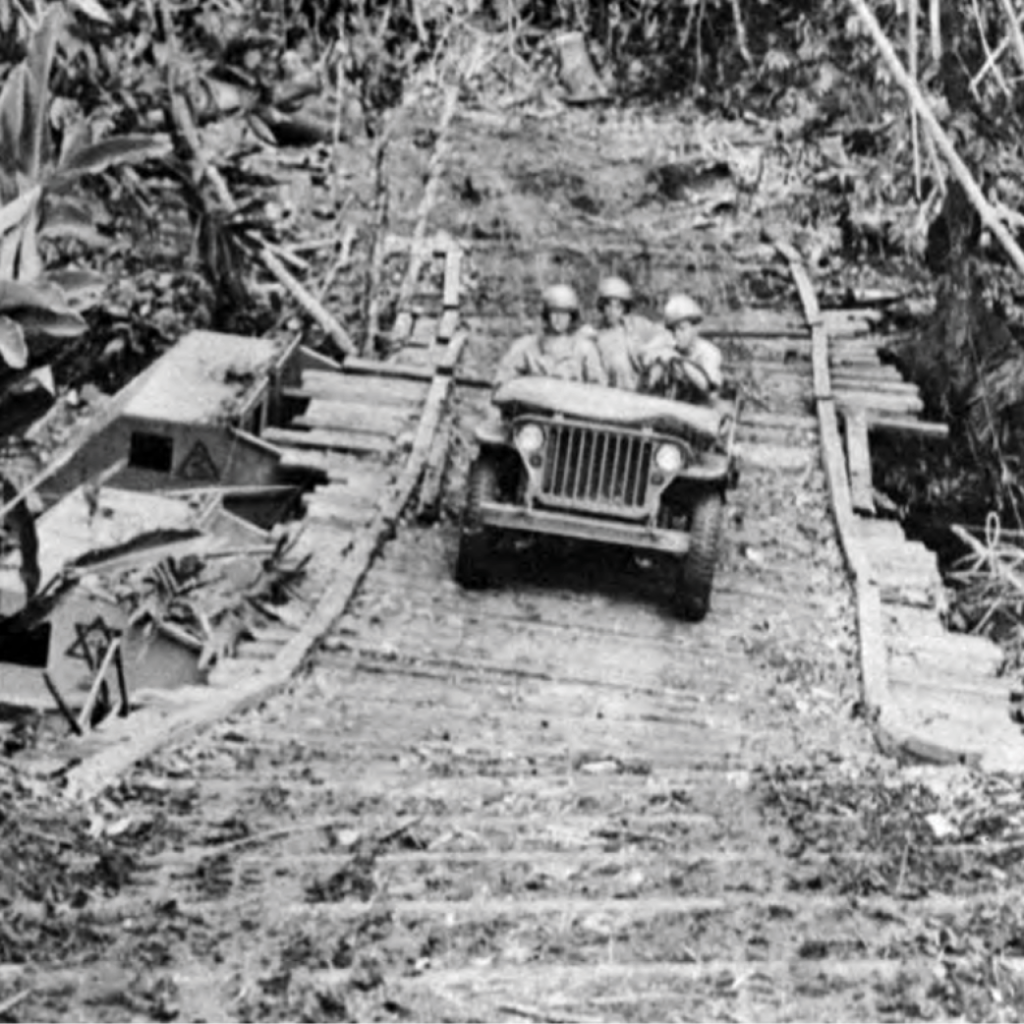
Guadalcanal: The First Offensive
John Miller Jr.
Center of Military History
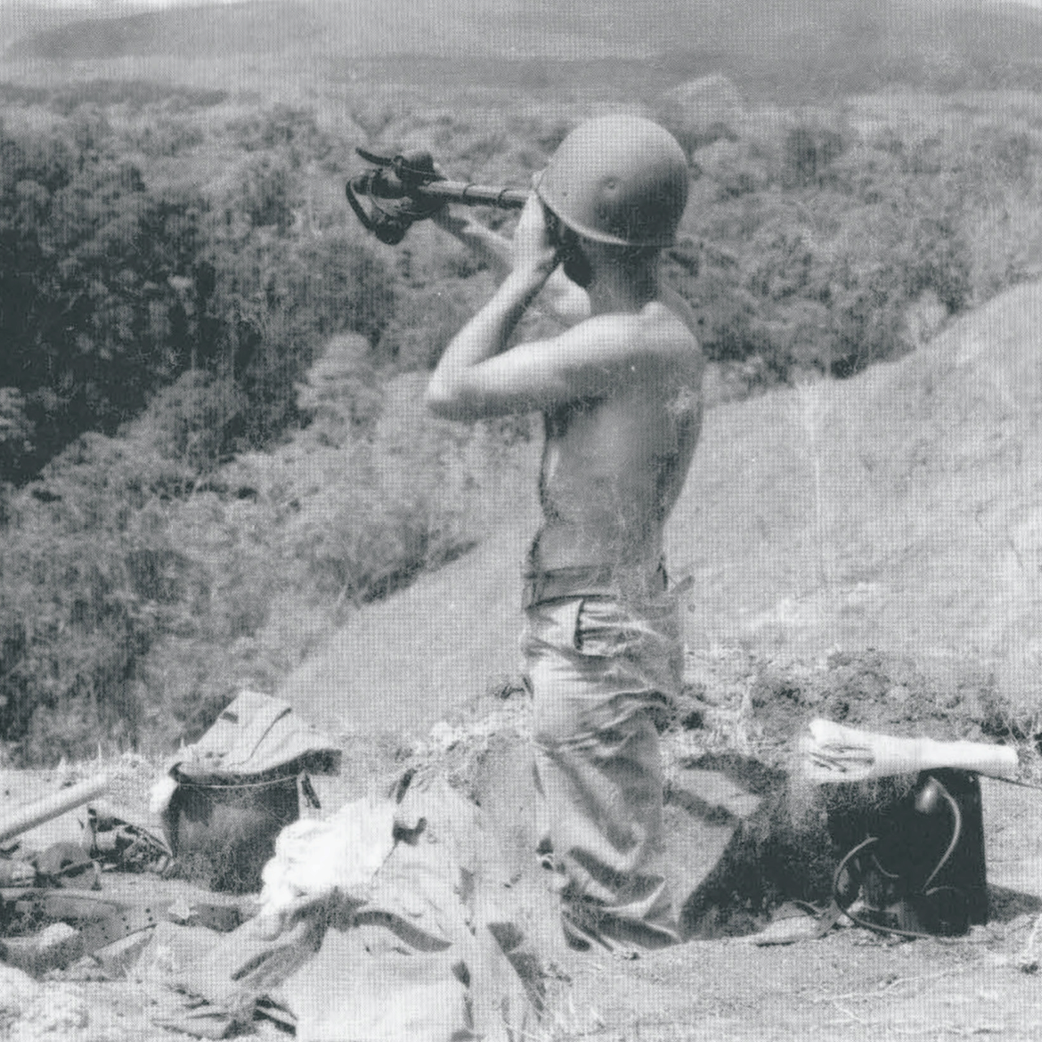
Guadalcanal A Case Study for Multi-Domain Battle
Chris Rein, PhD
Military Review
May – June 2018
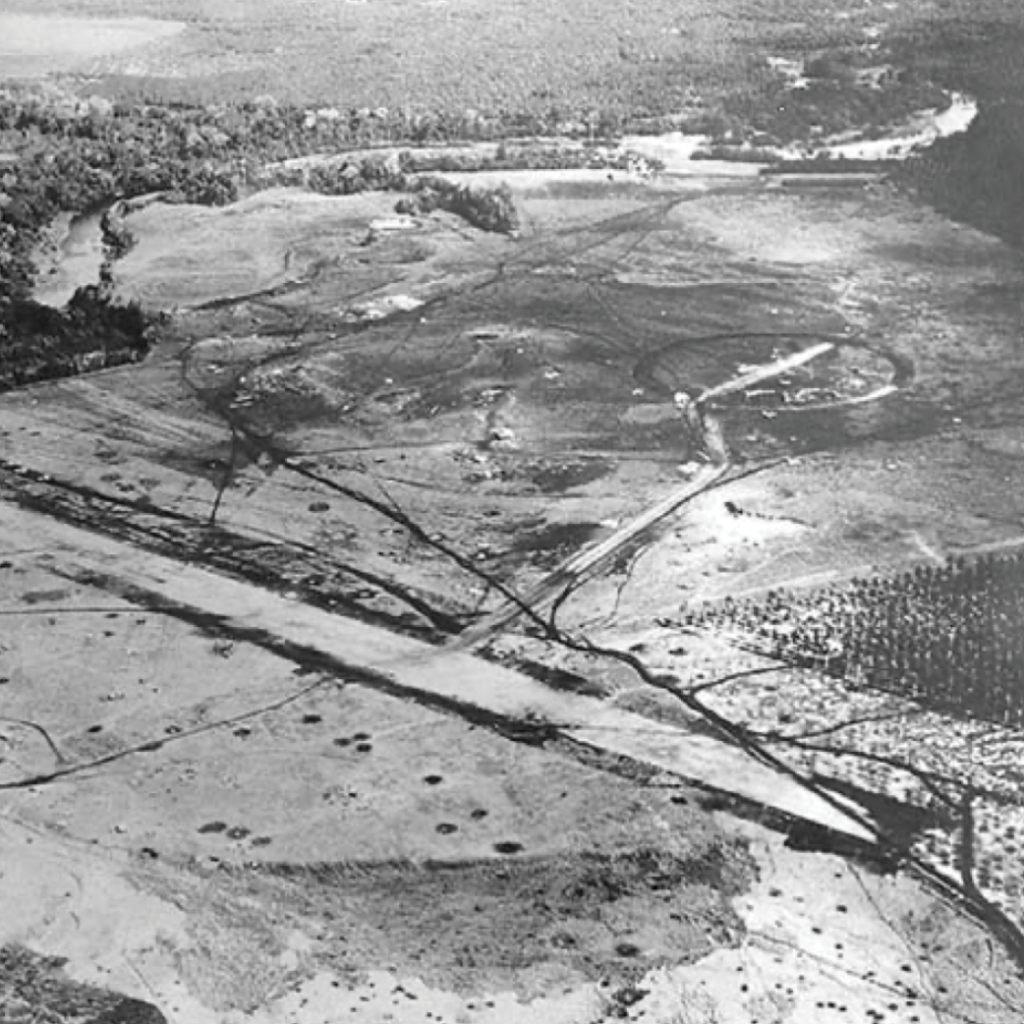
Henderson Field During the Guadalcanal Campaign
Maj Jeff D. Philippart
Air Command and Staff College