


 Gettysburg
The “high water mark” of the Confederacy.
HISTORICAL SIGNIFICANCE
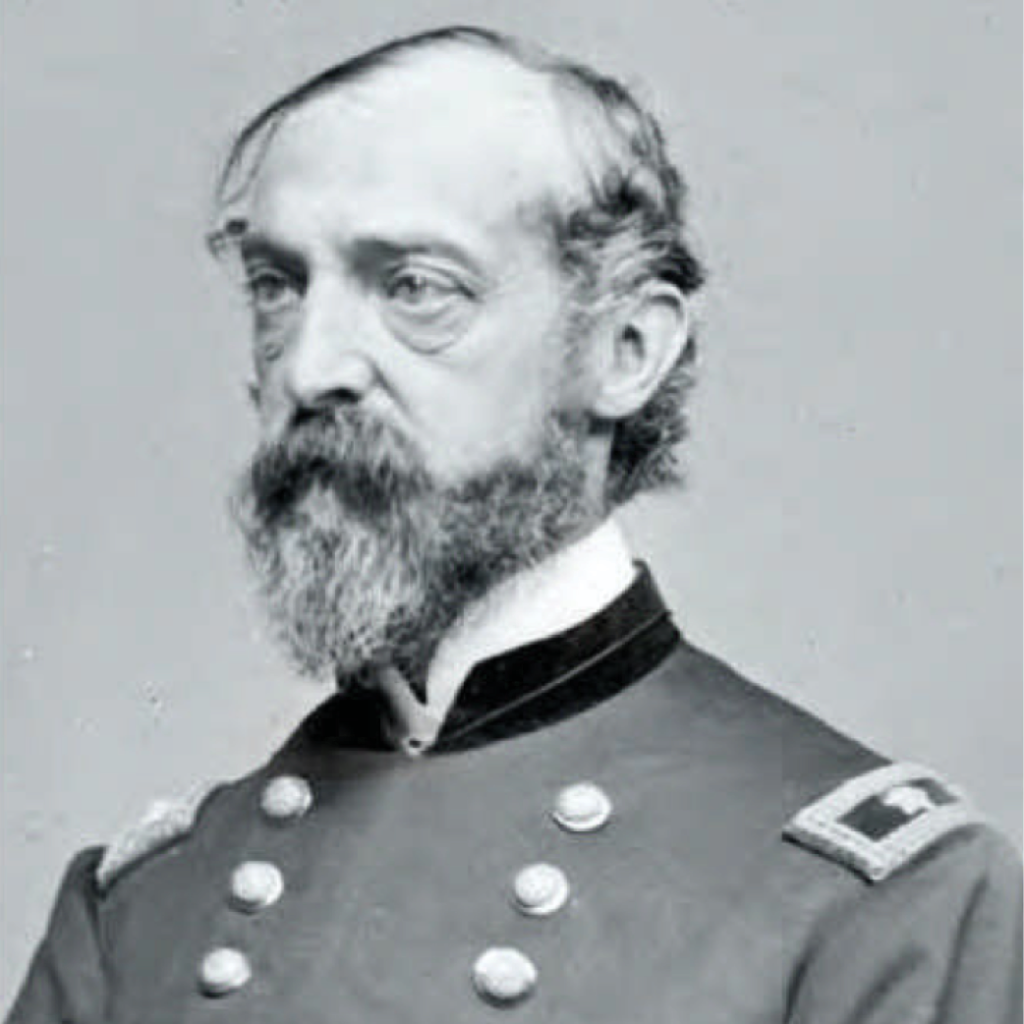
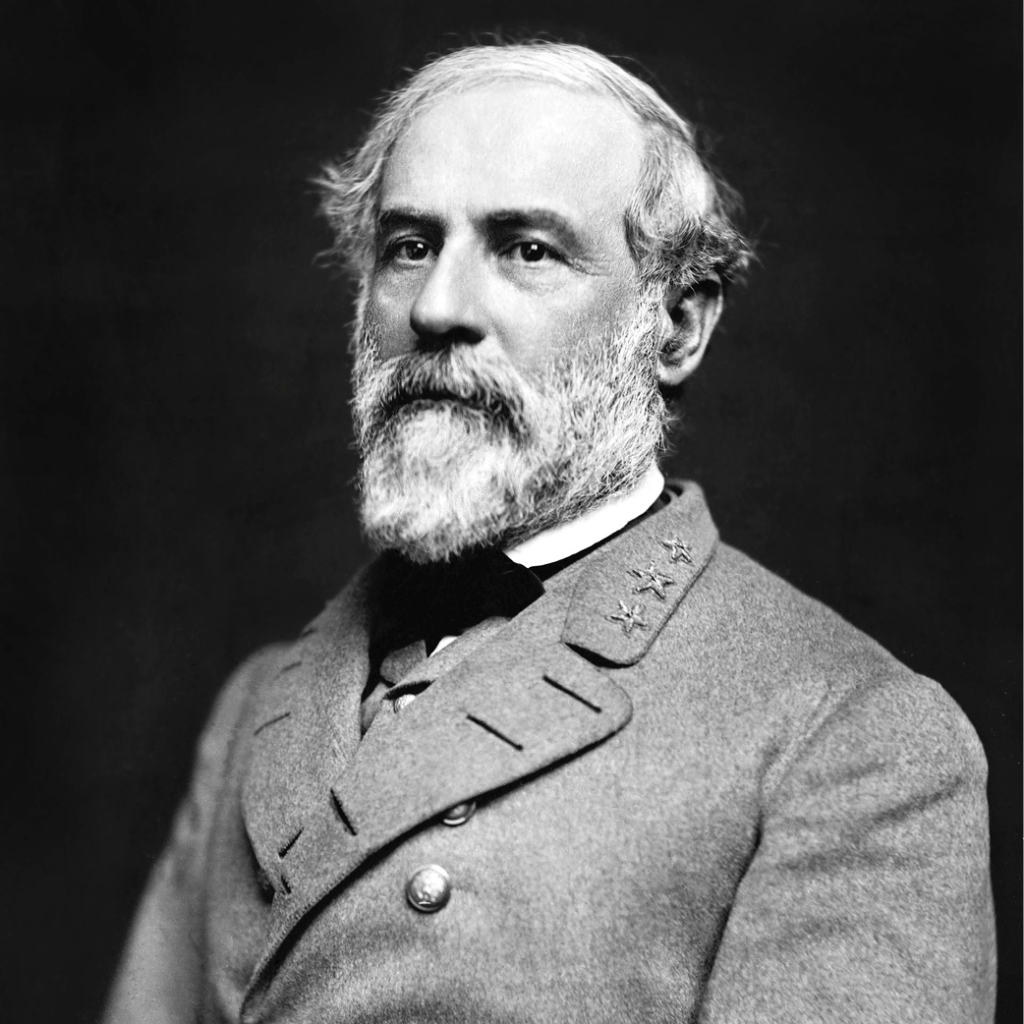
The defeat of the Confederate forces at Gettysburg, Pennsylvania resulted in the most casualties of any battle fought on American soil, and is cited by historians as a pivotal moment in the American Civil War. Fought over three days July 1–3, 1863, Union Maj. Gen. George Meade’s Army of the Potomac defeated attacks by Confederate Gen. Robert E. Lee’s Army of Northern Virginia, halting Lee’s invasion of the North.
TACTICAL IMPORTANCE
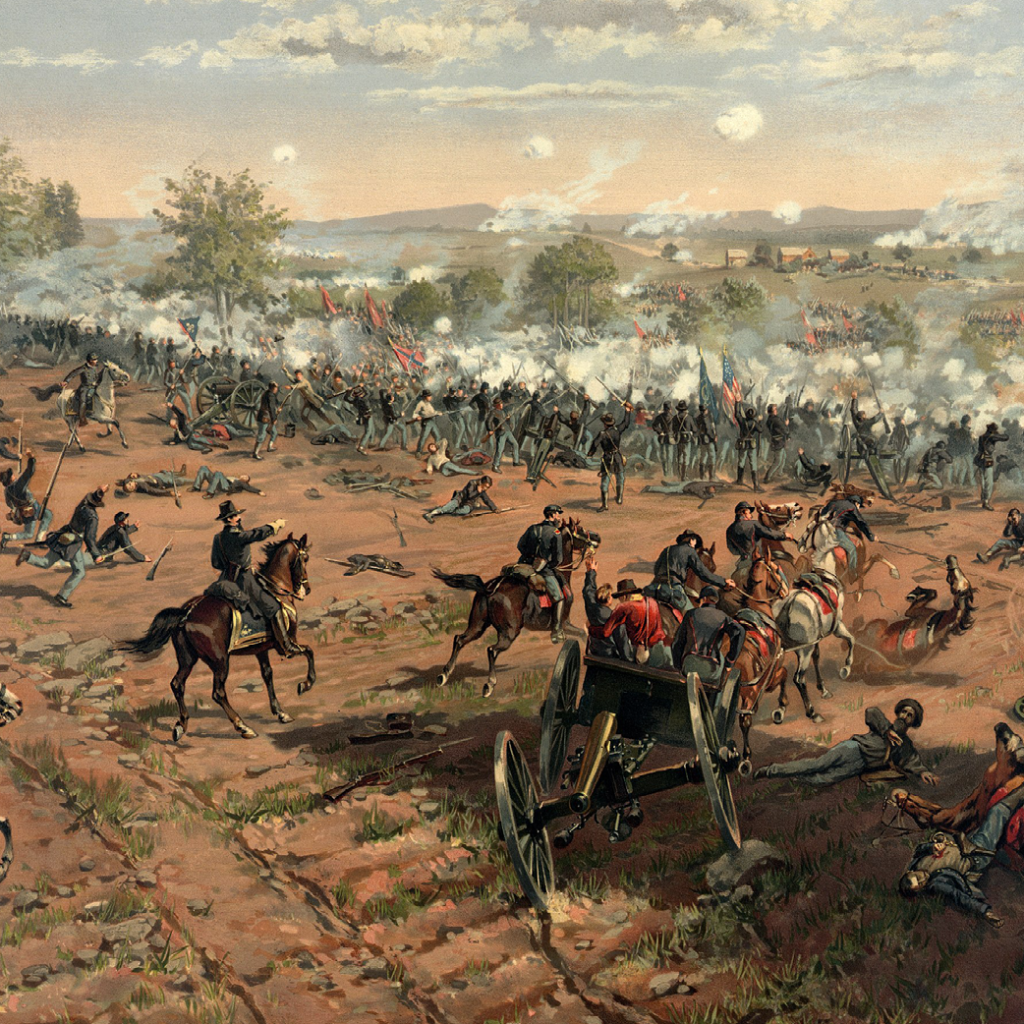
After a series of victories in northern Virginia, Lee led his army through the Shenandoah Valley to begin his second invasion of the North. The first day was a meeting engagement as the two armies collided. Initially, the Union defended the low ridges northwest of the town with cavalry joined later by infantry, but these forces collapsed under assaults by two Confederate corps. Lee did not press his advantage and Union forces retreated through the streets of the town to the hills just to the south. Here as both armies assembled, the Union laid out a defensive formation resembling a fishhook. In the late afternoon of July 2, Lee launched a heavy assault on the Union left flank, and fierce fighting raged at Little Round Top, the Wheatfield, Devil’s Den, and the Peach Orchard. On the Union right, Confederate demonstrations escalated into full-scale assaults on Culp’s Hill and Cemetery Hill. All across the battlefield, despite significant losses, the Union defenders held their lines. On day three, fighting resumed on Culp’s Hill, and cavalry battles raged to the east and south, but the main action was a dramatic infantry assault by 12,500 Confederates against the center of the Union line on Cemetery Ridge, known as Pickett’s Charge. The charge was repulsed by Union rifle and artillery fire, at great loss to the Confederate army. Meade allowed Lee’s forces to retreat back to Virginia.
STRATEGIC IMPACT
The goal of Lee’s Gettysburg Campaign was to penetrate the north as far as Harrisburg, and Philadelphia, PA. Lee intended to influence Northern politicians to end the war by positioning his army to threaten Washington D.C. The failure of this campaign ushered in Union commanders Ulysses S. Grant and William T. Sherman who would use the north’s superior numbers and industrial base in campaigns of attrition to force a Confederate surrender.
Related Articles
The Marine Corps Gazette and Leatherneck Magazine archives have more than 100 years of articles. Click the buttons below to read articles about the Battle of Gettysburg and its implications on the Corps, yesterday and today.
FMFM 1-1 and Lee at Gettysburg
Maj F.G. Hoffman, USMCR
Gazette
January 1991
Lessons From History
Capts David R. Breuhan, USA and Norbert B. Jocz, USA
Gazette
January 1991
If Practicable? Exactly!
LtCol Timothy E. Grebos, USMCR
Gazette
November 2019
Robert E. Lee and Lessons From the Gettysburg Campaign
Maj Michael Wisloski, Jr.
Gazette
January 1991
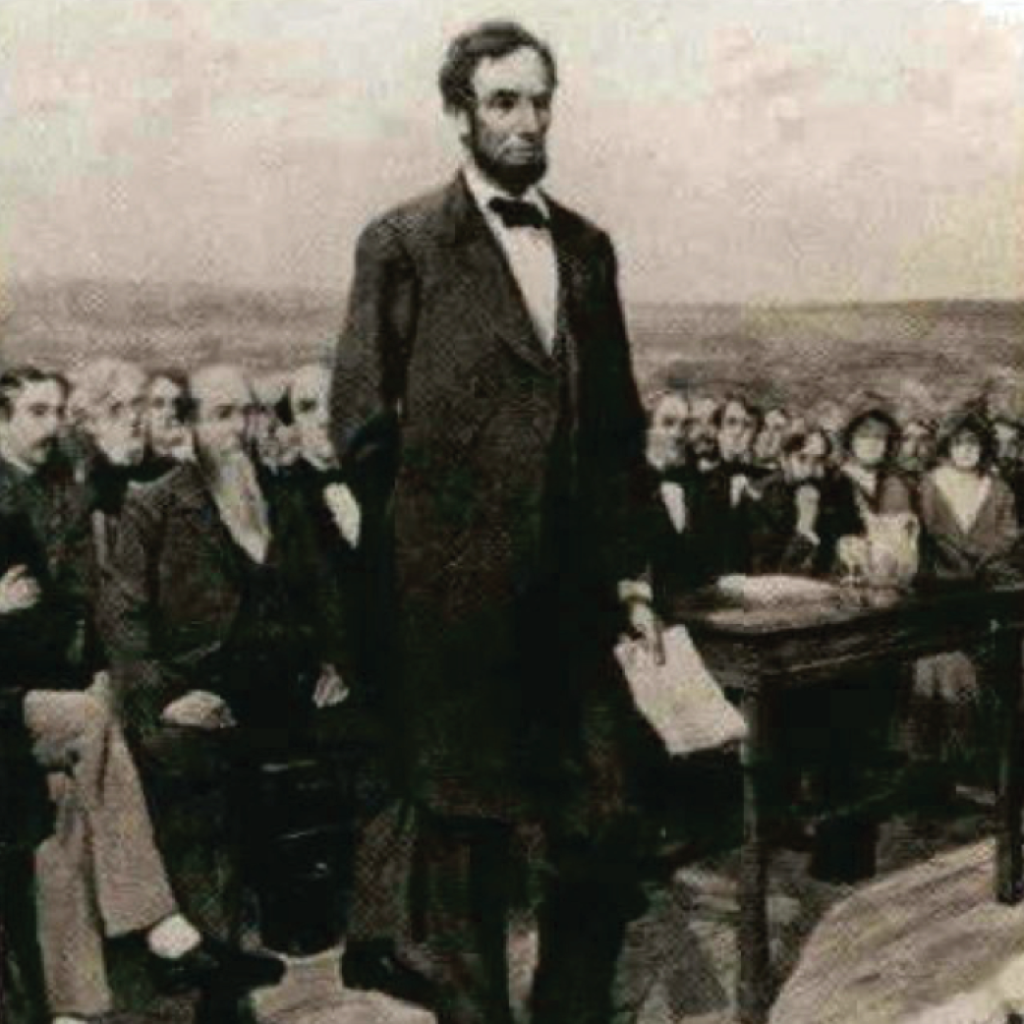
Lincoln and the Marines at Gettysburg
Suzanne Pool-Camp and Dick Camp
Leatherneck
January 2011
Maps
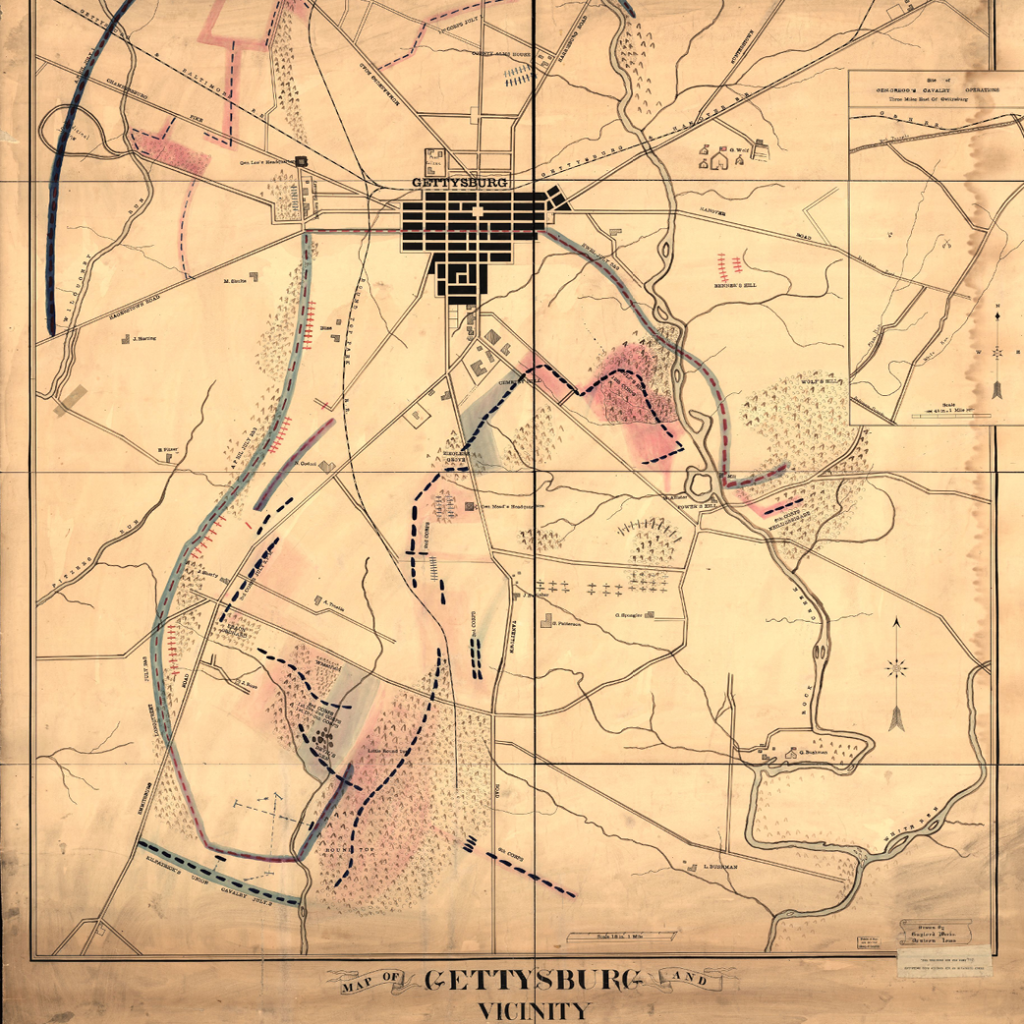
Map of Gettysburg and Vicinity
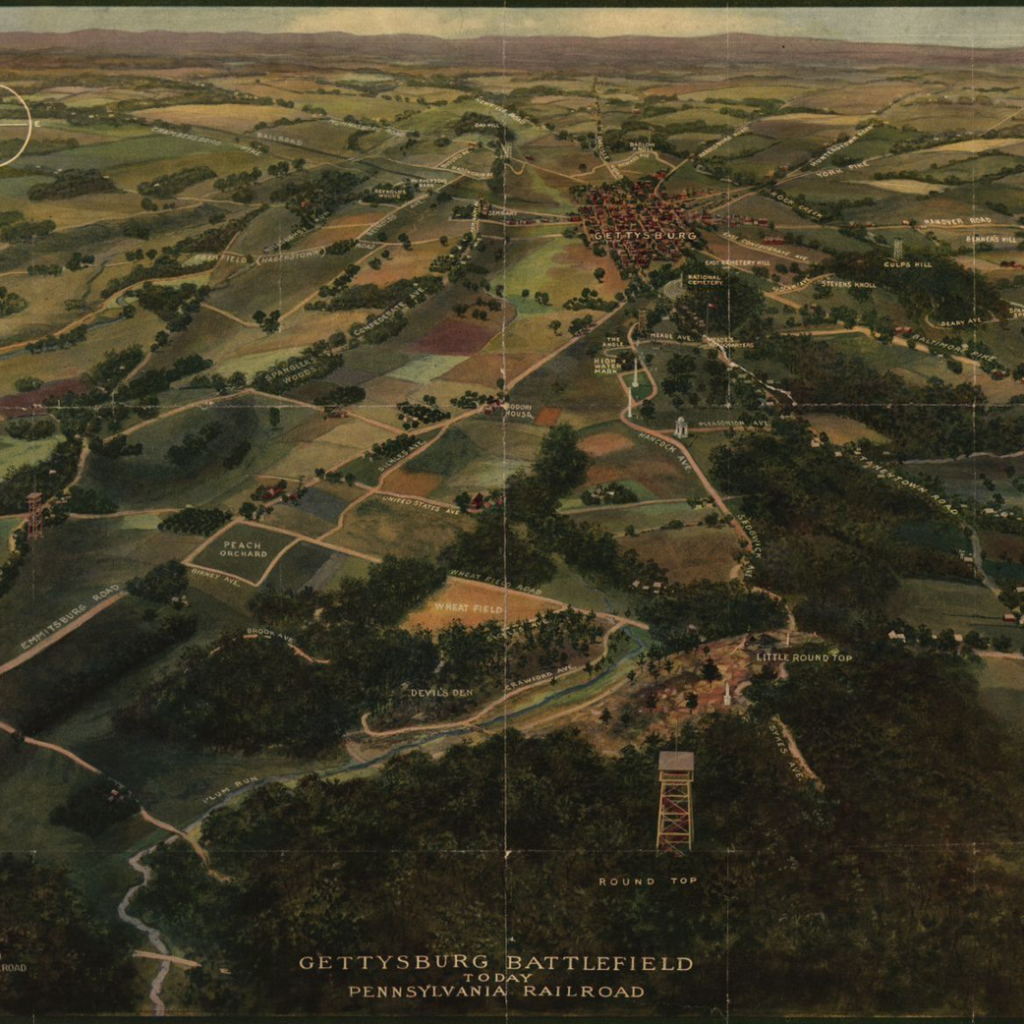
Gettysburg Battlefield Today: Pennsylvania Railroad
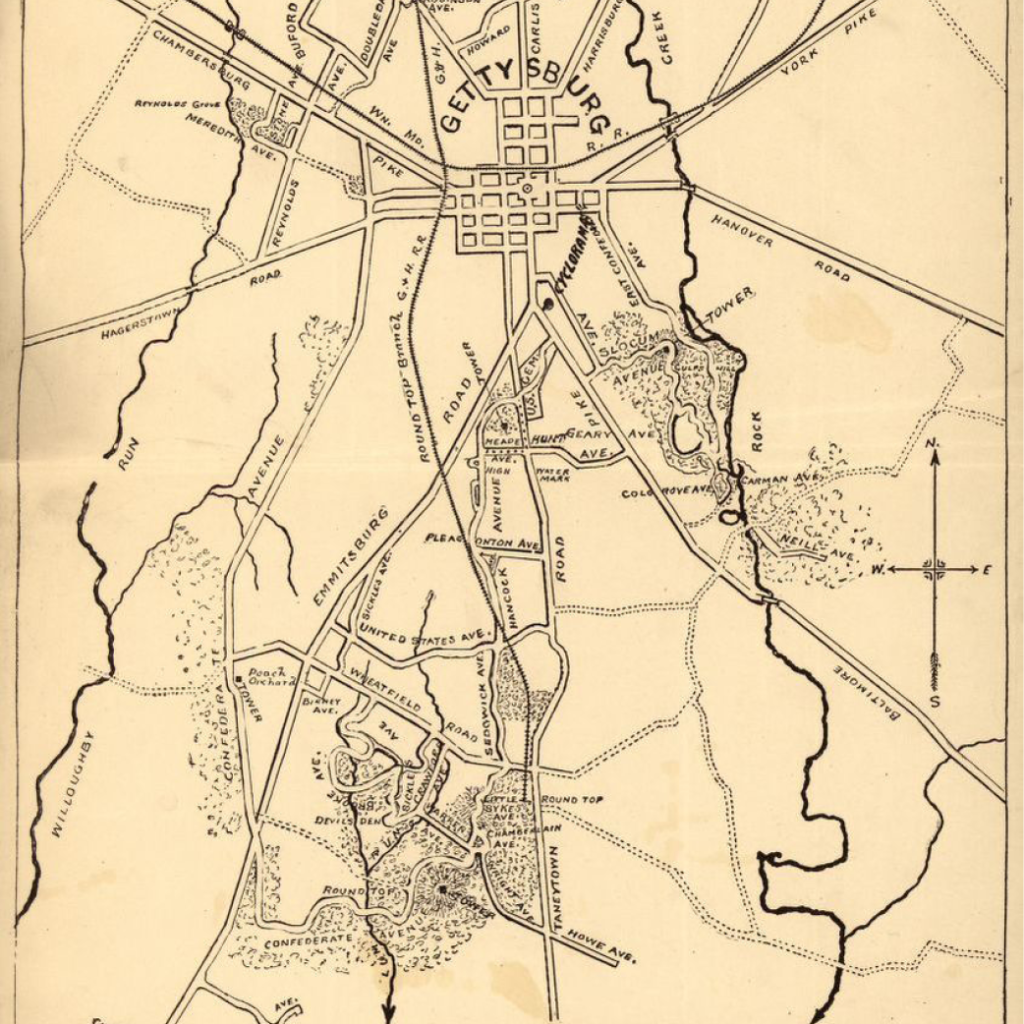
Map of the Gettysburg Battlefield
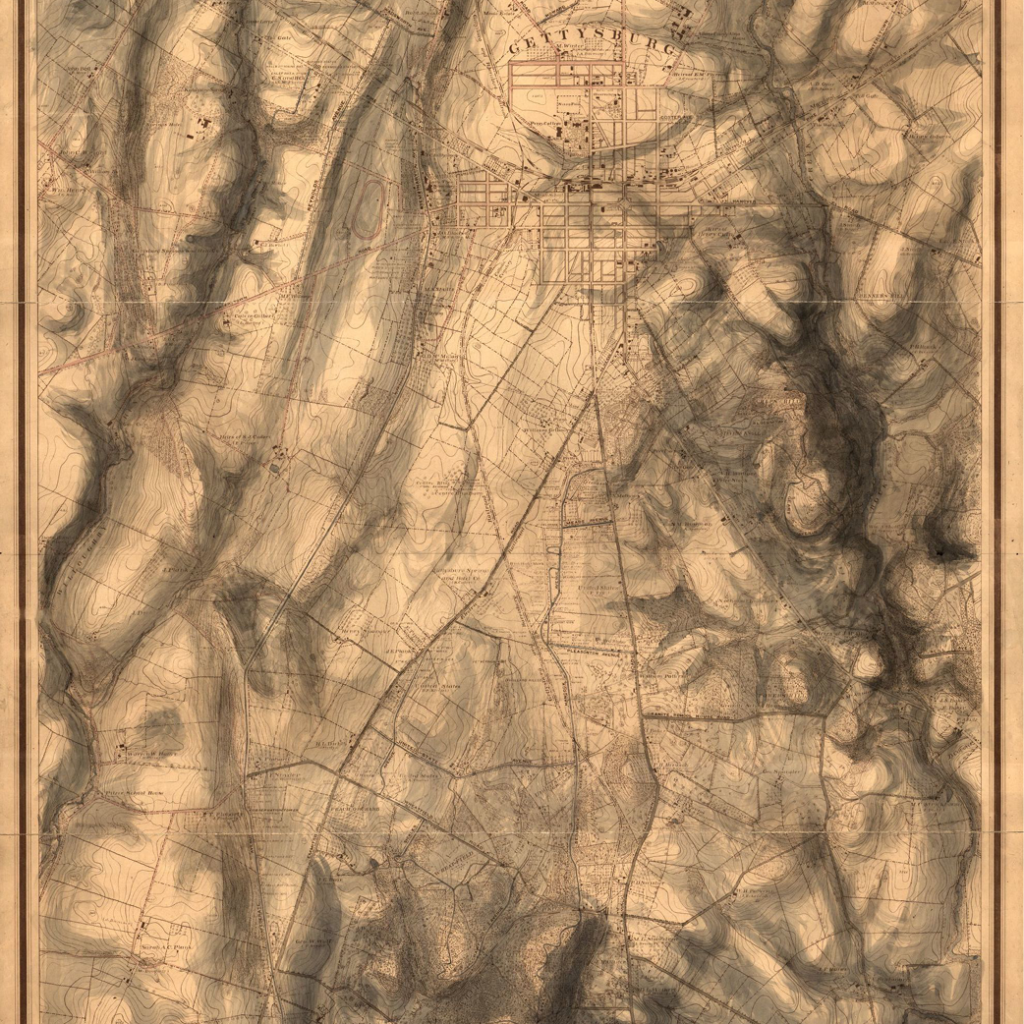
Map of the Gettysburg Battlefield
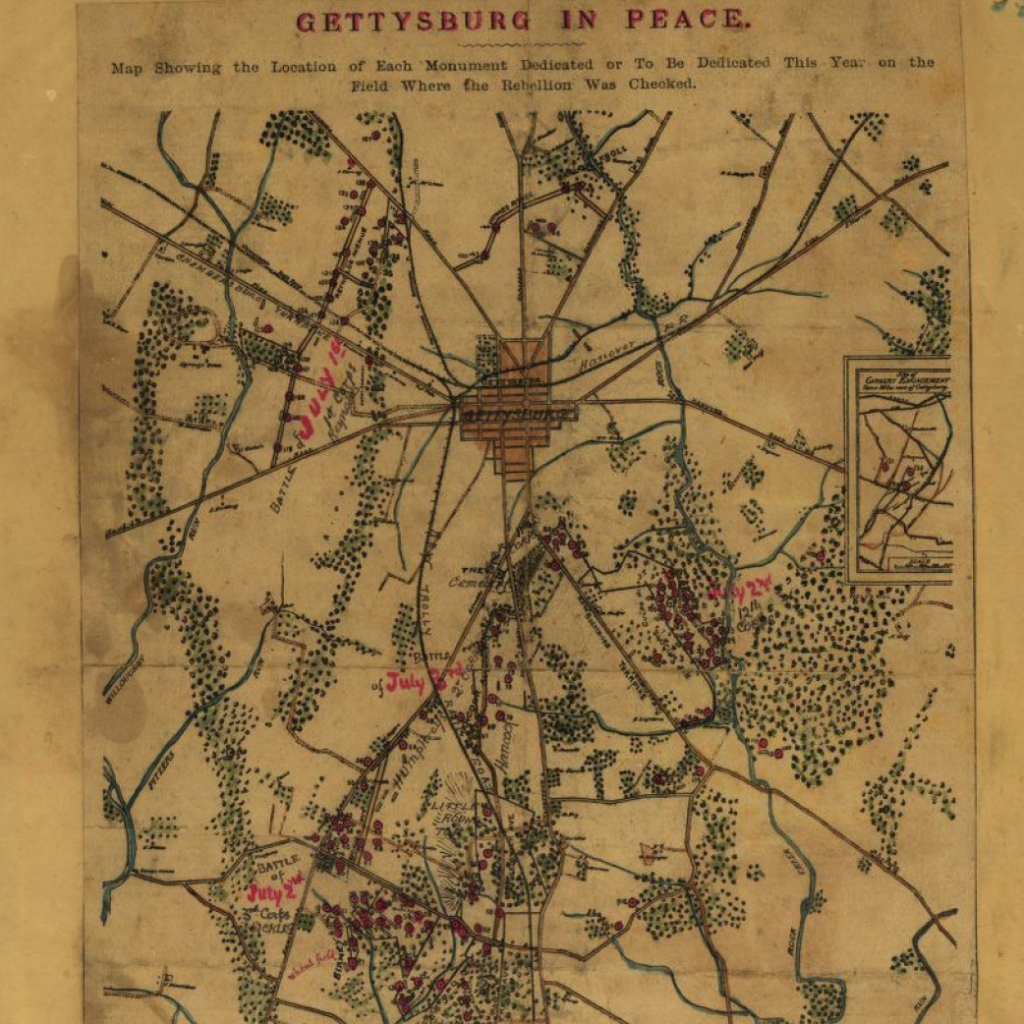
Gettysburg in Peace
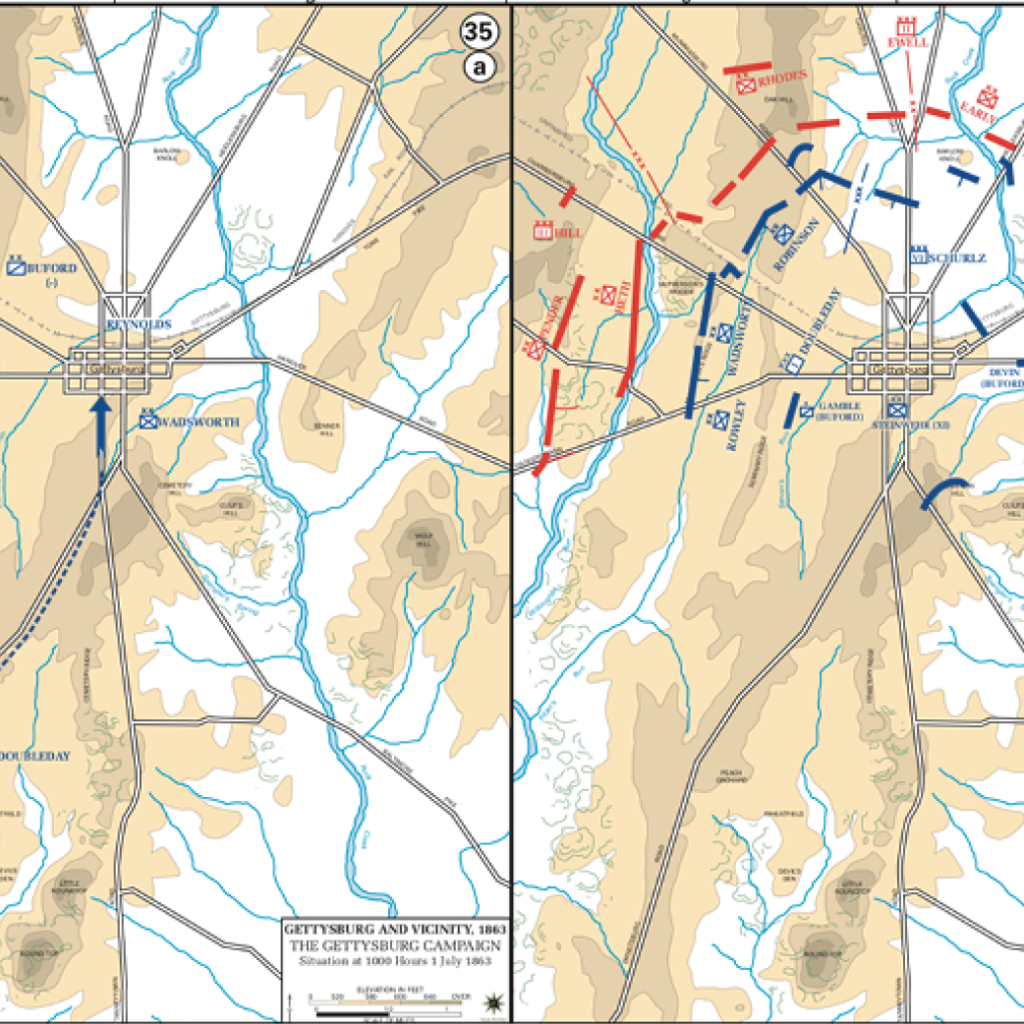
Gettysburg and Vicinity, 1000 – 1430, 1 July 1863
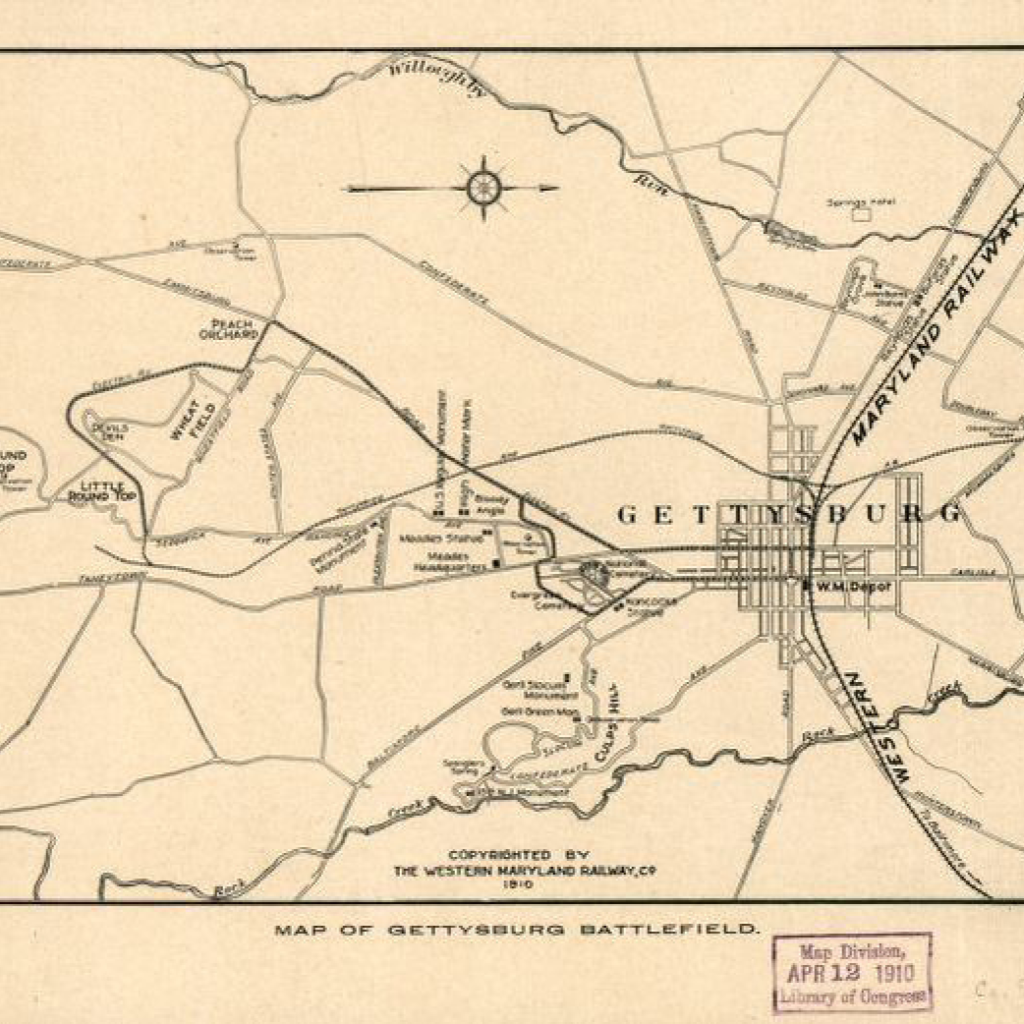
Map of Gettysburg Battlefield
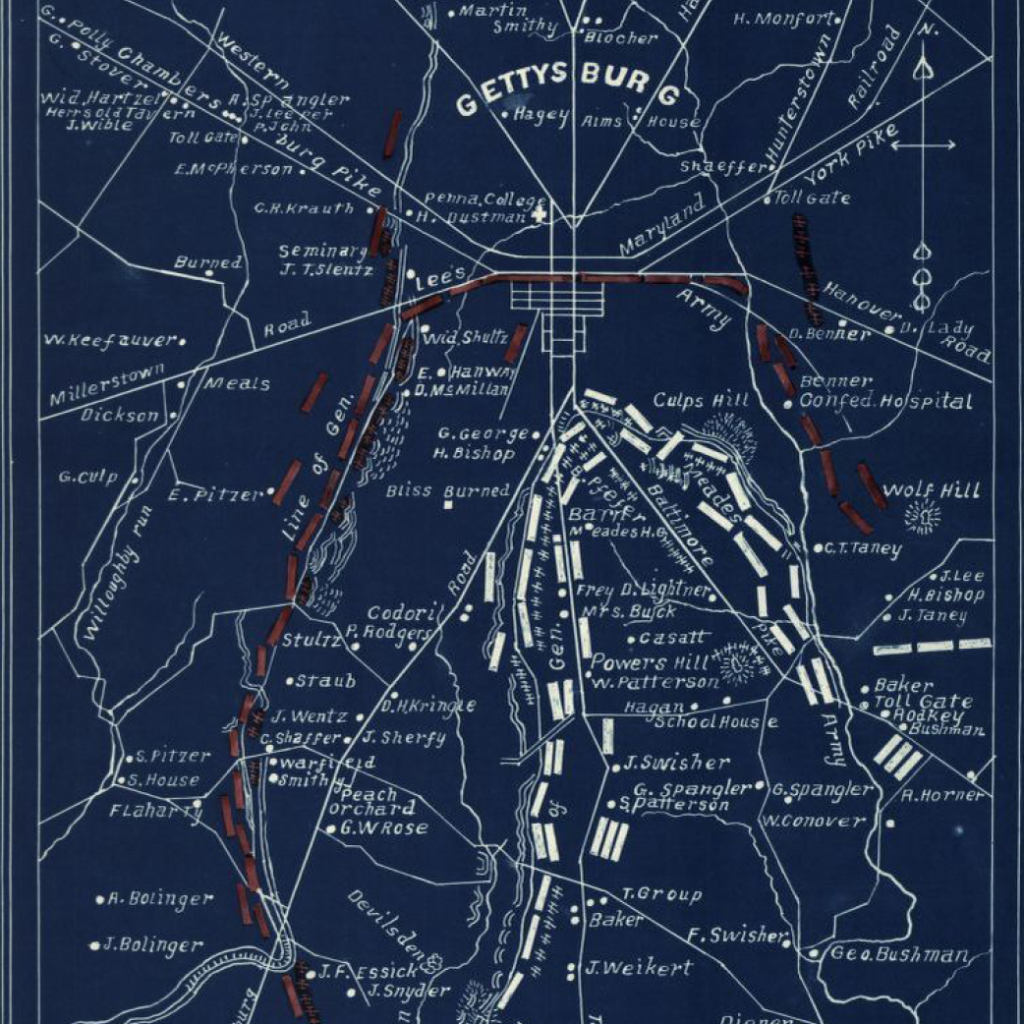
Gettysburg Battlefield
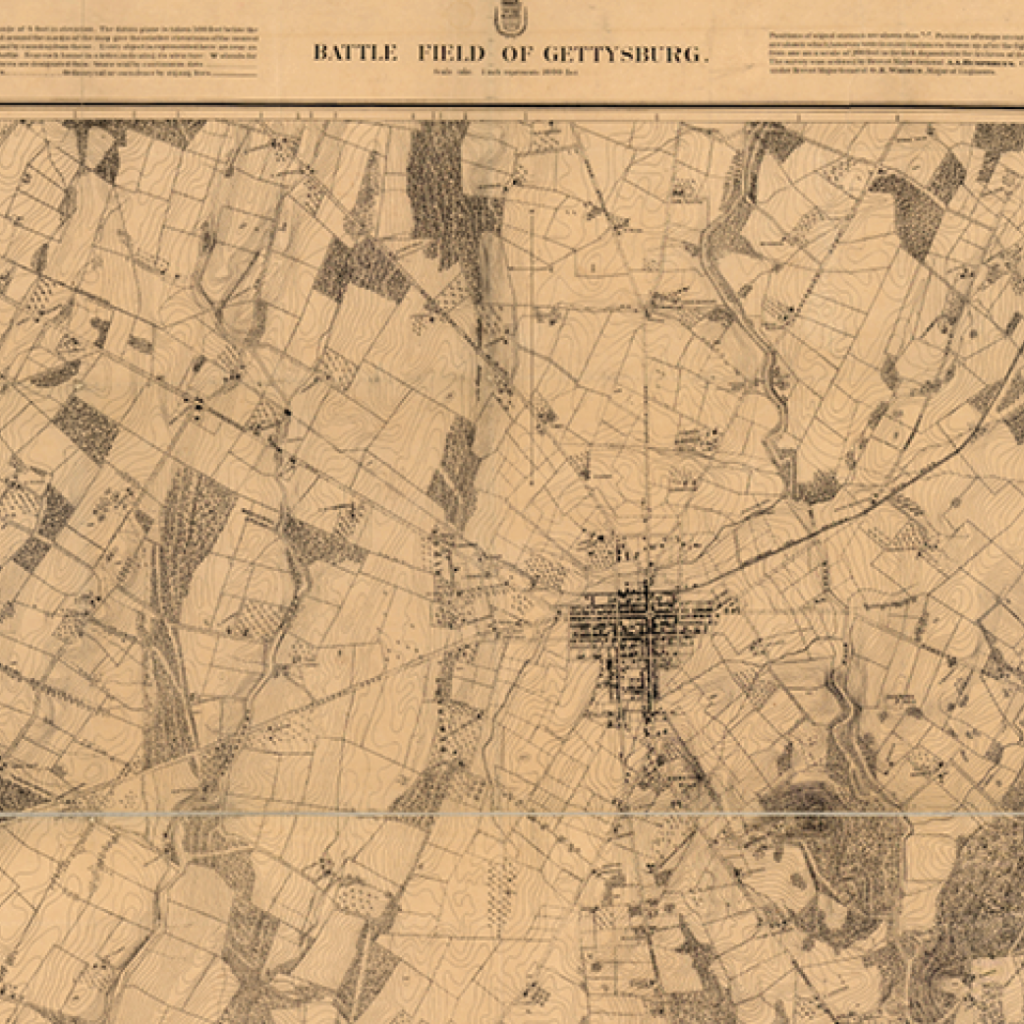
Battle Field of Gettysburg
Study Guide
Podcasts
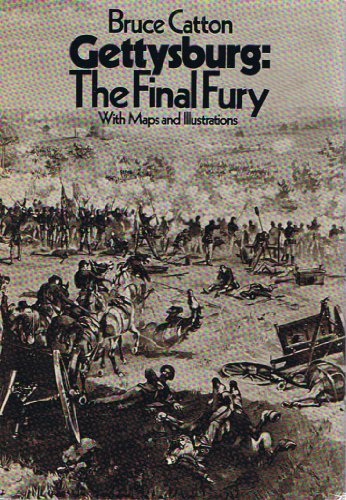
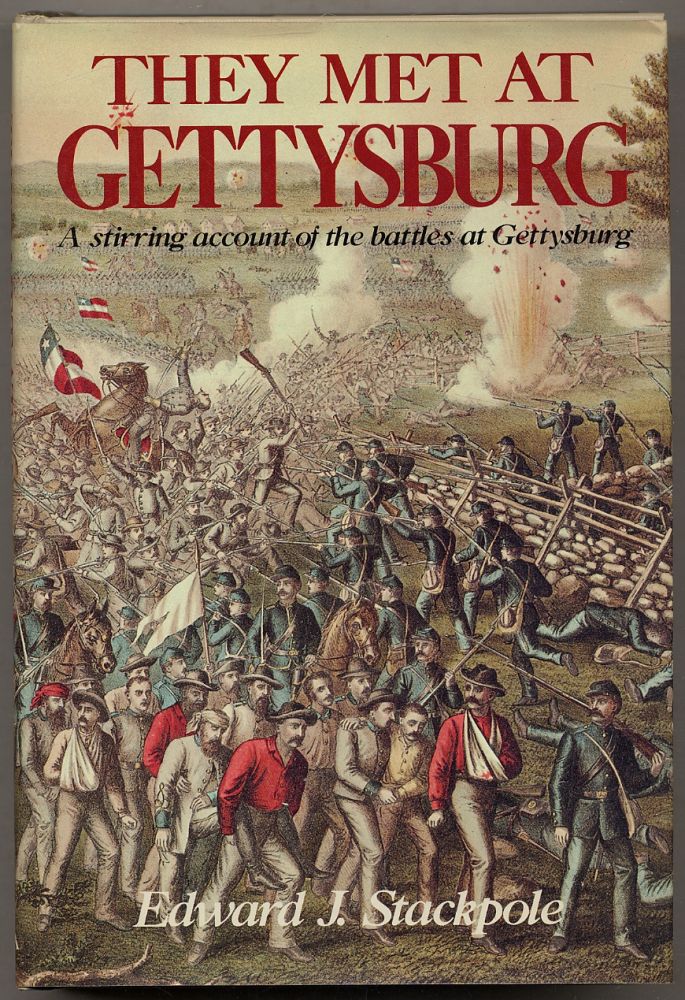
Books
Videos
Other Resources
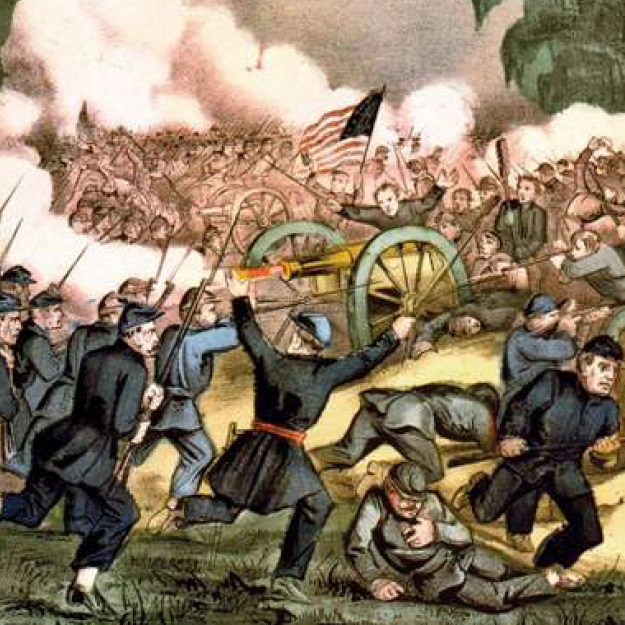
The Gettysburg Campaign
June 3 – August 1, 1863
Summary of Principal Events
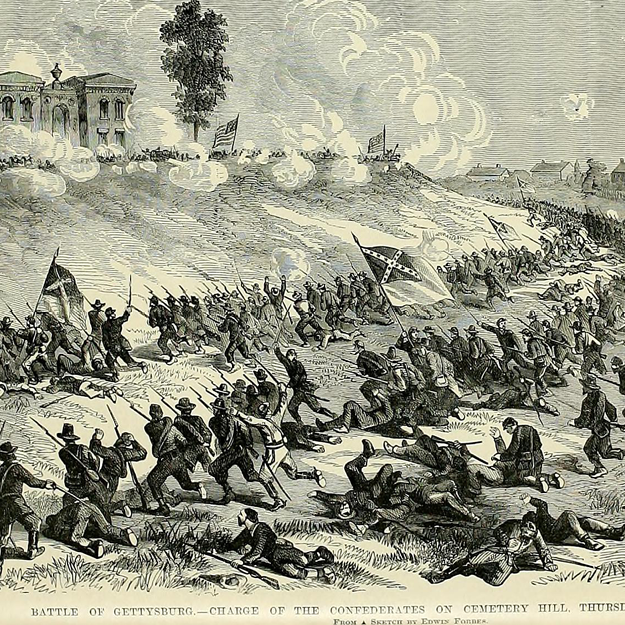
“A Field Made Glorious” Cemetery Hill: From Battlefield to Sacred Ground
Eric A. Campbell
Gettysburg National Military Park
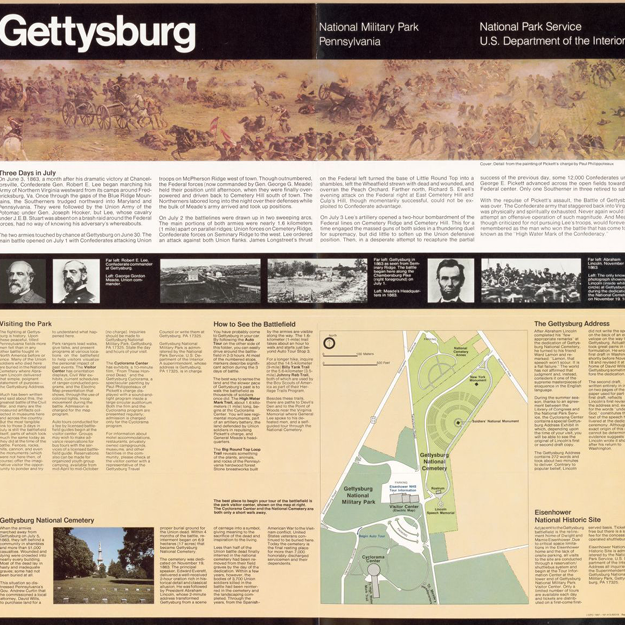
National Park Guide
Battle of Gettysburg
National Military Park
National Park Service
U.S. Department of the Interior
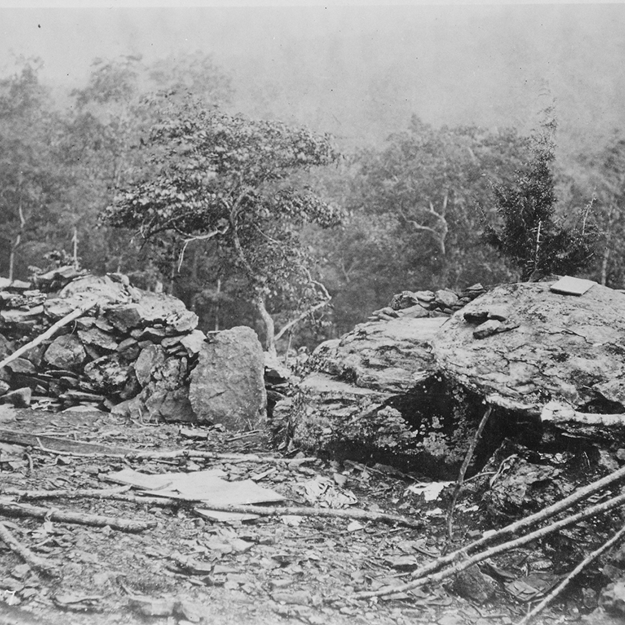
Memories of Little Round Top
Glenn LaFantasie
Gettysburg National Military Park