

 Battle Study Package: Soviet Invasion of Finland (The Winter War)
Soviet Invasion of Finland (The Winter War)
HISTORICAL SIGNIFICANCE
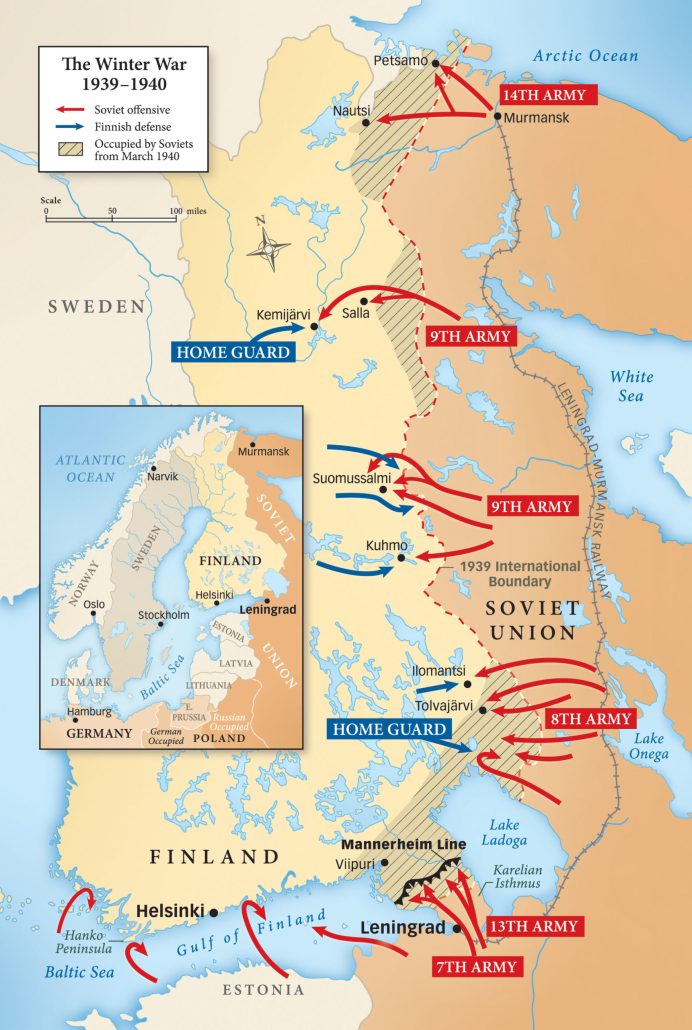
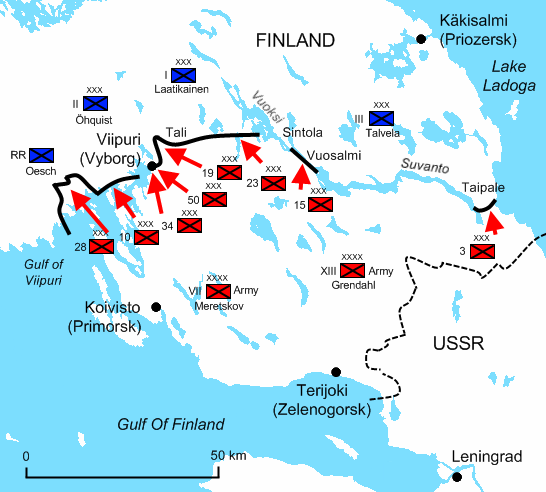
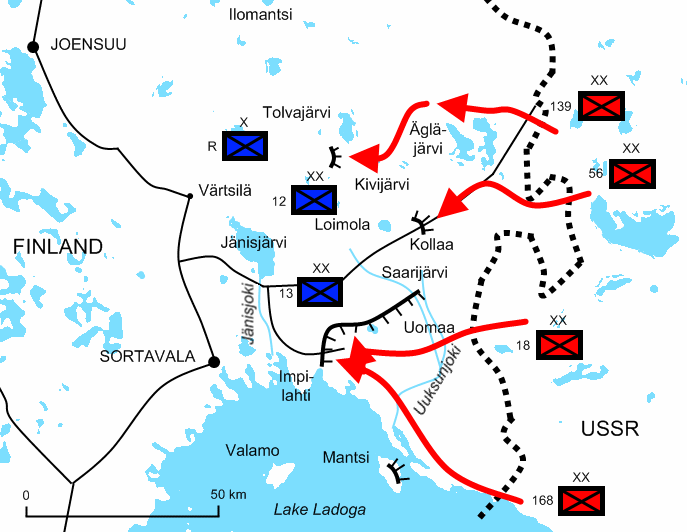
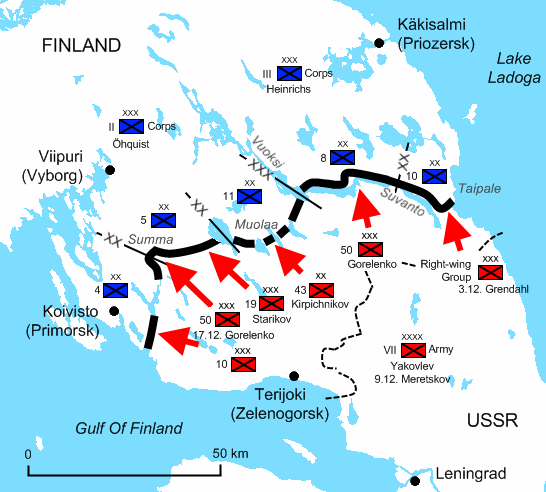
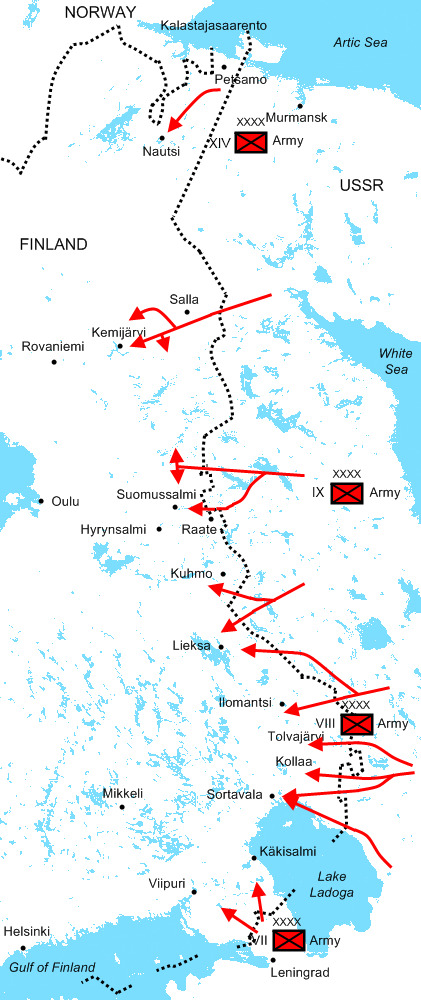
Following two decades of disputes over border territories following the Finish Civil War in 1918, the Soviets made several demands, including Finland ceding border territories in exchange for land elsewhere. On November 30, 1939, following a series of ultimatums and failed negotiations, the Soviet Red Army invaded Finland with half a million troops comprising four Army groups with 21 divisions. General Kiril Meretskov initially ran the overall operation against the Finns. He passed his command on 9 December 1939 to Kliment Voroshilov. The Finnish forces consisted of The Army of the Isthmus (six divisions) under the command of Hugo Österman with the II Army Corps on its right flank and the III Army Corps, on its left. In addition the IV Army Corps (two divisions) was north of Lake Ladoga under Juho Heiskanen with the North Finland Group (border guards) with drafted reservist units under Wiljo Tuompo.
TACTICAL IMPORTANCE
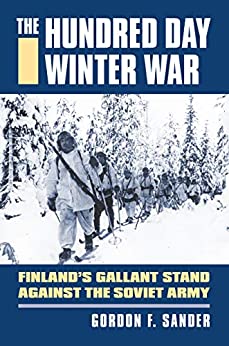
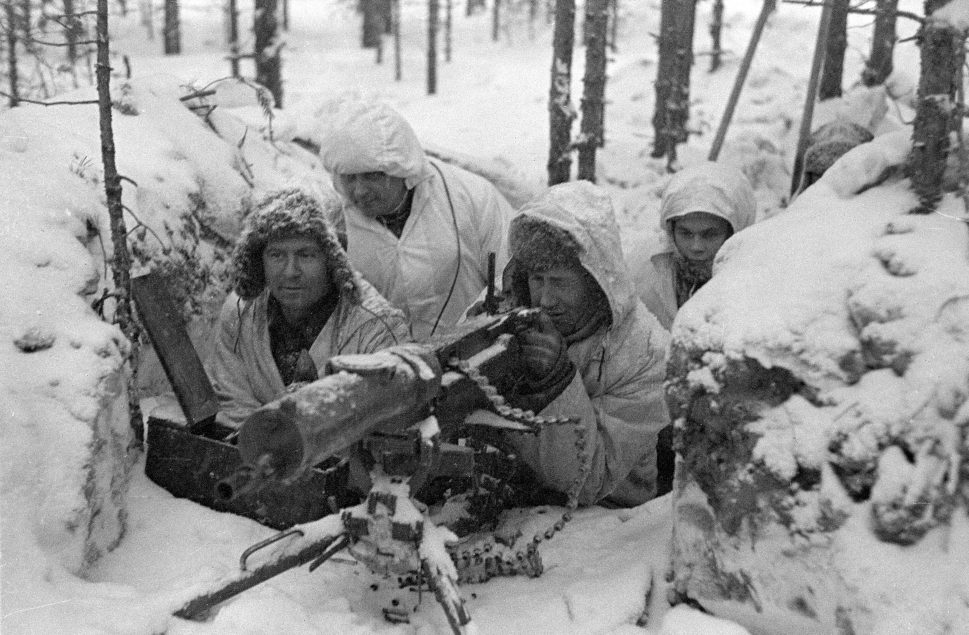
The Finns’ tactical approach was to immobilize, segment, surround and destroy Soviet units several times their size. To do this they would separate Soviet convoys by blocking the road with felled trees. They would then encircle each isolated pocket and destroy them in detail. They also operated in small units and moved almost exclusively on snow skis. Using the rugged landscape to conduct hit-and-run attacks on isolated Soviet units. The Finns used guerilla tactics aided by the freezing Finnish winter, which bogged the Soviets down and made their soldiers easy to spot against snowy terrain. The Soviets, on the other hand, used massive artillery barrages to break through Finn defenses and eventually win the short war.
STRATEGIC IMPACT
The Soviet Red Army was ill-equipped, poorly led, and not trained to deal with the Finnish terrain and winter weather. Though small and under-resourced, the Finnish Army was resilient, well-led and was able to use knowledge of the terrain to good effect. Although Finland ceded 10% of it land to keep from being annexed by the Soviet Union at the end of the war, they nonetheless remained an independent sovereign nation.
Maps
Podcasts
Books