

 Battle Study Package: Waterloo
Battle of Waterloo
HISTORICAL SIGNIFICANCE
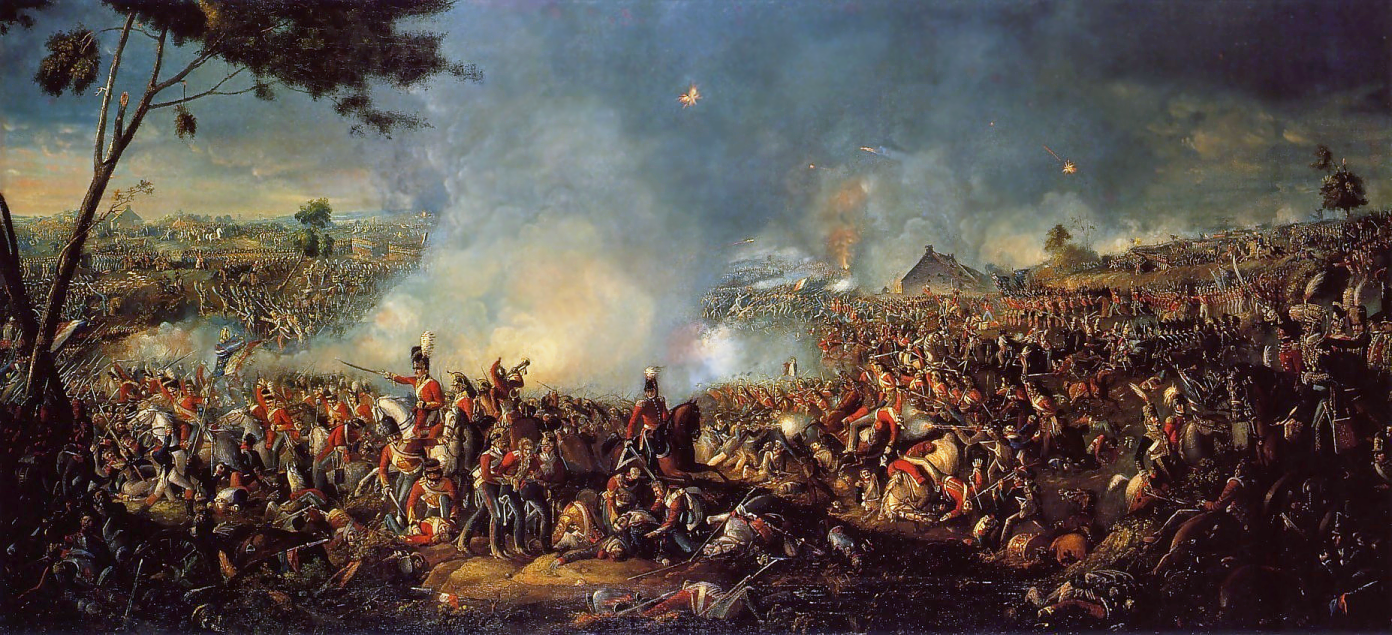
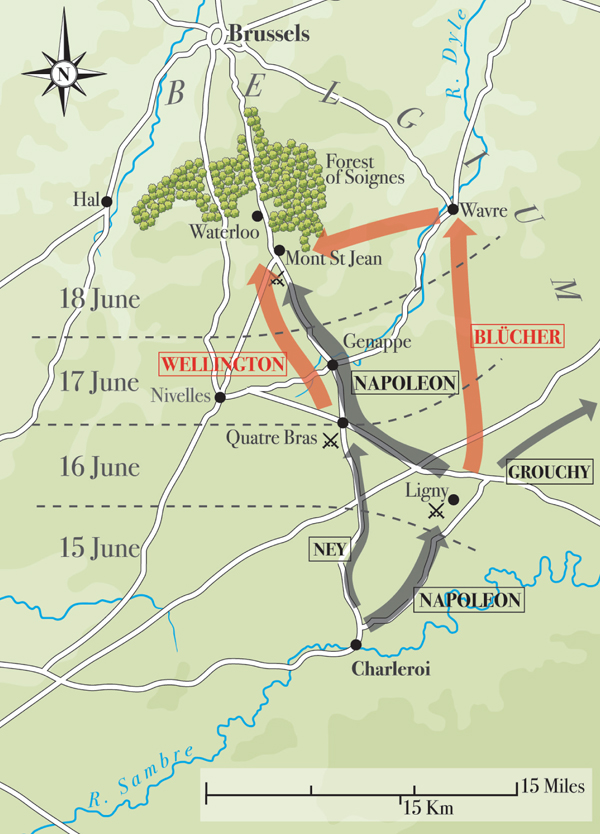
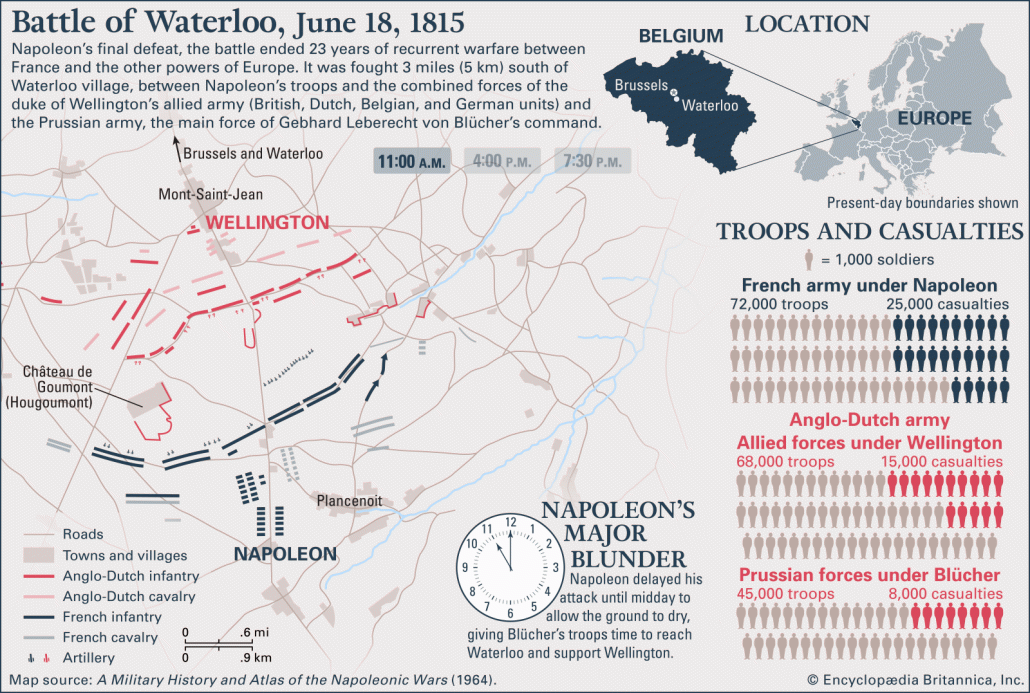
The Battle of Waterloo occurred on 18 June 1815, near Waterloo (at that time in the United Kingdom of the Netherlands, now in Belgium). Two of the armies of the Seventh Coalition defeated the French Army under Napoleon. One of the two armies was a British-led coalition from the United Kingdom, the Netherlands, Hanover, Brunswick, and Nassau commanded by the Duke of Wellington. The other coalition was composed of three Prussian army corps led by Field Marshal von Blucher. The battle marked the end of the Napoleonic Wars.
Waterloo proved to be a decisive battle in many ways. Each generation in Europe up to the outbreak of the First World War believed Waterloo dictated the course of subsequent world history, seeing it in retrospect as the event that ushered in the Concert of Europe, an era characterized by relative peace, material prosperity and technological progress. The battle ended the series of European wars—and involved other regions of the world—beginning with the French Revolution of the early 1790s. It also ended the First French Empire and the political and military career of Napoleon, one of the greatest commanders and statesmen in history.
TACTICAL IMPORTANCE
The furious combat that began in earnest at about 1:00 p.m. featured massed French infantry and cavalry attacks that nearly broke through the Anglo-Allied line before Blucher’s Prussians arrived around 7:30 p.m. to tip the scales of battle in the Coalition’s favor. Wellington, acknowledging how close Napoleon came to victory, famously described the Battle of Waterloo as “the nearest-run thing you ever saw in your life.” The key was to wait until the distance separating the two forces had been reduced to where, when the fire was finally delivered, it could not help but be effective, if not overpowering, and then to charge in with bayonets while the enemy was still recovering from the volley.
STRATEGIC IMPACT
Following the war was almost four decades of peace in Europe until the Crimean War of 1853–1856. Changes to the configuration of European states after Waterloo included the formation of the Holy Alliance of reactionary governments intent on repressing revolutionary and democratic ideas, and the reshaping of the former Holy Roman Empire into a German confederation marked by Prussian political dominance.
Maps
Podcasts
Books