


 Battlefield Study Package: Chickamauga
THE RIVER OF DEATH
HISTORICAL SIGNIFICANCE
The Battle of Chickamauga is infamous for being the second bloodiest battle of the American Civil War—only behind Gettysburg. Furthermore, not only was it among the few major Confederate victories in the western theatre of war, but it was among the few times in the American Civil War where Confederate forces had numerical superiority over their northern opponents.
TACTICAL IMPORTANCE
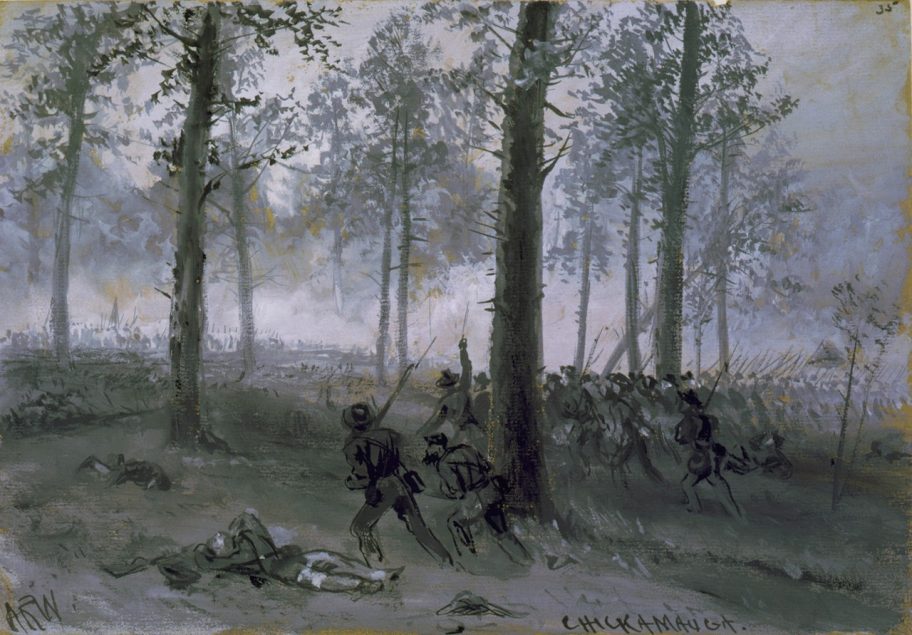
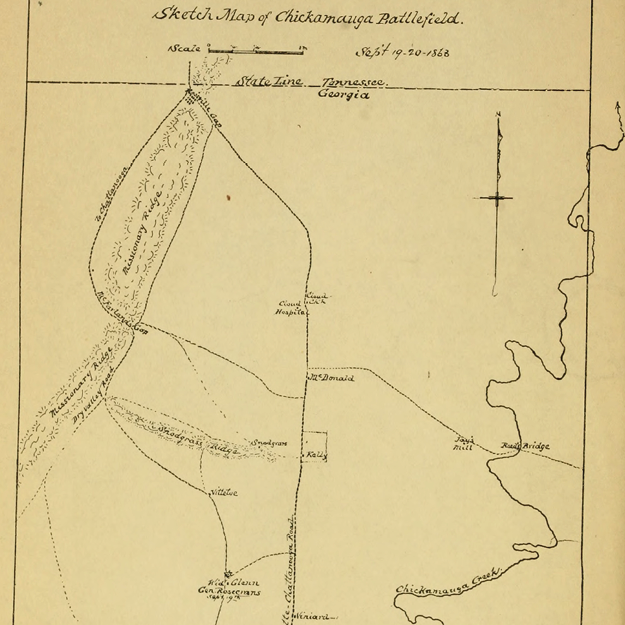
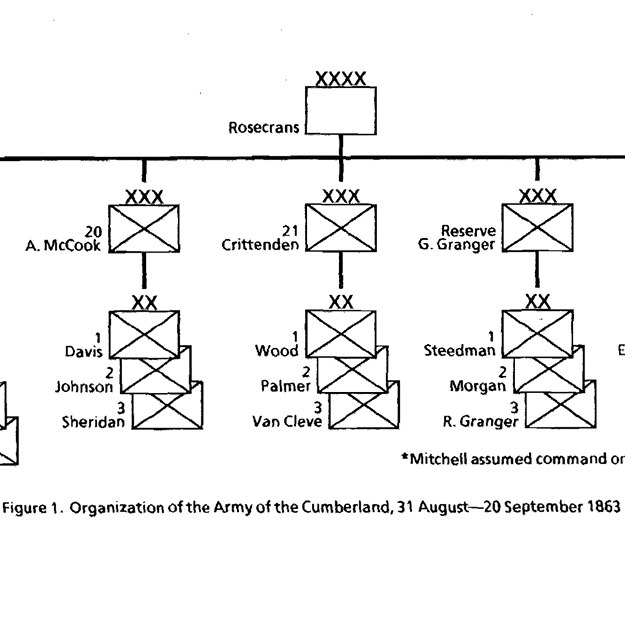
Having been outflanked from Chattanooga and forced to withdraw into Georgia by the northern Army of the Cumberland commanded by Gen Rosecrans, Gen Bragg and the reinforced Confederate Army of Tennessee sought to defeat their opponents in detail before attempting to recapture Chattanooga. On 18 September—as the Army of the Cumberland began concentrating in a heavily wooded region along the LaFeyette-Chattanooga Road on the northwest side of Chickamauga Creek in Northern Georgia—Bragg’s vanguard managed to capture several crossing points from Federal cavalry across the creek at Alexander’s Bridge and Reed’s Bridge. The main fighting began on 19 September in the northern flank of both armies near Jay’s Mill. Throughout the day, both armies continuously reinforced their Northern flanks, and the Confederate forces eventually pushed the Union army back toward the LaFeyette-Chattanooga Road. The heavily wooded terrain of the battlefield hindered the commanders’ ability to maintain command and control over their forces, making it difficult to coordinate efforts. By the morning of 20 September, the Army of the Cumberland defended an entrenched position along the road, from which they were able to repel several Confederate assaults earlier in the day. However, miscommunication between Union commanders created a quarter-mile gap in their defenses, which was violently exploited by Confederate Gen Longstreet. Consequently, the Army of the Cumberland collapsed and began to flee from the battlefield, and only the determined rearguard defense of Gen Thomas’s men on Snodgrass Hill prevented the total disintegration of Rosecrans’s army. Confederate casualties from the battle numbered over 18,000 compared to the 16,00 suffered by Union forces. The Army of the Cumberland retreated to Chattanooga, while the Army of Tennessee occupied the heights overlooking the city—thus setting the stage for the Siege of Chattanooga.
STRATEGIC IMPACT
The Battle of Chickamauga was a unique instance in the American Civil War in which the Confederacy took advantage of their interior lines of communication by transporting Gen Longstreet’s 1st Corps of the Army of Northern Virginia to reinforce Bragg’s Army of the Tennessee. Despite their superior numbers, the Confederates were unable to destroy the Army of the Cumberland, which was allowed to escape back to Chattanooga. As a result, Gen Bragg was forced to lay siege to the city. However, negating his advantage in numbers, Bragg detached Longstreet’s command to lay siege to the Union-held city of Knoxville. As a result of the strategic setback of the Battle of Chickamauga, the Lincoln administration sent Gen Grant to directly oversee the Union forces besieged at Chattanooga.
Maps
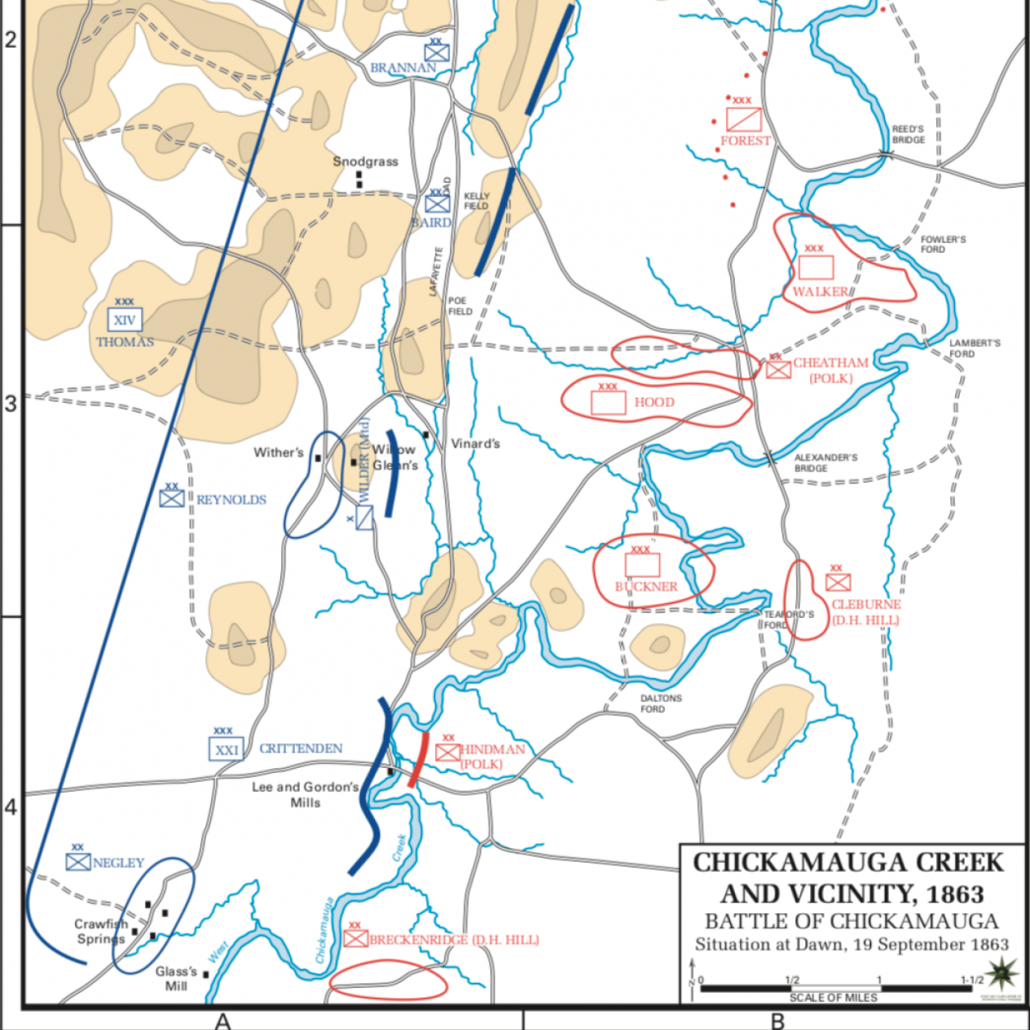
Chickamauga Creek and Vicinity, 1863: 19 September 1863
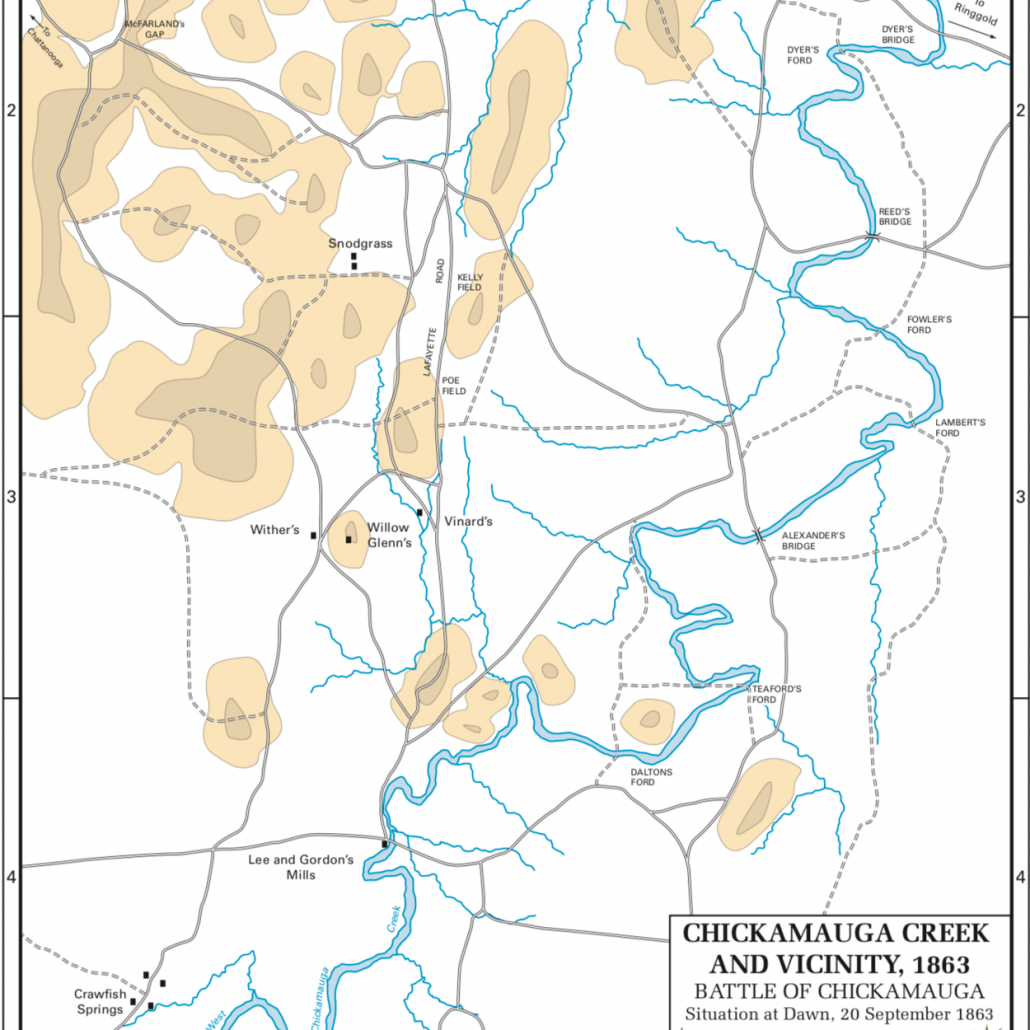
Chickamauga Creek and Vicinity, 1863: Situation at Dawn, 20 September 1863
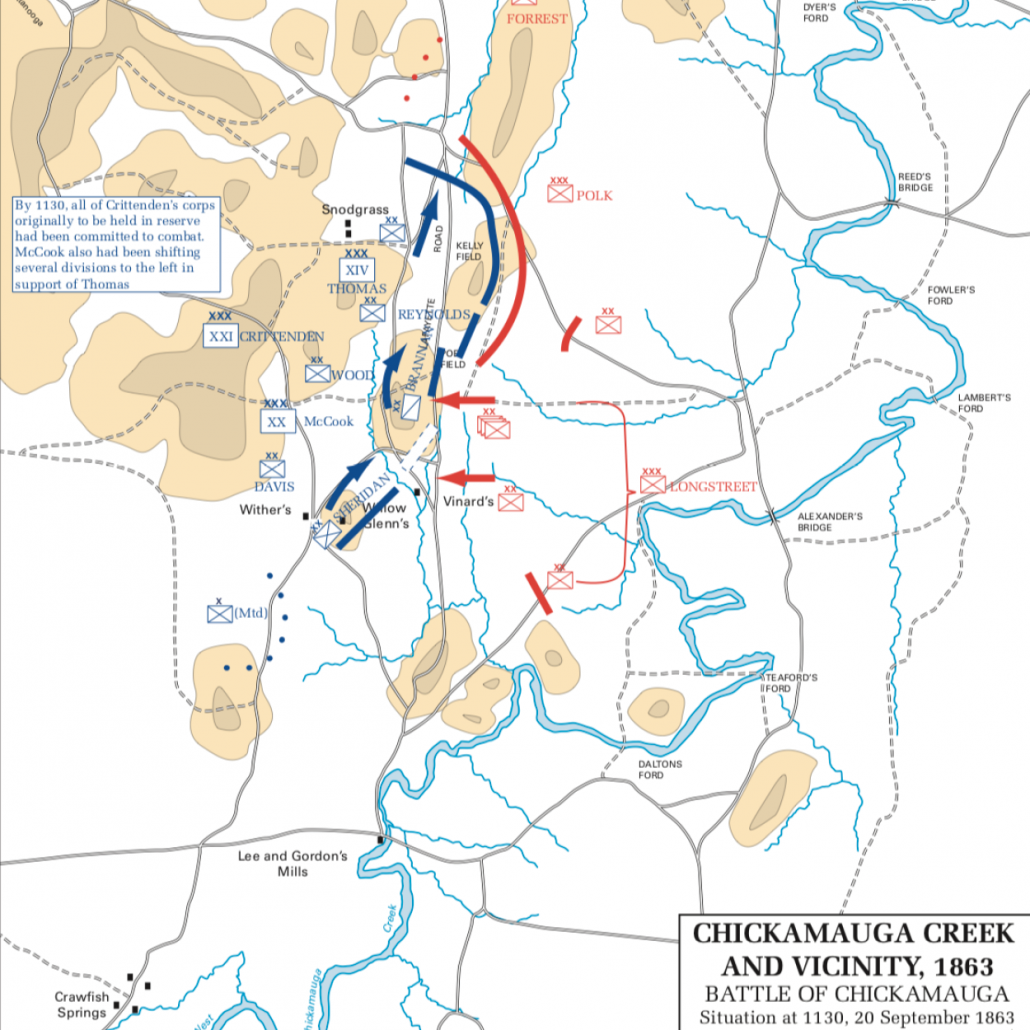
Chickamauga Creek and Vicinity, 1863: Situation at 1130, 20 September 1863
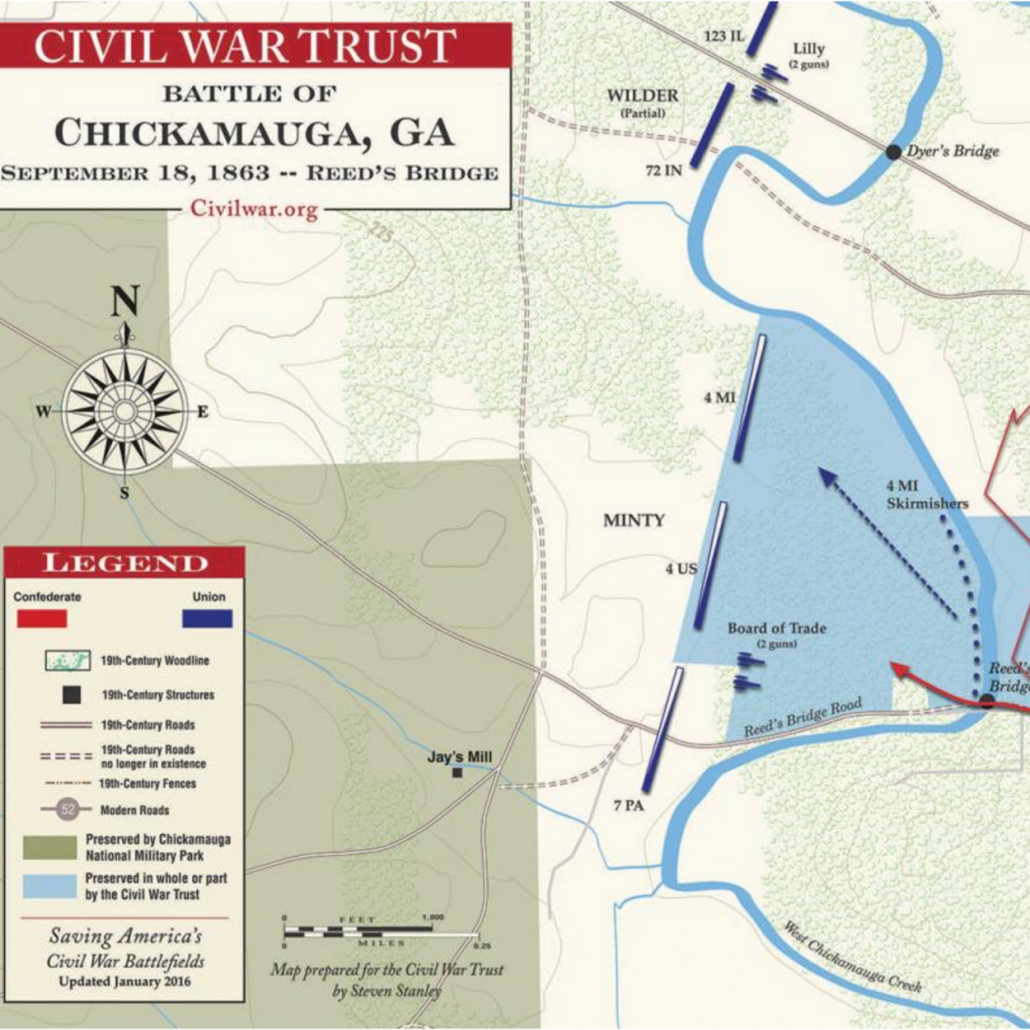
Battle of Chickamauga, GA September 18, 1863 – Reed’s Bridge
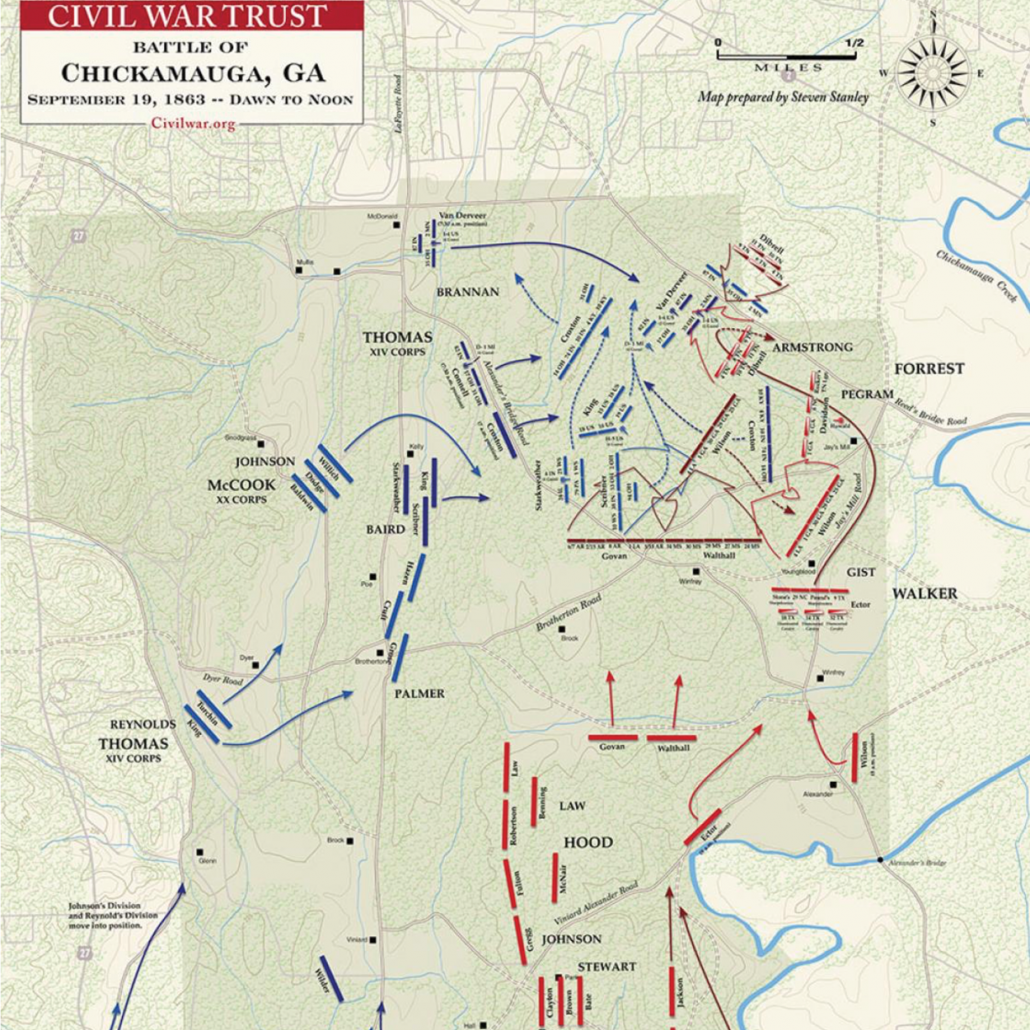
Battle of Chickamauga, GA September 19, 1863 – Dawn to Noon
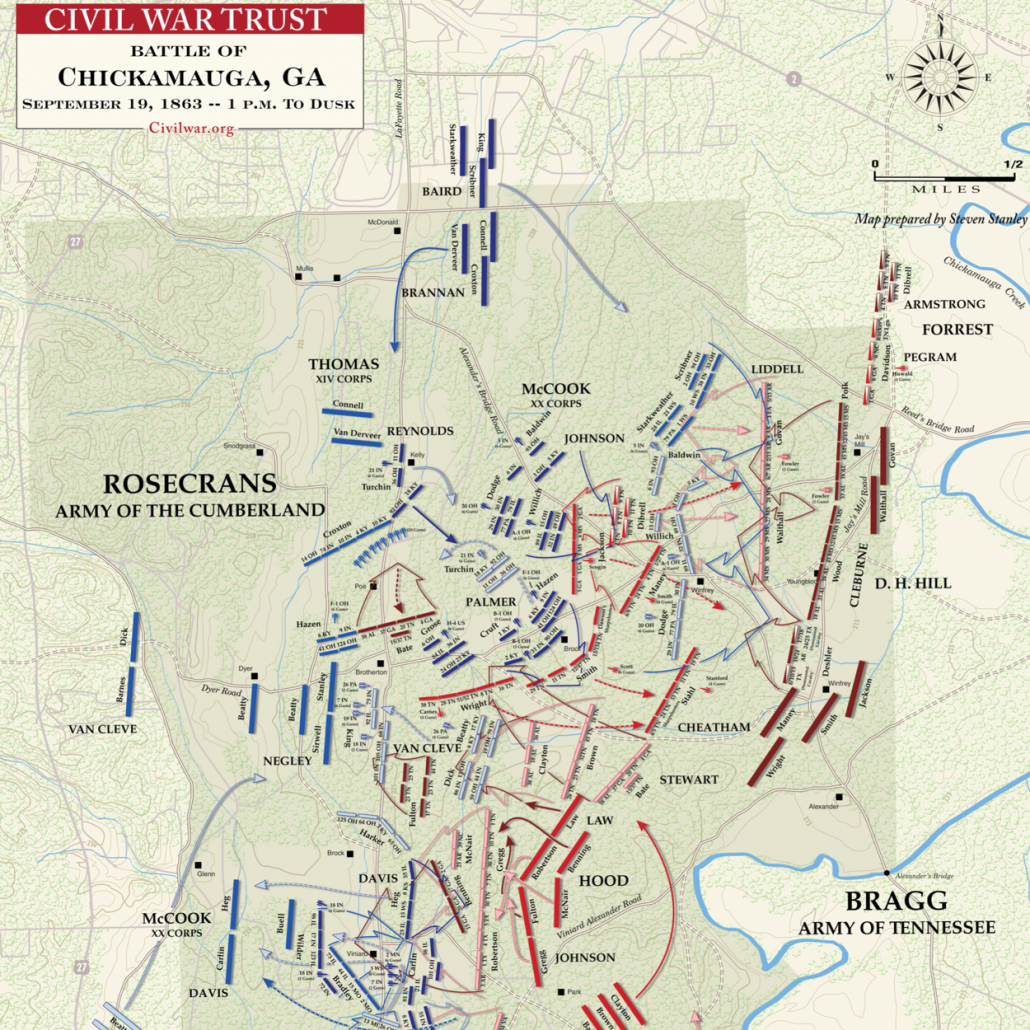
Battle of Chickamauga, GA September 19, 1863 – 1 P.M. to Dusk
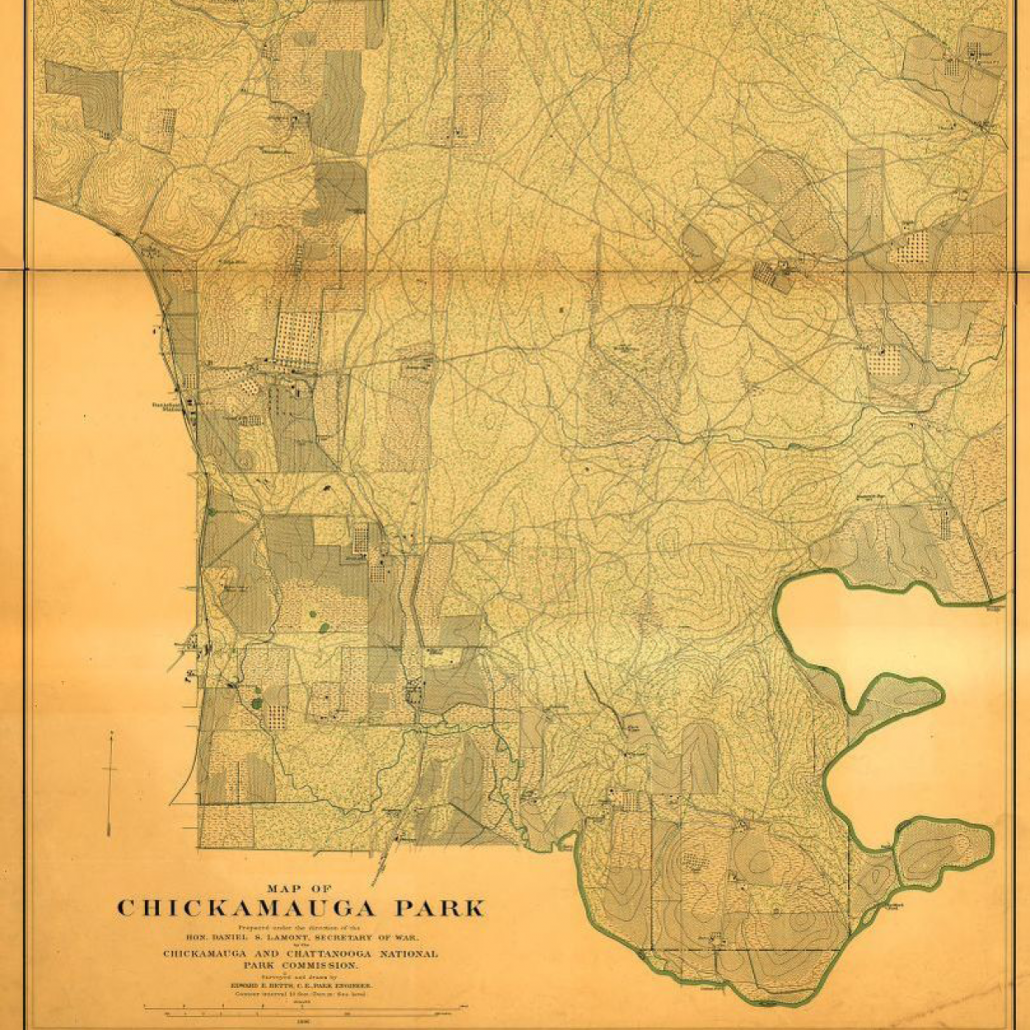
Map of the Chickamauga Park
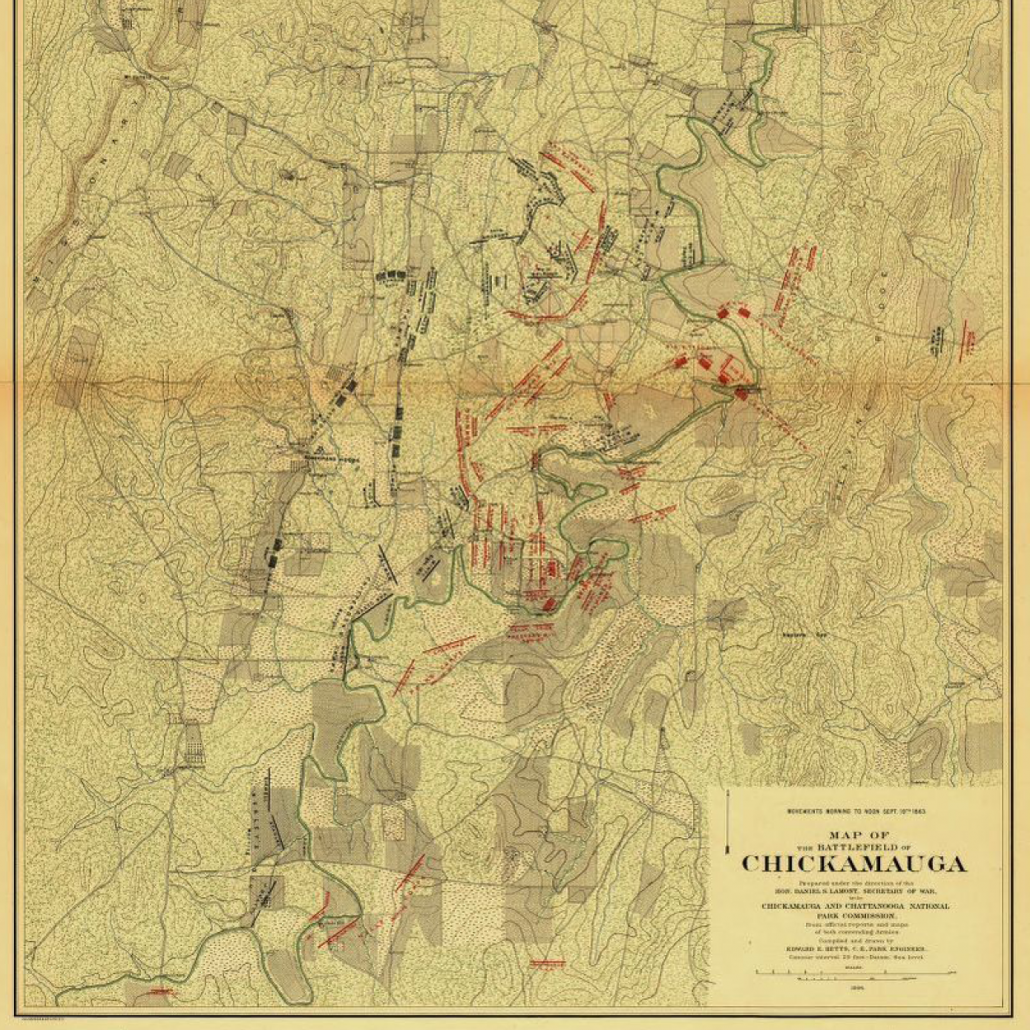
Map of the Battlefield of Chickamauga Movements Morning to Noon, Sept. 19, 1863
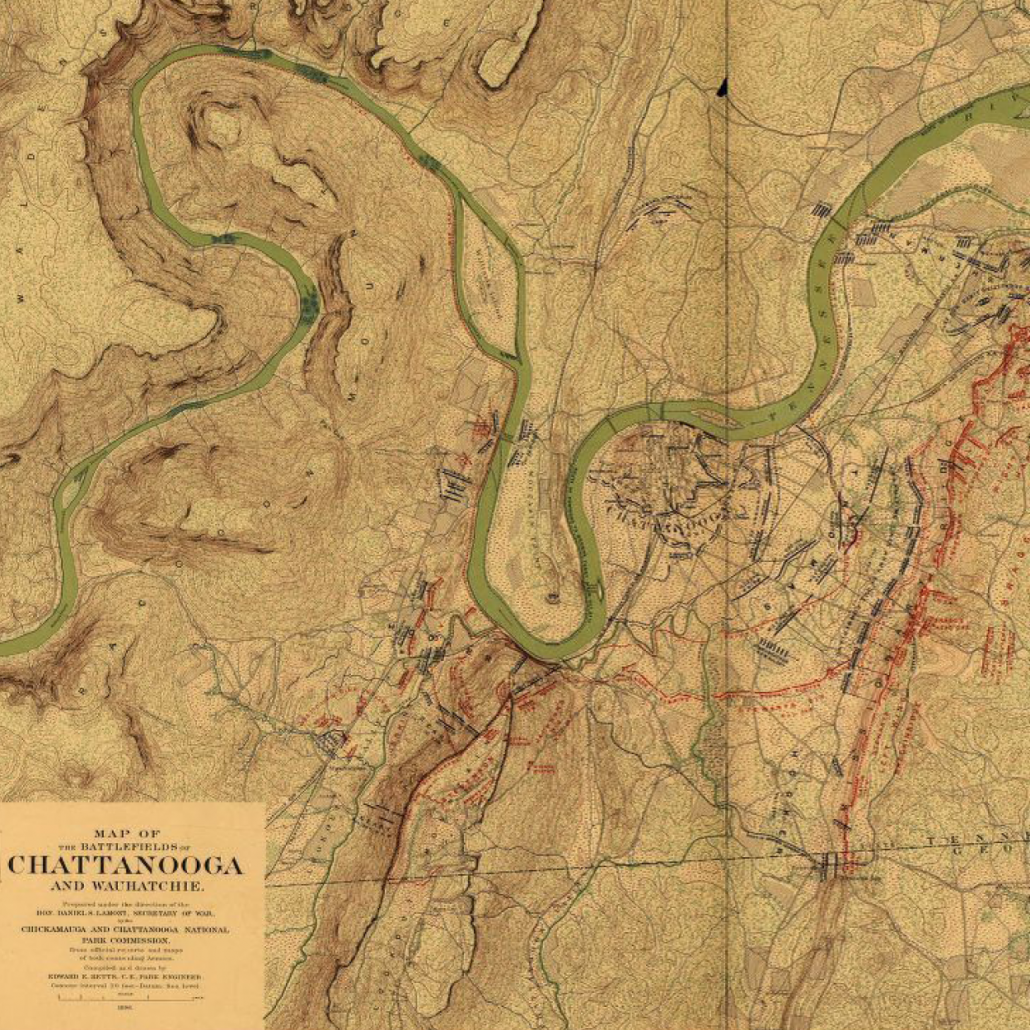
Map of the Battlefields of Chattanooga and Wauhatchie
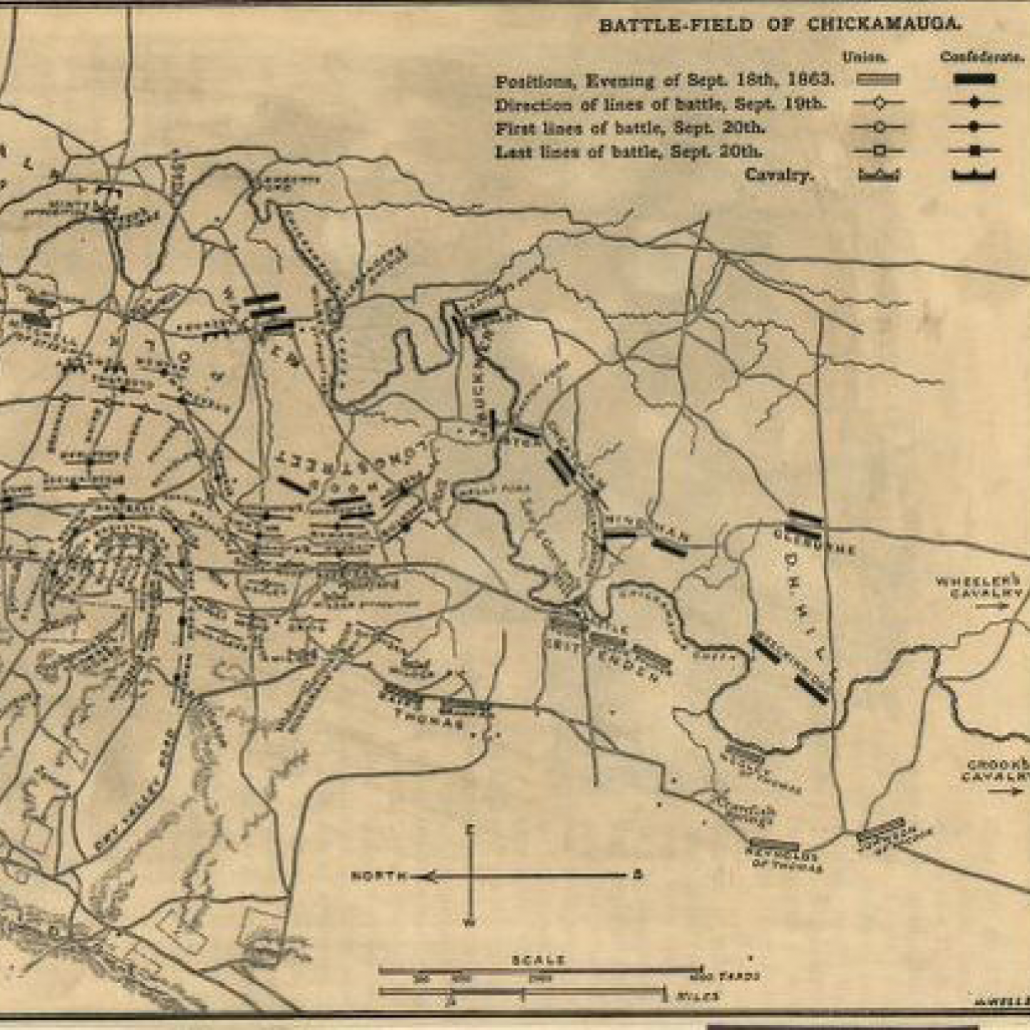
Battle-field of Chickamauga. [Sept 18-20, 1863]
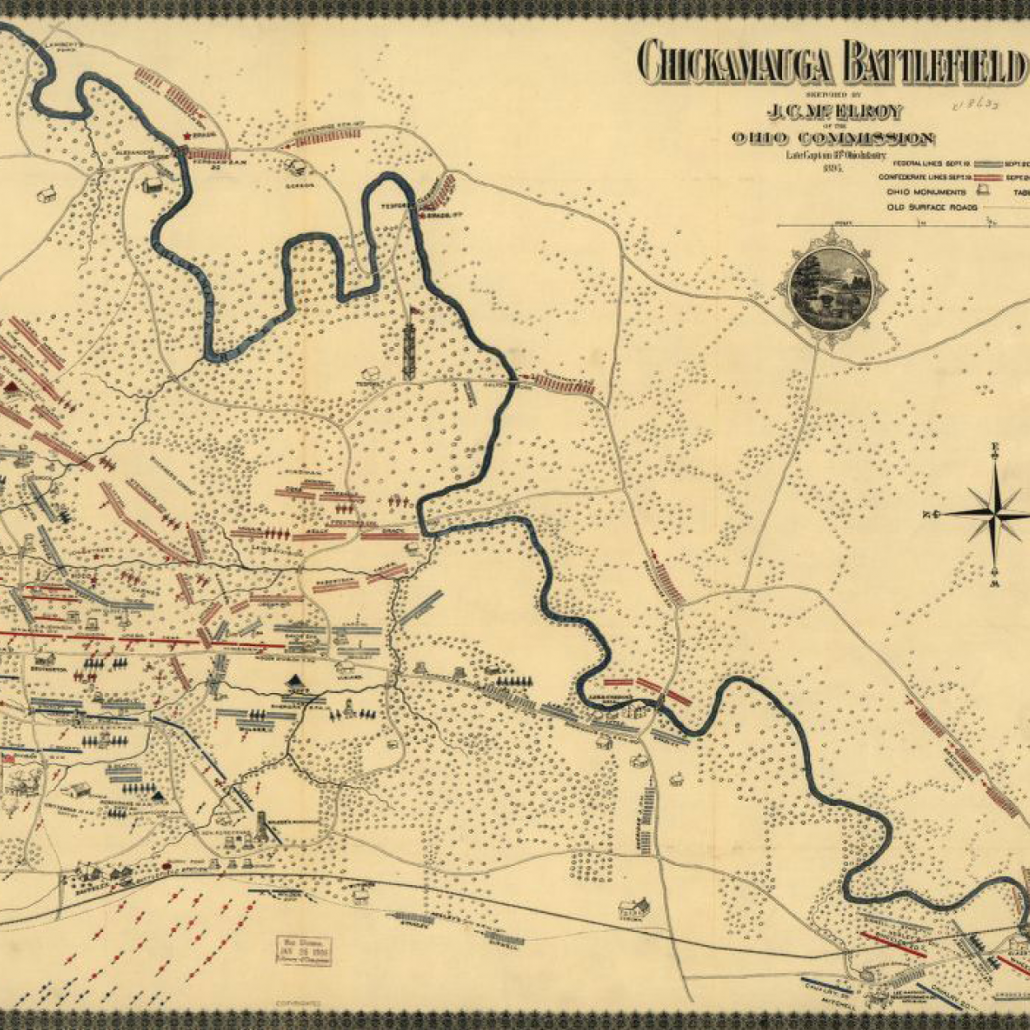
Chickamauga Battlefield. Historical Map and Guide Book
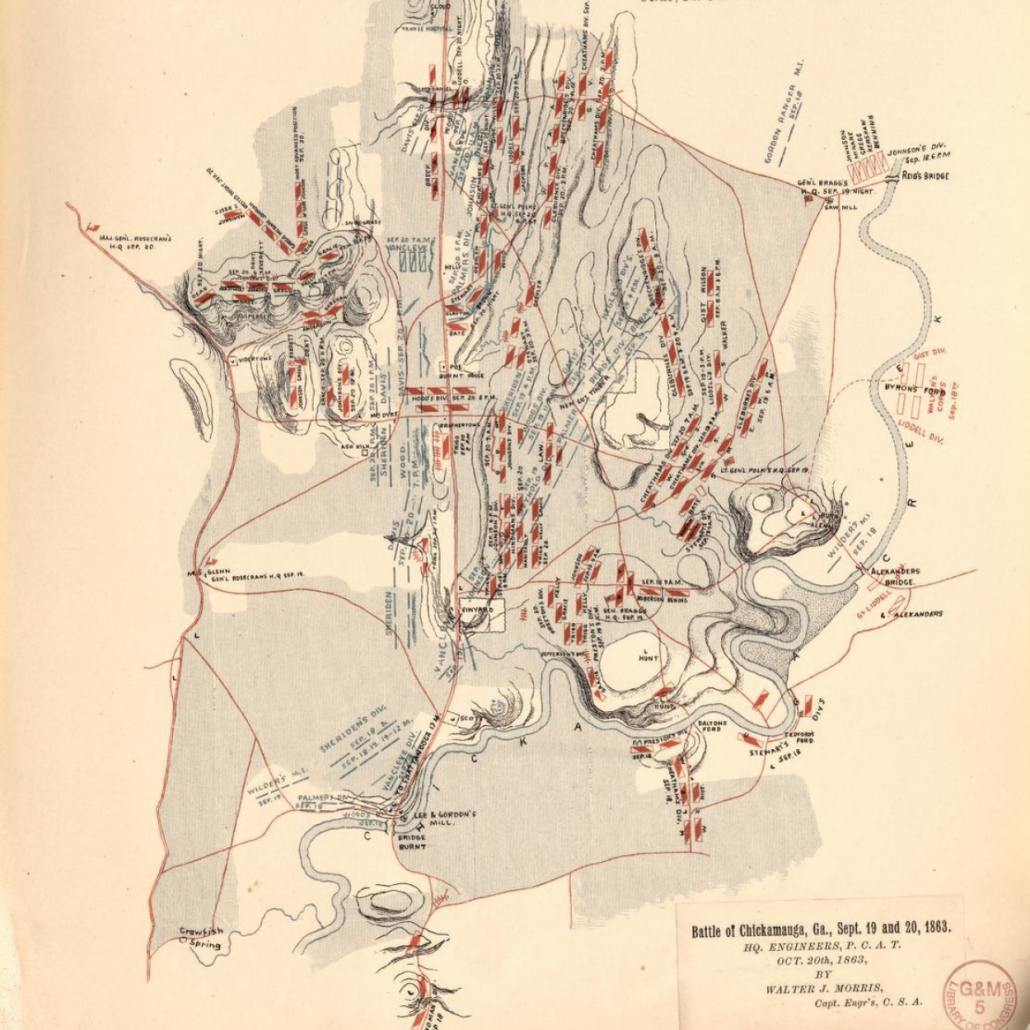
Battle of Chickamauga, GA., Sept. 19 and 20, 1863
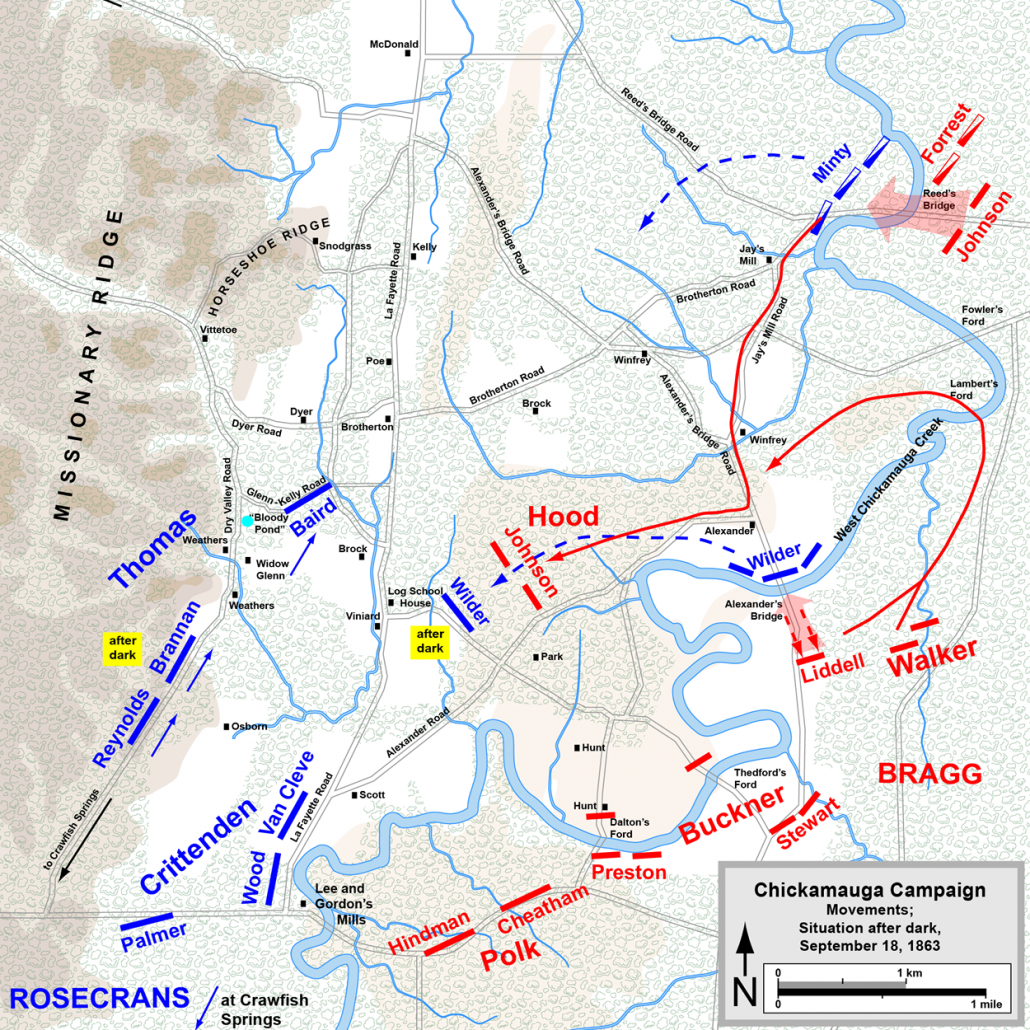
Chickamauga Campaign Movements; Situation after dark, September 18, 1863
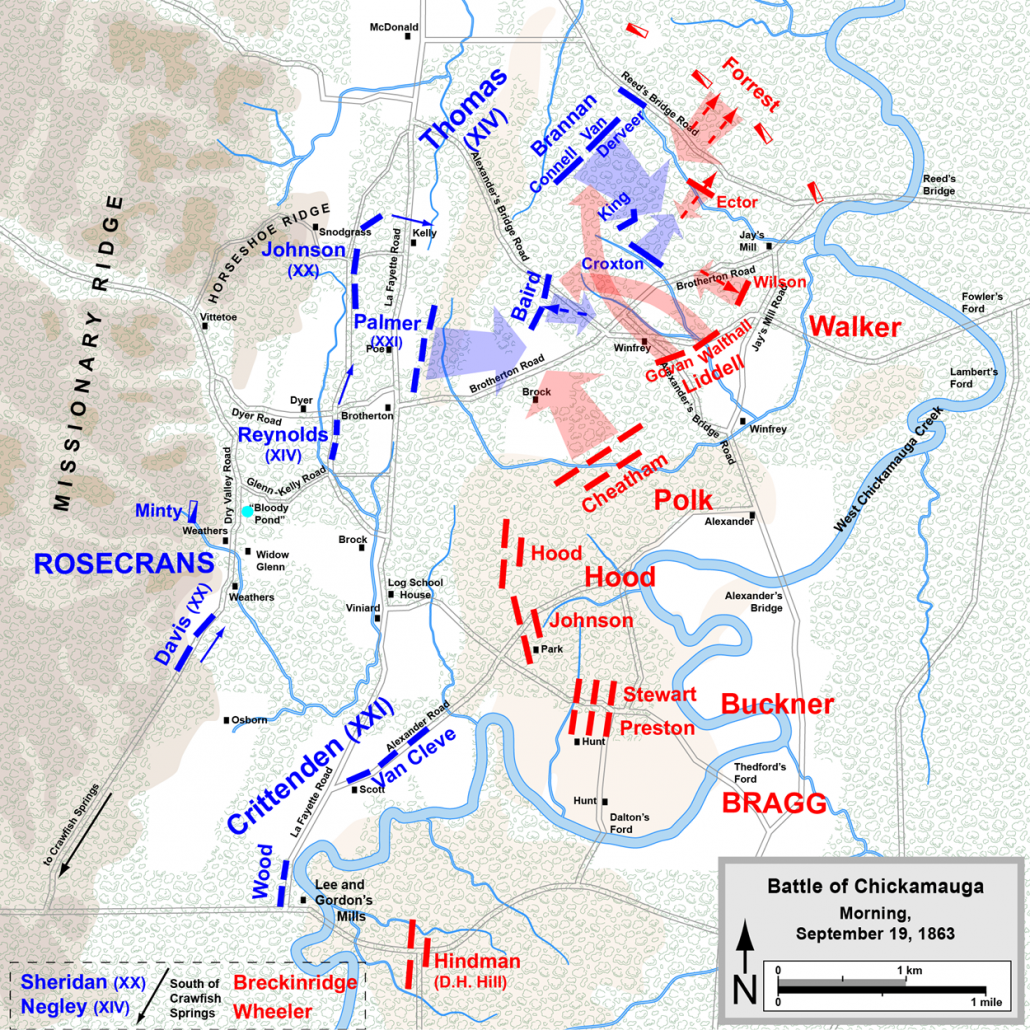
Battle of Chickamauga Morning, September 19, 1863
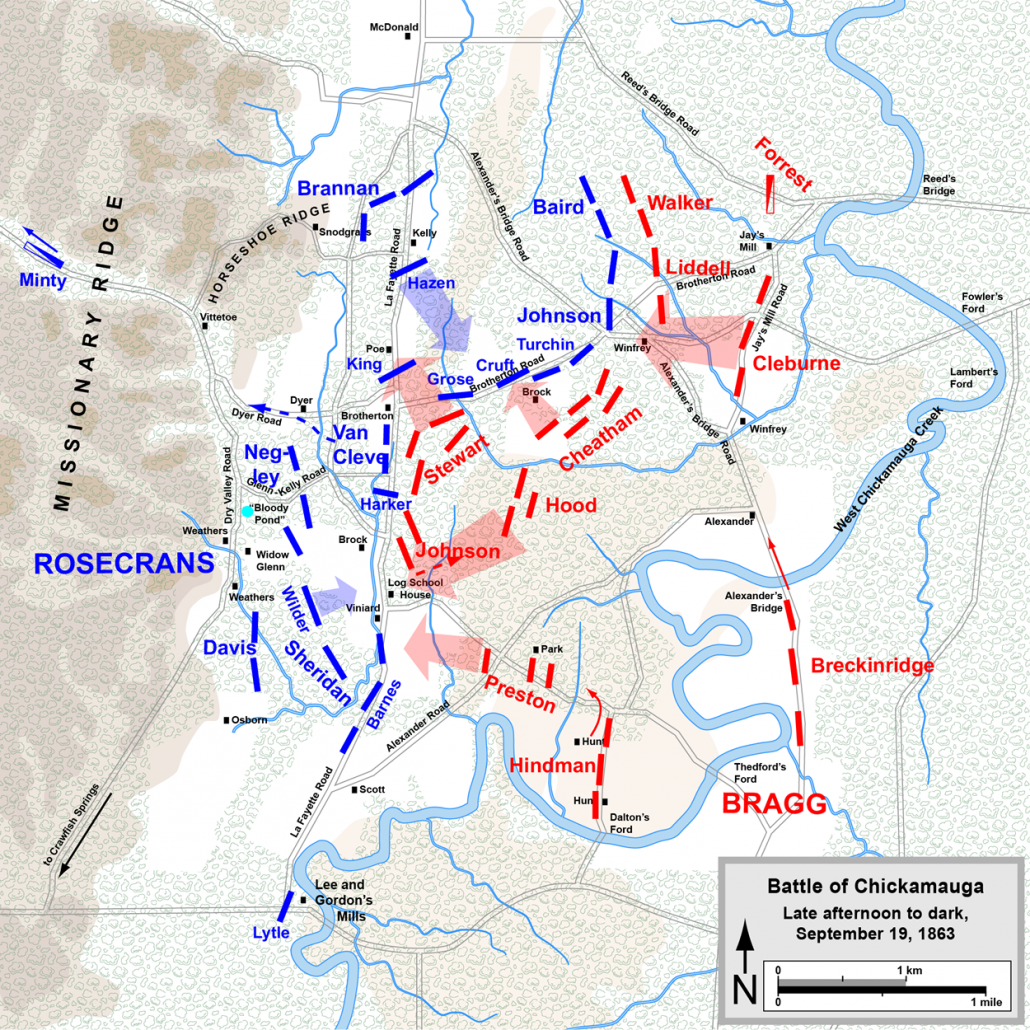
Battle of Chickamauga Late afternoon to dark, September 19, 1863
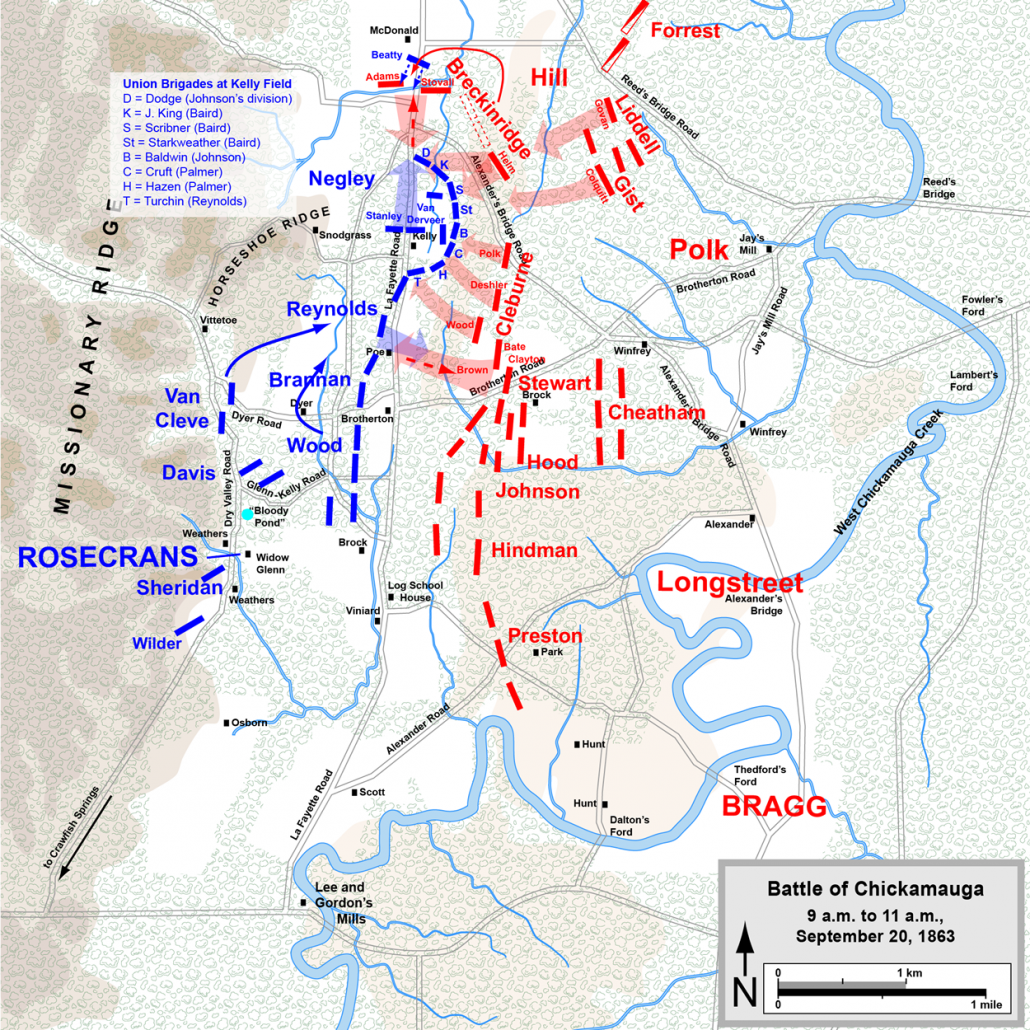
Battle of Chickamauga 9 a.m. to 11 a.m., September 20, 1863
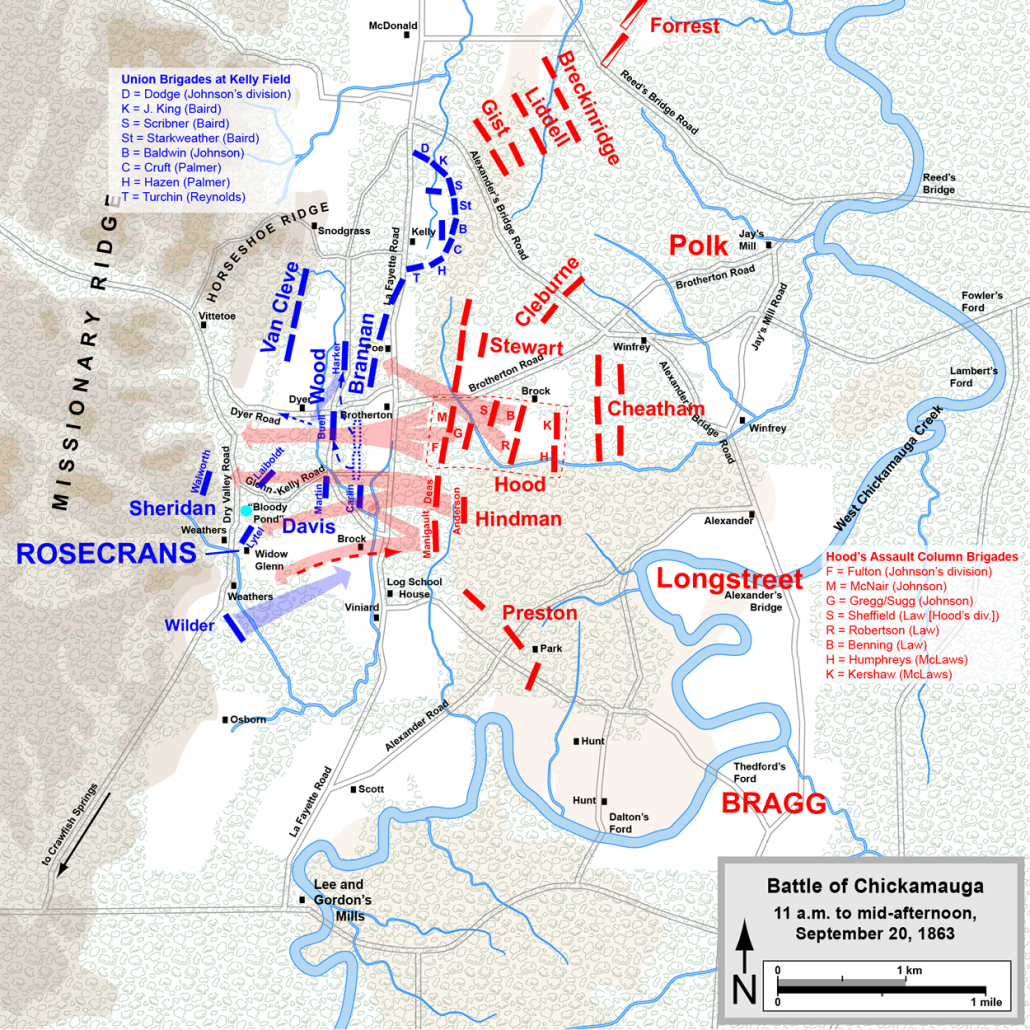
Battle of Chickamauga 11 a.m. to mid-afternoon, September 20, 1863
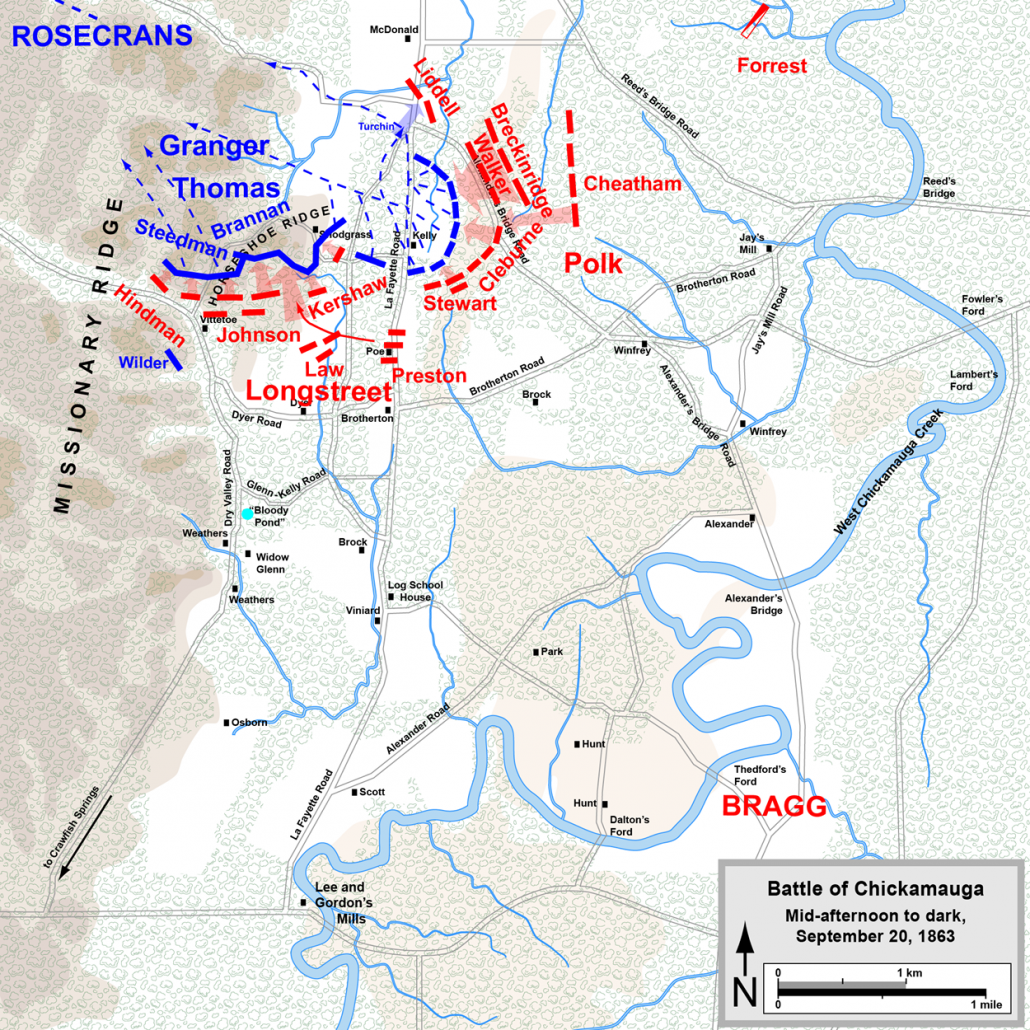
Battle of Chickamauga Mid-afternoon to dark, September 20, 1863
Study Guide
Podcasts
Books
Videos
Other Resources
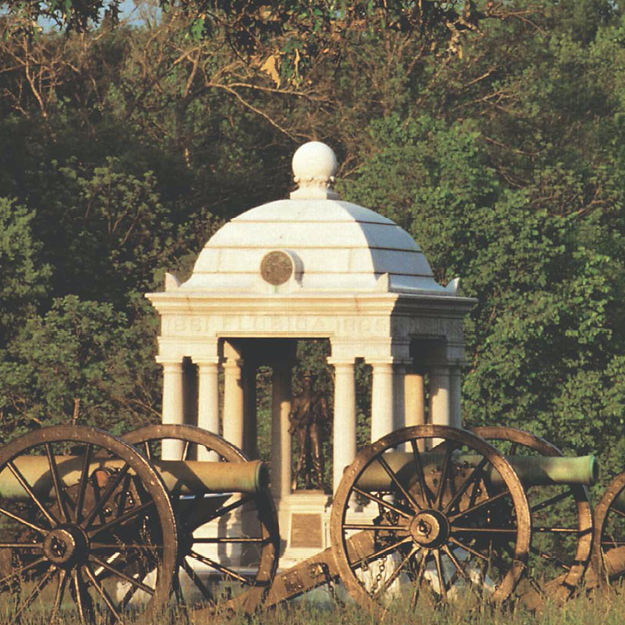
Chickamauga and Chattanooga National Military Park Historic Resource Study
Jill K. Hanson & Ryan W. Blythe
January 1999
National Park Service
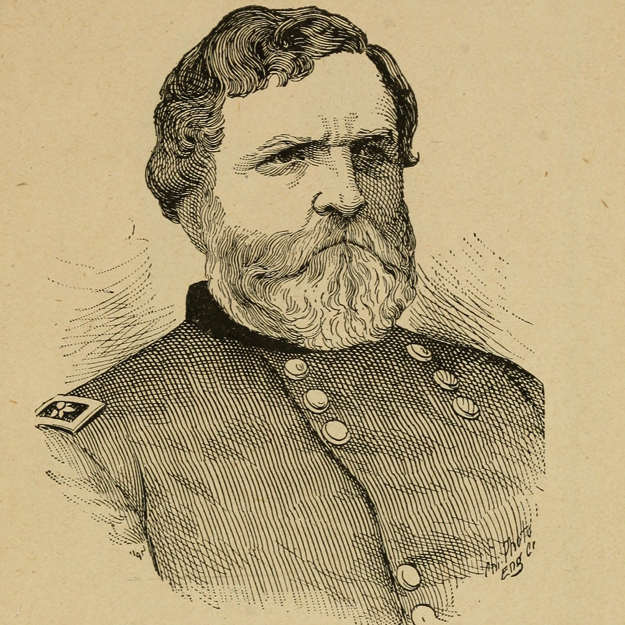
Glimpses of Chickamauga:
A Complete Guide to All Points of Interest on this Historic Battle-Field
Comrade Albert Disbrow
September 1895
Library of Congress
The Real Chickamauga
W.S. Furay & Col G.C. Kniffin
Columbus State Journal
September 1888
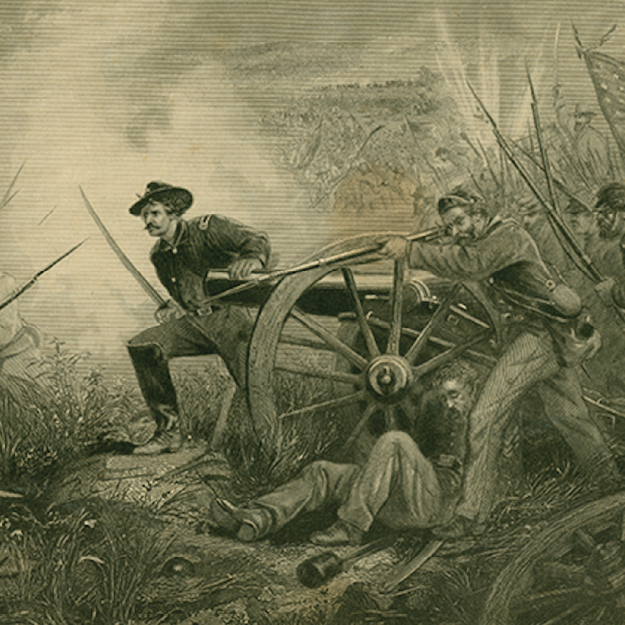
Personal Recollections of the Chickamauga Campaign
1stLt Granville C. West, U.S. Volunteers
December 1913
Commandery of the District of Columbia
Van Derveer’s Brigade at Chickamauga
Gen J.W. Bishop
May 1903
Minnesota Commandery of Loyal Legion
Staff Ride Handbook for the Battle of Chickamauga, 18-20 September 1863
Dr. William G. Robertson
LtCol Edward P. Shanahan
LtCol John I. Boxberger
Maj George E. Knapp
Combat Studies Institute
U.S. Army Command and General Staff College